

Towards Normalizing EU-Syria Relations: Lifting Partial Suspension of Cooperation Agreement and Holding First High-Level Political Dialogue; Supporting the Efforts of the Transitional Authorities and the Need to Respect the Rights of All Citizens

- Europe and Arabs
- Tuesday , 12 May 2026 6:29 AM GMT
Brussels: Europe and the Arabs
A concluding statement from the first high-level dialogue between the European Union and Syria, held last night in Brussels, indicated that the dialogue focused particularly on two main areas:
EU-Syria relations and regional issues – Discussions centered on the current state of EU-Syria relations and explored opportunities to strengthen cooperation, while addressing regional challenges affecting stability and security.
Political transition in Syria and EU support – The EU reaffirmed its support for the efforts of the Syrian transitional authorities towards a comprehensive political transition, socio-economic recovery, and reconstruction. Discussions highlighted the importance of respecting the rights of all Syrian citizens and coordinating efforts to promote stability, humanitarian assistance, and socio-economic development.
As a further indication of the normalization of EU-Syria relations, the Foreign Affairs Council, at its meeting preceding the dialogue, adopted a decision to lift the partial suspension of the EU-Syria Association Agreement. The European Commission will notify the Syrian authorities of the termination of the partial suspension.
The decision will enter into force on the date of its adoption. The reinstated provisions of the Cooperation Agreement will apply from the first day of the month following this notification, allowing sufficient time for implementation.
The 1977 Cooperation Agreement between the EU and Syria provides a framework for economic and trade relations between the two parties.
In September 2011, the Council partially suspended certain provisions of the Agreement in conjunction with the restrictive measures adopted under the EU Common Foreign and Security Policy in response to the Syrian regime’s repression of its people. This suspension was extended in February 2012 to include additional products.
Since 2024, significant political developments in Syria, including the fall of the Assad regime, have allowed the EU to resume its relations with Syria. In 2025, the Council lifted economic sanctions against Syria, with the exception of those imposed for security reasons, and reaffirmed its support for a peaceful and inclusive transition, respect for human rights, and the reintegration of the country into the international economic system.
By ending the partial suspension, the Council is fully restoring the Cooperation Agreement, representing a significant step towards strengthening bilateral relations between the EU and Syria. The partial suspension, imposed in 2011 and extended in 2012, targeted specific trade provisions in the agreement in response to the gross human rights violations committed by the Bashar al-Assad regime. This suspension included provisions removing quantitative restrictions on imports of certain Syrian products, including oil and its derivatives, gold, precious metals, and diamonds.
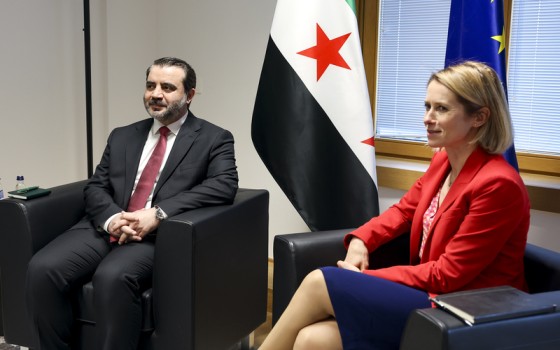
The first high-level political dialogue between the European Union and Syria took place in Brussels on Monday. The meeting was co-chaired by the High Representative of the European Union for Foreign Affairs and Security Policy, Kaja Kallas, and the Minister of Foreign Affairs and Expatriates of the Syrian Interim Government, Asaad al-Shaibani. The European Commission was represented by Dubravka Šuić, Commissioner for the Mediterranean, and Haja Lahbib, Commissioner for Humanitarian Aid and Crisis Management.
The dialogue provided an opportunity to make progress towards normalizing relations between the EU and Syria and to assess the various avenues of action related to EU support for the Syrian transitional authorities' efforts to achieve stability, socio-economic recovery, and a comprehensive political transition in Syria.






No Comments Found