

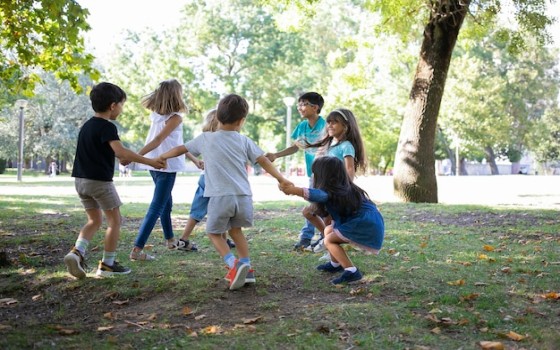
Economic inequality has negative effects on children even in the world's richest countries, according to a UNICEF study that examined the situation in 44 countries.

- Europe and Arabs
- Wednesday , 13 May 2026 7:22 AM GMT
New York: Europe and the Arabs
UNICEF has warned that economic inequality is harming the well-being of children in the world's richest countries, including their health and education, and called on countries to take measures to close the gap.
According to the organization's latest report—which reviewed the situation in 44 OECD and high-income countries—families in the top 20 percent of income earn more than five times the income of families in the bottom 20 percent.
On average, nearly one in five children across these countries lives in "income poverty," meaning their basic needs may not be met.according to the UN Daily News
Bo Victor Nylund, UNICEF's Director of Strategy and Evidence, emphasized that inequality "profoundly affects how children learn, what they eat, and how they view life."
He called for urgent investments in the most disadvantaged communities to mitigate the worst consequences of inequality for children. The report revealed that children in countries with the highest levels of inequality are 1.7 times more likely to be overweight than their peers in more equal countries, which may reflect poorer diets or irregular eating habits.
It also noted that countries with a widening gap between rich and poor generally tend to score lower on academic tests. Children in the most unequal countries are 65% more likely to leave school without acquiring basic reading and math skills, compared to 40% in the most equal countries.
Domestically, there are also significant gaps in test scores between children from the wealthiest and poorest families. On average, 83% of 15-year-olds from the highest income bracket possess basic math and reading skills, compared to only 42% of children from the lowest income bracket.
The report called on governments and stakeholders to take effective action across multiple policy areas to mitigate the impact of inequality on children's well-being, including:
Improving social safety nets, including providing benefits for families and children and establishing a minimum wage. Supporting disadvantaged communities by providing subsidized housing, improving infrastructure in their neighborhoods, and investing in public amenities such as green spaces and recreational facilities. Addressing inequalities in education by reducing socioeconomic segregation within schools, ensuring schools are adequately staffed and equipped regardless of students' economic backgrounds, and providing healthy and nutritious school meals for children. Engaging with children themselves to understand their perspectives on how inequality affects them and their families, and to develop solutions that promote their well-being.




No Comments Found