

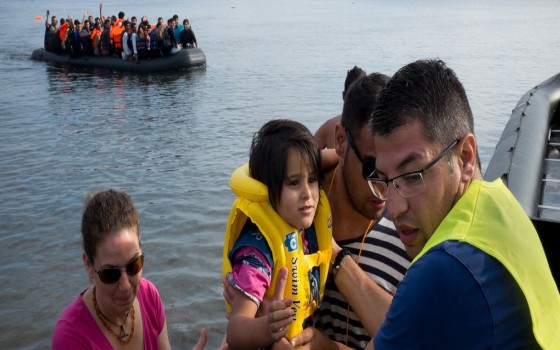
The Spanish army and police prepared to confront those fleeing from Morocco to Ceuta. Rabat erected barbed wire fences and prevented young people from traveling by train to the north to repeat the attempt at the end of July.

- Europe and Arabs
- Saturday , 15 August 2026 7:54 AM GMT
Madrid-Brussels: Europe and the Arabs
Spanish soldiers were deployed to guard major stores and government buildings on Friday evening, and police patrols intensified on main streets. The city center was calm, and cafes and restaurants were bustling, a stark contrast to the tense days following the deadly border crossing on July 30.
Morocco also tightened its border controls. Rabat is investigating anonymous reports calling for a mass crossing on August 15 and has warned that organizers and participants will be prosecuted. Security was reinforced near the borders with Ceuta and Melilla, and new barbed wire fences were erected. In Casablanca, Fez, and Kenitra, authorities prevented various groups from boarding trains and buses heading north, according to Belgian media reports in Brussels, citing Reuters on Saturday morning.
According to Spanish government estimates, more than 72,000 migrants reached Ceuta at the end of July, and at least 96 people died. Many of them set off from the beach of Fnideq in Morocco and attempted to swim around the breakwater in Tarajal. The vast majority of them returned to Morocco voluntarily shortly afterward.
Since then, Spain has erected a sea barrier and deployed more than 500 additional police officers from the mainland. Interior Minister Fernando Grande-Marlaska said, "We continue to deploy all the necessary elements to restore normalcy as quickly as possible and prevent a repeat of the events of July 30."
Around 5,000 migrants remain in Ceuta. Authorities are processing the cases of adults and have made decisions on more than 500 asylum applications, most of which have been rejected. Those without residency permits are being deported to Morocco. Exceptions are only allowed in exceptionally serious cases.
Some of the migrants who arrived in Ceuta on July 30 are warning others about the dangers of the journey. Idriss Sadiq, 22, who swam for five hours from Fnideq, said, "Don't cross now, my brothers. You will only suffer." Seventeen-year-old Adel Jamil fears that the newcomers will achieve nothing, as there is no solution that satisfies everyone. However, he explained his reasons for taking the risk: "If I had stayed with my parents, I would have died a slow death. But if I risked my life, made it, and built my future, it would be better."


No Comments Found