

Amsterdam Once Again Tops Major Cities in Poverty Rates

- Europe and Arabs
- Thursday , 26 November 2026 9:45 AM GMT
Amsterdam: Nour Eddine Amrani
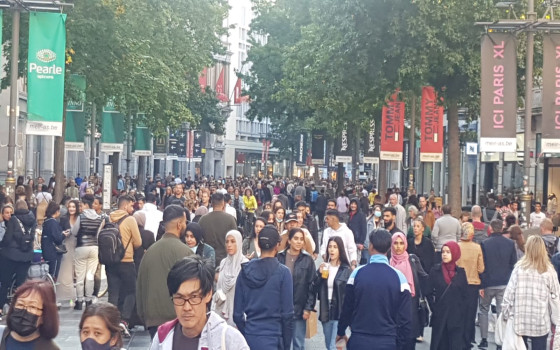
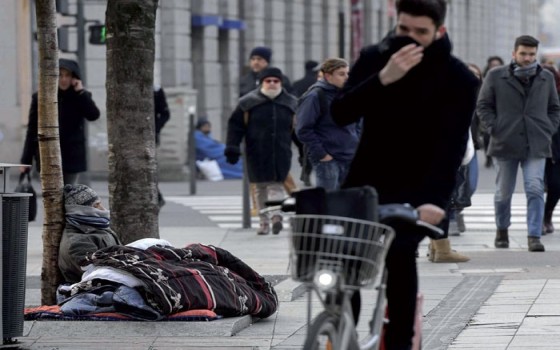
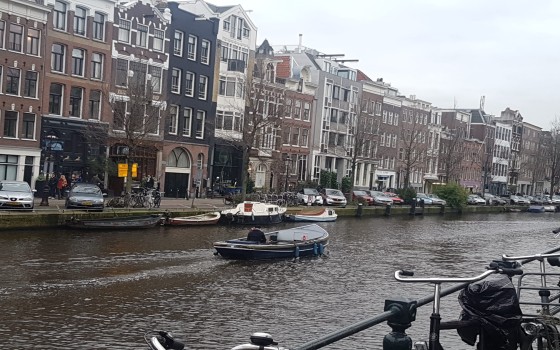
For the third consecutive year, Amsterdam ranks first among major cities in terms of the number of residents living in poverty. Compared to the national average, a significantly higher proportion of people in Amsterdam—double the national rate—lack sufficient funds to cover their basic needs. This finding comes from the latest poverty statistics released by Statistics Netherlands (CBS). According to the CBS definition, an individual is considered poor if, after paying fixed expenses (such as rent or mortgage, energy bills, and health insurance), they do not have enough money left to live on. In practical terms, this means individuals may no longer be able to afford breakfast or new shoes for their children. The poverty threshold is set at a disposable income of €1,640 per month for a single person, and €2,645 for a single-parent household. Based on this definition, 521,000 people in the Netherlands—3 percent of the population—were living in poverty. Furthermore, CBS estimates that an additional 1.1 million people in the Netherlands are "on the brink of poverty." In Amsterdam, however, the poverty rate is significantly higher, standing at 6.2 percent. At the national level, the rate has remained unchanged compared to 2024; however, in Amsterdam, it fell from 6.6 percent in 2023 to 6.3 percent in 2024, and subsequently to 6.2 percent in 2025. This decline is not a recent development; poverty across the Netherlands as a whole decreased between 2018 and 2023, driven by factors such as rising wages, pandemic-related support measures, and an energy allowance. In 2023, rents for low-income households were reduced, a change that continued to provide relief throughout 2024 and 2025. Nevertheless, Statistics Netherlands (CBS) has now observed a shift in this trend, attributing it primarily to the discontinuation of the energy allowance. Nationally, poverty began to rise again in 2024—though this is not the case in Amsterdam. The municipality of Tubbergen records the lowest poverty rate (0.9 percent), while the municipality of Vaals, in the province of Limburg, records the highest, at 6.6 percent. Among the major cities, Amsterdam fares the worst (6.2 percent), though the margins separating it from The Hague (5.9 percent) and Rotterdam (5.6 percent) are narrow. For years, Rotterdam held the title of the "poorest city," but Amsterdam took on this dubious distinction in 2024, coinciding with the implementation of a new measurement methodology. Marjolein Moorman, the former Deputy Mayor for Poverty Policy, previously called for a more nuanced perspective. In a letter to the City Council, she noted that the Municipality of Amsterdam invests heavily in poverty alleviation through various municipal programs—such as the provision of free bicycles, a laptop scheme, or the "City Card"—none of which are factored into standard poverty measurements. According to Moorman, these initiatives mean that not everyone with an income below the poverty line is necessarily living in actual poverty. Economist Peter Hein van Mulligen of Statistics Netherlands (CBS) explains: "We base our figures on income data reported to the tax authorities. Consequently, municipal programs are not included in our calculations. In such cases, an individual’s actual situation may be better than what the raw numbers suggest. While similar programs may exist in other municipalities, we do not have data on them, so we cannot quantify the extent of the difference they make." It is more meaningful to examine trends rather than focusing on precise decimal figures. One such trend is the growing proportion of employed individuals among those living below the poverty line; one-third of those in poverty are now employed, compared to no more than 20 percent prior to 2022. Van Mulligen clarifies: "This increase is likely because many poverty-alleviation measures reach individuals already known to the municipality—such as recipients of social assistance benefits—whereas working people living below the poverty line often remain 'invisible' to the municipal authorities." Independent workers represent a significant segment within this group. An economist notes: "Consider, for instance, those who deliver parcels or meals. They are often not employees of the companies for which they work; rather, they operate as independent contractors. Frequently, their income is not sufficiently high." Previous research has shown that these individuals do not always take advantage of the support programs to which they are entitled—a trend particularly evident in the city’s marginalized, impoverished, and vulnerable districts. These areas are home to many families of immigrant origin who face distinct economic and social hardships—specifically in the city’s southeastern, western, and eastern districts. Despite the efforts made by the municipality and local district councils to support initiatives and organizations dedicated to combating poverty, the situation has not improved; in fact, it has worsened due to staggering cost increases across various aspects of the social and economic lives of residents in these districts.



No Comments Found