

Hunger Hotspots: 16 Areas Across Countries Including Sudan, Yemen, Palestine, and Somalia

- Europe and Arabs
- Saturday , 28 November 2026 6:19 AM GMT
Rome/Geneva – Europe and the Arabs
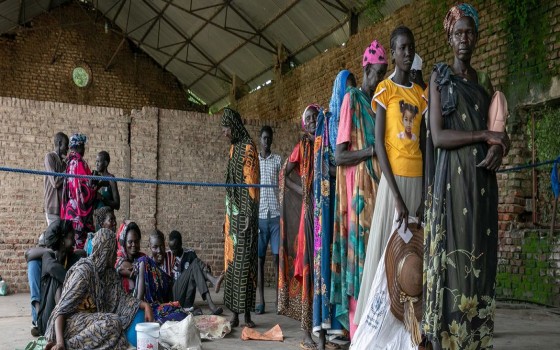
The Food and Agriculture Organization (FAO) and the World Food Programme (WFP) have confirmed that the El Niño phenomenon is exacerbating the drivers of food insecurity in the world’s most hunger-stricken regions. They warned that parts of Sudan and South Sudan face the risk of famine in the coming months.
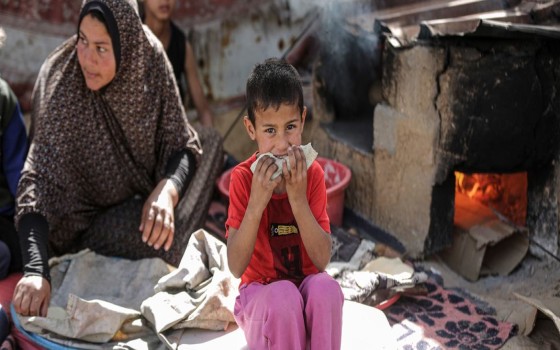
In their latest joint report, covering the period from December through May 2027, the two UN agencies identified 16 countries as "hunger hotspots." Among these, Sudan, South Sudan, Somalia, and parts of Nigeria and Yemen are the most concerning, according to the UN daily news bulletin received this Saturday morning.
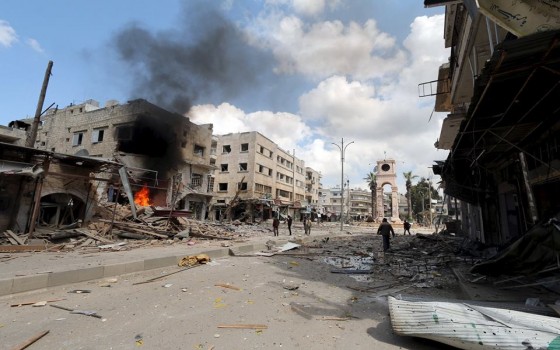
Speaking to reporters in Geneva via video link from Rome, Rein Paulsen, Director of the FAO Office of Emergencies and Resilience, explained that conflict and violence remain the primary drivers of hunger in most of these nations, compounded by economic pressures and disruptions affecting global trade and supply chains.
He noted that "challenges surrounding the Strait of Hormuz, the Black Sea, and the Red Sea are driving up the costs of agricultural inputs and other essential commodities, disproportionately harming the most vulnerable, food-insecure households."
A Significant Factor, But…
Paulsen added that El Niño is also a critical factor in the report’s projections, as it has already begun to trigger global repercussions that are impacting many of these hunger hotspots. However, he emphasized that this phenomenon cannot be viewed "in isolation; it is, in fact, an additional factor that exacerbates the repercussions of conflicts, violence, and other pressures."
He noted that the impacts of El Niño vary from one region to another. In Southern Africa, droughts and rising temperatures are affecting the agricultural season, while East Africa—particularly the Horn of Africa—faces the risk of severe flooding, which could "destroy crops, displace families, disrupt markets, and hinder our ability to deliver humanitarian aid."
Avoidable Scenarios
Poulsen stressed that these projected scenarios can be averted "if aid is provided in a timely manner—ensuring access to food, protecting crops and livestock, and safeguarding livelihoods."
He explained that the warning issued by the two UN agencies aims to "support families before they are forced to exhaust all their remaining resources or resort to emergency coping strategies just to survive."
"We know where the risks lie, and we have evidence to support this," he said. "Therefore, we must act before these risks escalate into disasters."
Continued Pressure on Supply Chains
Joining Poulsen was Jean-Martin Bauer, Director of Food Security Analysis at the World Food Programme, who highlighted "three bottlenecks" affecting the global economy—identifying them as key factors in the worsening hunger crisis within the countries mentioned in the report. He pointed out that events in the Strait of Hormuz, the Black Sea, and the Red Sea have had dire repercussions for shipping operations, insurance costs, fuel prices, energy and fertilizer markets, and—ultimately—food prices, making life increasingly difficult for millions of families around the world.
He emphasized that if pressures on global supply chains persist until the middle of next year, the program will face additional costs of up to $750 million. This would leave it unable to provide assistance to more than seven million of the 91 million people it aims to reach.
Bauer also noted that resources allocated to address food and nutrition issues in the five most concerning hunger hotspots have declined by 62% since 2022. He stressed that while full funding could buy more time, what is also required is guaranteed safe access, as well as "diplomatic support to end the conflicts that drive much of the hunger highlighted in this report."
It is worth noting that the report identifies four countries as being of grave concern: Afghanistan, the Democratic Republic of the Congo, Haiti, and Palestine. The report states that although food security in the Gaza Strip began to improve following a ceasefire in October 2025, these gains remain fragile, and acute food insecurity is expected to worsen in the West Bank.







No Comments Found