

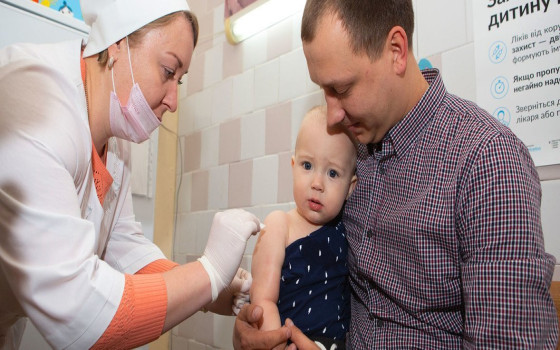
Measles cases surge globally as nearly 30 million children, particularly in conflict zones, remain unvaccinated

- Europe and Arabs
- Saturday , 29 November 2025 11:35 AM GMT
Geneva: Europe and the Arabs
Despite a 88% decrease in measles deaths since 2000, the disease claimed nearly 95,000 lives last year, mostly children. Outbreaks are accelerating globally as millions of children remain unvaccinated after years of disruptions related to the COVID-19 pandemic, according to the UN Daily News.
Dr. Kate O'Brien, Director of Immunization, Vaccines and Biologicals at the World Health Organization, said, "The measles virus remains one of the most infectious respiratory viruses. One person can infect up to 18 others. Many people think measles isn't serious, but it is, and it can be fatal. One in five children who contract it ends up in the hospital."
Last year, approximately 11 million people worldwide contracted the virus—an increase of nearly 800,000 since the pre-pandemic period. Most deaths occurred among children under five, with about 80% of those deaths occurring in Africa and the Eastern Mediterranean. Dr. O'Brien emphasized that "no child should suffer the consequences of measles. Two doses of the vaccine provide 95% protection. The tragedy is that children are not protected because the system isn't reaching them."
Measles cases have tripled since 2021.
Measles outbreaks continue to rise sharply. In 2024, 59 countries experienced large or devastating outbreaks—almost three times as many as in 2021—and a quarter of these countries had previously eliminated measles.
Only 84% of children globally received their first dose of the measles vaccine last year, but only 76% received the crucial second dose—leaving up to 30 million children without adequate protection.
Three-quarters of these children were in Africa and the Eastern Mediterranean, many of them in conflict-affected or highly mobile communities. “Measles knows no borders,” said Diana Chang-Blanc, head of the WHO’s core immunization program. “No country will be safe until every child is fully immunized, wherever they are.”
Why are cases on the rise?
According to the WHO, three factors are contributing to the increase in measles cases:
The pandemic-induced slowdown, as health workers were diverted to respond to COVID-19;
The large number of unvaccinated children, now concentrated in fragile and conflict-affected settings; and
Weak routine immunization systems, even in strong health systems.
Misinformation about vaccines and limited access
Dr. O’Brien also addressed vaccine misinformation, noting that false claims—especially online—undermine trust. However, she pointed out that access gaps, not hesitancy, remain the biggest obstacle to stopping measles.
“The biggest barrier is access, not hesitancy,” she said. “Parents everywhere want the best for their children. What they need is reliable information and a health system that can reach them.” However, she called on political, community, and religious leaders to "share accurate, evidence-based information," noting that trust is "the beginning, middle, and end of successful immunization programs."
An opportunity to get back on track: More than 11 million children have already been vaccinated through the global "Great Compensation" campaign, which runs until 2025. But the WHO indicated that countries need stronger surveillance, a faster response to disease outbreaks, and renewed political commitment to achieve the goals of the 2030 Immunization Agenda.





No Comments Found