

War's Aftermath: 32 Million People Worldwide Could Be Pushed into Poverty by Escalation in the Middle East

- Europe and Arabs
- Tuesday , 14 April 2026 6:52 AM GMT
New York: Europe and the Arabs
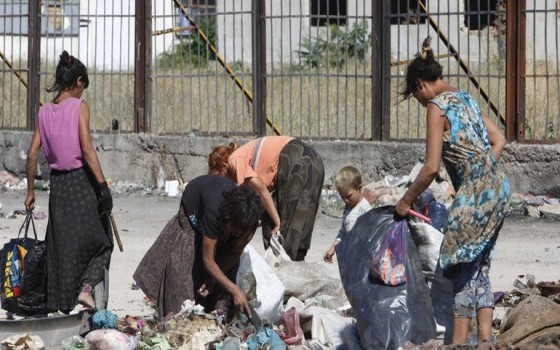
The United Nations Development Programme (UNDP) said that the ongoing military escalation in the Middle East is putting tens of millions of people at risk of falling into poverty across 162 countries.
In its latest policy brief, published Monday, the UNDP explained that while the impacts are concentrated in countries directly affected by the conflict and those dependent on energy imports, the brief's findings indicate severe and long-lasting damage that could be inflicted on poor countries far removed from the battlefields.
The brief, titled "Military Escalation in the Middle East: Setbacks to Global Development and Policy Response Options," stated that as the crisis enters its sixth week – despite the declared ceasefire – its effects are shifting from an "acute" to a "persistent" phase. This was reported in the UN Daily News, a copy of which we received on Tuesday.
The policy brief revealed that the longer this phase continues, the greater the risk of accelerated descent into poverty in fragile countries, adding that, in a worst-case scenario, an additional 32 million people could be pushed into poverty. He also noted that countries in the Gulf region, Asia, sub-Saharan Africa, and small island developing states are exceptionally vulnerable.
Impossible Choices
Alexander de Crowe, UNDP Administrator, said that this new brief shows “that the shock of escalating conflict in the Middle East is not only felt by countries directly affected, but is disproportionately borne by countries that lack the fiscal space to absorb rising energy and food prices.”
He added that for these countries, the crisis presents impossible trade-offs between stabilizing prices today and funding health, education, and job creation tomorrow, stressing that “this is unacceptable and avoidable; early policy action is essential.”
Proposed Solutions
The program outlined a range of policy options that countries could adopt to help mitigate the impact of the conflict under each of the projected scenarios, including:
Policymakers should consider providing temporary, targeted cash transfers to protect poor and vulnerable households as a first line of defense. According to the scenario, the cash transfers needed for this measure to be effective could reach $6 billion.
Providing temporary, targeted subsidies or vouchers for specific consumption amounts of electricity or cooking gas. The report warns against blanket energy subsidies—common in developing economies—which disproportionately favor wealthier households at the expense of the most vulnerable and are financially unsustainable in the long term.
The war in the Middle East, and the resulting near-total halt to shipping in the Strait of Hormuz, have exacerbated the energy crisis facing developing countries in Africa and South Asia, which rely heavily on imports of liquefied natural gas, food, and fertilizers.
With Brent crude trading above $100 a barrel, many workers and families have reverted to using oil and coal, raising concerns about lasting environmental damage. Meanwhile, several countries have already announced fuel rationing programs and a shift to online meetings. More than a month after the start of the Israeli-American bombing campaign against Iran, and the subsequent Iranian attacks that ignited a wider regional conflict, the near-immediate disruption of oil tanker traffic in the vital Gulf waterway halted oil shipments worldwide. This was followed by disruptions to shipments of natural gas, coal, transportation services, food, and fertilizers.
In this context, Junior Davis, head of the Policy Analysis and Research Branch in the Africa, Least Developed Countries and Special Programmes Division at the United Nations Conference on Trade and Development (UNCTAD), said: “Only a small group of least developed countries are net energy exporters: South Sudan, Angola, Chad, Mozambique, Laos, Myanmar, and Yemen.”
The vast majority of these countries are "net energy importers," according to Mr. Davis, and include: Niger, Zambia, Rwanda, Ethiopia, Tanzania, Madagascar, Togo, Sudan, Uganda, Nepal, Eritrea, Benin, Bangladesh, Cambodia, and Senegal.


No Comments Found