

United Nations: Migration is not a crisis in itself, but rather the crisis lies in the "collective failure of the world to manage it jointly in order to create opportunities, promote growth, and support development."

- Europe and Arabs
- Friday , 8 May 2026 5:18 AM GMT
New York: Europe and the Arabs
UN Secretary-General António Guterres stated that migration is not a crisis in itself, but rather the crisis lies in "the collective failure of the world to manage it together." He emphasized the need for cross-border cooperation across all segments of society, adding that "no country can manage migration alone."
This came in his address on Thursday at the Second Global Forum on Migration Review, held at UN Headquarters in New York. The forum aims to review progress made over the past four years, at all levels, in implementing the Global Compact for Safe, Orderly and Regular Migration, adopted in 2018, according to the UN Daily News.
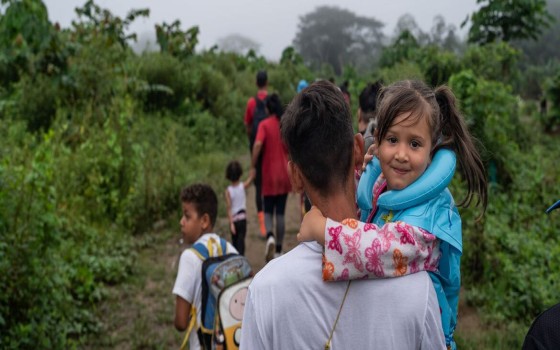
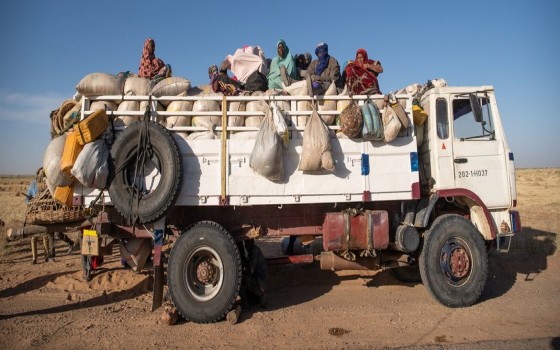
Mr. Guterres affirmed that migration is "an integral part of the human story," contributing to building societies, driving economic growth, and stimulating innovation worldwide. However, migration is currently being distorted by fear and misinformation, with migrants being scapegoated for political gain, dehumanized in public discourse, and deprived of their rights and dignity.
Fulfilling the Global Compact
The Secretary-General stated that the Global Compact represents a milestone in multilateral cooperation on migration and highlighted six ways to act decisively and fulfill its commitments:
Prioritizing human rights: “Migration governance must be based on dignity, humanity, and rights.”
Making migration safer: by improving early warning systems, providing assistance to migrants in distress, and ensuring that returns—when they occur—are safe and respect human dignity.
Combating smugglers and human traffickers: Dismantling transnational criminal networks that exploit people’s desperation and profit from death is not only a security imperative but also a moral one. Creating real and viable pathways for regular migration: “When pathways are predictable, fair, and accessible, everyone benefits.”
Expanding opportunities in countries of origin: By investing widely in education, skills development, and decent work, especially for young people, “migration must be a genuine choice.”
Investing in cooperation: The UN Migration Network and the Multi-Partner Trust Fund for Migration are important and effective tools in this regard.
Guterres said the forum provides an opportunity to accelerate action on safe, orderly, and regular migration as a vital priority, through concrete commitments, peer-to-peer learning, and the setting of measurable targets.
He also called on participants to demonstrate that multilateral cooperation delivers real results “at borders and in communities, in schools and labor markets, in consulates and courtrooms, and above all, in the lives of migrants and in the communities they help to strengthen.” “A Triple Win”
General Assembly President Annalena Baerbock said that discussions on migration—often highly politicized—often treat the issue as a “new phenomenon.”
However, she emphasized that migration is “an unavoidable human reality,” adding that “almost all of us, or our families, have been migrants at some point.” She noted that every country today is either a country of origin, transit, or destination, “and often all three at once.”
Baerbock stated that the Global Compact provides a common framework for multilateral cooperation and engagement, based on international law and human rights, with full respect for national sovereignty.
She acknowledged the tangible progress made in this regard since the first Review Forum four years ago, “but much remains to be done to realize the full potential of this Compact and make migration a triple win: a win for migrants, a win for destination countries, and a win for countries of origin or transit.” She said that without migrants, “almost no country could prosper, particularly industrialized nations with declining birth rates that desperately need migrant workers.” But she also stressed that ignoring the social challenges and pressures associated with migration risks turning it into “a source of division and toxic polarization.”
Rebuilding Trust
As head of the UN Migration Network, the Director General of the International Organization for Migration (IOM), Amy Pope, shared the story of a young Bangladeshi welder she had met in Libya.
This young man, who was awaiting voluntary return to Bangladesh with IOM support, had spent years of his family’s savings trying to find decent work far from home, only to fall victim to smugglers who promised to take him to Europe.
He was one of the few survivors after their overcrowded boat sank off the Libyan coast. The coast guard found him after he had spent 30 hours in the water, suffering from “dehydration, shock, and complete collapse.” Ms. Pope said: “A young welder with skills the world needs should not have to risk his life at sea in search of decent work. His family should not have to risk everything to pay for the journey. And smugglers should not profit from this young man’s desperation.”
The Director-General added that migration, when properly managed, creates opportunities, fosters growth, and supports development, but achieving this requires cross-border, cross-sectoral, and cross-institutional cooperation.
She noted that the forum is taking place at a time when multilateral cooperation is under real strain, saying, “At the heart of this challenge is trust: trust between countries, and trust that migration can be managed in an orderly, humane, and mutually beneficial way. When that trust breaks down, cooperation unravels, and it is the people who pay the price.”
Bobb stressed that the forum should not simply assess the current situation, but should work to rebuild trust that cooperation can still deliver results.
She told participants that the UN Migration Network stands ready to support Member States through its national and regional networks, the exchange of expertise, and financing mechanisms such as the Multi-Partner Trust Fund for Migration, with the aim of translating commitments into practical action.
But she emphasized that ultimately, success depends on “the choices you make, as governments, communities, and employers.” She concluded by saying, "The next young welder I meet should be on a safe and steady path towards decent work, not clinging to life in the open sea. That is the opportunity before us here and now, let's seize it together."



No Comments Found