

Crises and Wars in Arab Countries: Hunger Threatens Millions in Sudan, Children Pay the Highest Price in Palestine and Lebanon, and an Agreement Ends the Detention of Hundreds in Yemen

- Europe and Arabs
- Friday , 15 May 2026 5:13 AM GMT
New York – Brussels: Europe and the Arabs
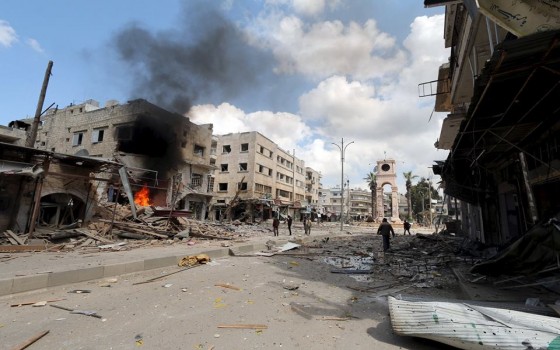
The United Nations daily news bulletin focused on the repercussions of the crises and wars plaguing Arab countries, beginning with Lebanon. UNICEF warned that children in Lebanon continue to pay the heaviest price for the ongoing violence, displacement, and exposure to traumatic events. The bulletin cited reports indicating that at least 59 children were killed or injured in the past seven days alone, despite the ceasefire agreement of April 17.
In a statement, the organization noted that among those killed were two children from the same family, along with their mother, who were killed on Wednesday morning in an airstrike that targeted their car. UNICEF stated that these figures serve as a stark reminder of the grave violations and ongoing dangers that children continue to face.
Citing the Lebanese Ministry of Public Health, UNICEF reported that at least 23 children have been killed and 93 others injured since the ceasefire came into effect. This brings the total number of child casualties since March 2 to 200 killed and 806 injured – an average of approximately 14 children killed or injured every day. “Children are being killed and injured at a time when they should be returning to school, playing with their friends, and recovering from months of fear and turmoil,” said Edward Beigbeder, UNICEF Regional Director for the Middle East and North Africa.
“Just a month ago, an agreement was reached to silence the guns and end the violence, but the reality is quite the opposite. Ongoing attacks are killing and injuring children, exacerbating their trauma, and leaving devastating, potentially lifelong scars.”
UNICEF called on all parties to protect children, abide by international humanitarian law, and take all necessary measures to ensure the ceasefire holds.
Meanwhile, the United Nations expressed hope that the latest round of direct talks between Lebanon and Israel, currently underway in Washington, will lead to an effective and lasting ceasefire and pave the way for a lasting peace. Meanwhile, the United Nations Interim Force in Lebanon (UNIFIL) reported that it continues to monitor significant aerial and military activity throughout its area of operations, including several Israeli airstrikes on Wednesday in areas within its western and eastern sectors.
UNIFIL also reported observing approximately 455 incidents of gunfire attributed to Israeli forces and six projectile trajectories attributed to Lebanese non-state actors, including Hezbollah. UNIFIL also recorded three interceptions of projectiles over its area of operations.
During the daily press briefing, UN Deputy Spokesperson Farhan Haq reiterated the call on all parties to exercise maximum restraint, ensure the protection of civilians and humanitarian personnel, and fully comply with their obligations under international humanitarian law.
The UN Resident and Humanitarian Coordinator for the Occupied Palestinian Territory, Ramiz Alekperov, concluded a two-day visit to the Gaza Strip on Thursday.
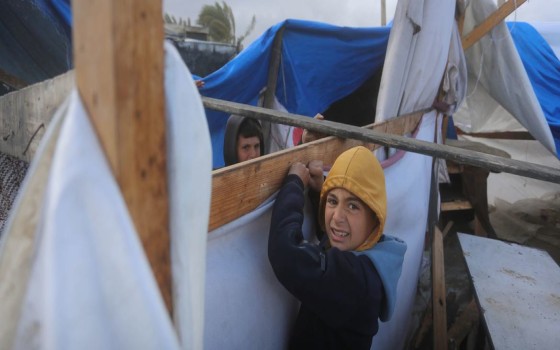
Alekperov visited a community kitchen that provides thousands of meals daily and observed how materials are being recycled to help families store food safely, particularly in light of the pest and rodent problem. At the daily press briefing, Farhan Haq, Deputy Spokesperson for the United Nations, said that humanitarian partners have reported an increasing number of skin infections and other illnesses among displaced families, resulting from rats and insects entering their tents or contaminating their food.
The UN and its partners are doing everything they can to improve sanitation and pest control services. However, providing adequate and more sustainable responses requires restoring access to the two sanitary landfills in Gaza near the border area and allowing the entry of rubble removal equipment, along with other vital materials and equipment.
Dozens of Palestinians line up daily around water trucks in the Gaza Strip, trying to obtain limited quantities of drinking water, as the water crisis worsens with the continued deterioration of the humanitarian situation.
East of Khan Younis, in the southern Gaza Strip, near what is known as the Yellow Line, workers at a water well continue to fill tankers that transport water to displacement camps, amidst security risks and increasing difficulties in accessing the eastern areas. Reports at the end of last month indicated that an NGO worker was killed and four others were injured in an Israeli airstrike on a water well in Gaza City. Two truck drivers contracted by UNICEF were also killed.
Children, women, and men gather around trucks carrying plastic containers to collect drinking water, as residents say access to water has become less regular than in previous months.
Meanwhile, humanitarian workers continue to expand education services, with more than 600 temporary learning sites now operating, a 27 percent increase since the end of March. These sites serve approximately 60 percent of children across Gaza.
However, most students receive only an average of three hours of instruction per day, three days a week. Students urgently need more supplies, the import of which requires permits from the authorities, as well as funding.
In the West Bank, settler violence continues. A child was killed on Wednesday in an incident involving settlers who stole approximately 700 head of livestock in the Ramallah area, displacing at least two families from their homes.
The Office for the Coordination of Humanitarian Affairs (OCHA) reported that between May 5 and 11, some 70 Palestinians, including 10 children, were injured by Israeli forces or settlers. Most of these injuries occurred during Israeli search and raid operations, as well as during settler attacks.
Since the beginning of the year, the Office for the Coordination of Humanitarian Affairs (OCHA) has documented more than 800 attacks by settlers, resulting in casualties or property damage in 220 communities, averaging six incidents per day.
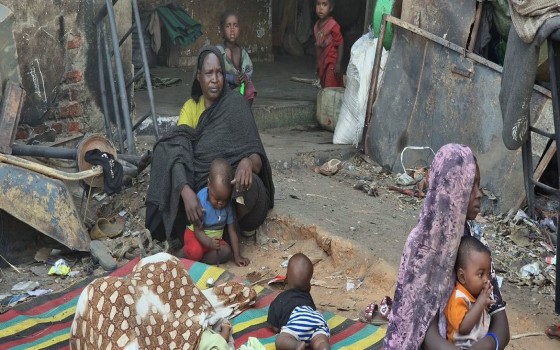
In Sudan, some 19.5 million people – about 41 percent of the country’s total population – are facing high levels of acute food insecurity, and the situation is expected to worsen during the upcoming lean season, according to a new Integrated Food Security Phase Classification (IPC) analysis.
The IPC report confirms that these findings underscore the devastating humanitarian impact of the ongoing conflict in Sudan, which has displaced millions, crippled health services, and severely restricted humanitarian access across large parts of the country. The analysis, which covers the period from February to May 2026, reveals that some 135,000 people are currently experiencing Phase 5 conditions (catastrophe or famine). More than 5 million people were classified as being in Phase 4 (Emergency), while an additional 14 million were classified as being in Phase 3 (Crisis).
The report stated that Sudan remains one of the world’s most severe humanitarian crises, warning that the situation is likely to worsen during the lean season, which runs from June to September.
Worst-case scenario
Although no area in Sudan is currently officially classified as experiencing famine, the Phase 4 classification body identified 14 areas in North Darfur, South Darfur, and South Kordofan states as being at risk of famine under a “plausible worst-case scenario,” characterized by an escalation of conflict and further restrictions on humanitarian access and the movement of goods and people.
In Yemen, under UN auspices, the parties reached an agreement today to release more than 1,600 detainees related to the conflict, an unprecedented number in the history of the current Yemeni conflict. This achievement comes after 14 weeks of intensive negotiations held under UN auspices in the Jordanian capital, Amman.
UN Special Envoy to Yemen, Hans Grundberg, said, "This is a moment of immense relief for thousands of Yemenis who have endured the agonizing wait for the return of their loved ones."
He added that this achievement is clear evidence of what sustained and serious negotiations can accomplish. It proves that when parties choose to engage in dialogue, they can address the pressing priorities of Yemeni families and build the necessary trust for a broader peace process.
He commended the parties for their good faith and dedication to these negotiations over several weeks, "despite a period marked by exceptional regional complexities." He encouraged them to build on today's results and carry out further releases, including unilateral ones. Thursday’s agreement builds on a previous round of negotiations held in Muscat, Oman, in December 2025.
As for next steps, the parties also agreed to meet again to discuss further releases, conduct joint visits to each other’s detention facilities, and ensure access to all detainees.
The UN envoy expressed his deep solidarity with all those arbitrarily detained and their families, including “UN, NGO, civil society, and diplomatic staff arbitrarily detained by Ansar Allah.”
He affirmed that the UN continues its unwavering efforts to secure their release. He expressed hope that the positive momentum achieved today will contribute to advancing efforts to free them.






No Comments Found