

High housing costs, the effects of climate change, and conflicts leave millions without adequate shelter. The 13th World Urban Forum kicks off in Baku on Sunday. 70% of the world's population is projected to live in cities by 2050.

- Europe and Arabs
- Saturday , 16 May 2026 6:2 AM GMT
Baku-New York: Europe and the Arabs
Exorbitant housing costs, the effects of climate change, and conflicts are leaving millions of people without adequate shelter. What can be done? As the 13th UN World Urban Forum opens on Sunday in Baku, Azerbaijan, participants will discuss solutions to the worsening global housing crisis. According to the UN Daily News on Saturday, the conference, organized by UN-Habitat in cooperation with Azerbaijan, will bring together world leaders, mayors, urban planning experts, and representatives from governments, the private sector, civil society, and international organizations.
An ambitious goal: Housing the world
The forum's theme is a call to action: "Housing the world: safe and resilient cities and communities." According to the UN, nearly 2.8 billion people today live in inadequate housing conditions, while more than 300 million have no shelter at all.
With nearly 70% of the world's population projected to live in cities by 2050, the crisis is likely to worsen. In an interview with the UN's video section, Annacledia Rosbach, Executive Director of the UN Human Settlements Programme (UN-Habitat), described the situation as a "global housing crisis."
She added, "This crisis has always been more severe and structural in the Global South, but it is now affecting the Global North as well."
According to Ms. Rosbach, the rising cost of living has become a major problem, while international crises, including the war in the Middle East and its associated risks to global supply chains, are exacerbating the situation.
More than just a house
The crisis goes far beyond buildings. Housing is increasingly seen as a cornerstone of human dignity, urban resilience, and even global stability.
The UN warns that the effects of the crisis extend to all aspects of life, straining healthcare and education systems, weakening economies, and disrupting the social fabric. Francine Beckapp, Deputy Administrator of the United Nations Development Programme (UNDP) and head of the UNDP delegation to the 13th World Urban Forum, said the program hopes to use the forum in Baku to strengthen partnerships aimed at supporting integrated urban solutions that combine housing, climate resilience, governance, and local finance.
Ms. Beckapp said, “The global housing crisis we are experiencing is not primarily a construction problem. We need to move beyond simply looking at building houses and buildings, and consider the urban environment, and view housing as a complex issue.”
Informal Settlements: Challenge and Opportunity
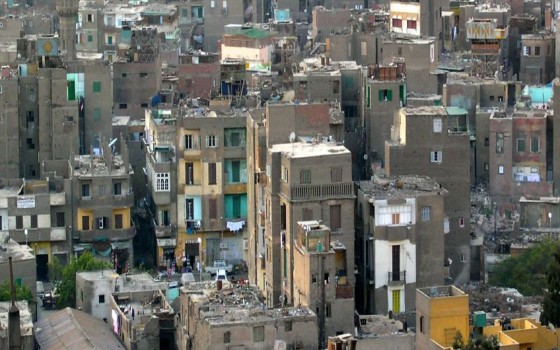
One of the forum’s main themes will be the rapid growth of informal settlements, or unplanned areas where residents lack legal land rights and live in precarious housing.
Today, approximately 1.1 billion people live in slums, and this number is projected to increase by another 2 billion in the coming decades. Children are among the most vulnerable, with an estimated 350 to 500 million children living in squalid conditions. At the same time, the UN Human Settlements Programme (UN-Habitat) is calling for a shift away from viewing informal settlements solely as a problem. In many cases, these settlements are the only means by which millions of people can find shelter in cities.
Post-Conflict Reconstruction
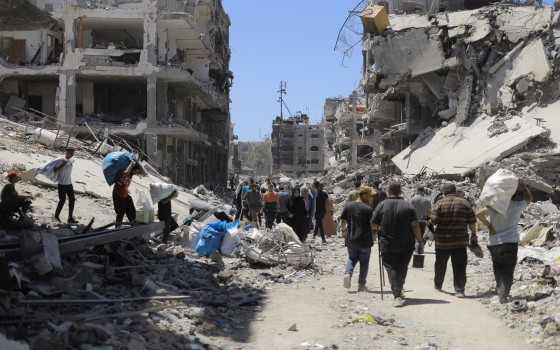
Another issue that will come to the fore, amid ongoing conflicts and crises, is how cities recover after wars and disasters. By the end of 2022, more than 123 million people had been forcibly displaced worldwide, according to the UN, with more than 60% of them seeking refuge in urban areas.
Losing a home is more than just losing a roof over one’s head; it can mean the tearing apart of communities, the loss of livelihoods, and a profound sense of insecurity.
In Baku, the focus will not only be on providing shelter but also on rebuilding lives, from rehabilitating neighborhoods and creating jobs to helping communities return to normalcy.
Climate Shocks
Another key focus of the discussion will be climate issues. Experts warn that the climate crisis is becoming a major driver of the global housing crisis. Extreme weather events, including floods, storms, and wildfires, displaced more than 20 million people in 2023 alone.
Climate change is estimated to destroy 167 million homes worldwide by 2040.
At the same time, buildings themselves remain major sources of emissions: the construction sector accounts for 34% of global energy-related CO2 emissions. Therefore, the forum will seek answers to two interconnected questions: How do we build more housing while avoiding exacerbating the climate crisis?
“The theme of the forum is housing,” said Ms. Rossbach. “We will explore housing from multiple perspectives, including the informal sector, finance, sustainability, and resilience.”
She added, “We must be fully aware today of the impact of climate change and the pressure it places on housing systems. What we build, how we build it, and where we build it all have implications for natural resources, climate resilience, and the ability of communities to withstand shocks and disasters.” She noted that the discussions in Baku would also focus on reconstruction and recovery in countries affected by wars and disasters.
Ms. Rossbach added, "There is an urgent need not only to provide housing, but also to rebuild communities in inclusive, resilient, and sustainable ways."
A Joint Effort
One of the key themes running through this forum is the need for collective action—mobilizing everyone, from governments and local authorities to universities and grassroots communities.
“The World Urban Forum is our largest platform for bringing stakeholders together,” said Ms. Rossbach. “We hope to see a strong and diverse community converge in Baku and emerge from the 13th session of the Forum with a more robust global alliance to address the housing crisis.”
She added, “We cannot solve the global housing crisis alone; we need governments, local authorities, civil society, academia, local communities, and the private sector to work together.”
The New Urban Agenda: 10 Years On
This year’s Baku Forum will be a significant political milestone, as it marks the 10th anniversary of the adoption of the New Urban Agenda in 2016.
Furthermore, the UN General Assembly will conduct a mid-term review in July to assess progress in implementing the Agenda. The discussions in Baku are expected to help determine the progress the world has made toward building safer, more sustainable, and more affordable cities.
About the World Urban Forum
The World Urban Forum was established by a resolution of the United Nations General Assembly in 2001 and is organized by UN-Habitat, the United Nations Human Settlements Programme.
Holded biennially, the Forum is the leading international conference focused on sustainable urbanization and the future of cities.
It brings together governments, urban planners, researchers, civil society groups, and private sector representatives to discuss how rapid urbanization impacts societies, economies, infrastructure, and the climate.
Since its first session in Nairobi in 2002, the Forum has been hosted by various cities around the world. More than 27,000 people are expected to participate in the Baku Forum.




No Comments Found