

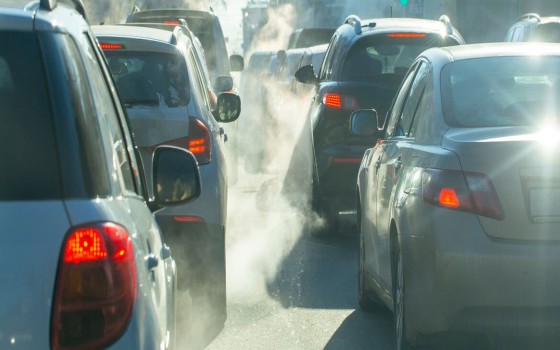
Climate change is an escalating health emergency, while the ocean’s capacity to mitigate it is weakening. Current efforts remain insufficient, and the world’s 100 largest oil and gas companies are planning to increase their fossil fuel production.

- Europe and Arabs
- Thursday , 29 October 2026 6:37 AM GMT
New York – Europe and the Arabs
The health impacts of climate change are accelerating. Heat-related deaths, droughts, and other climate-related risks are increasing at a faster pace than they were a decade ago—when world leaders adopted the Paris Agreement—even though investments in clean energy and climate action have already begun to yield health benefits.
This is according to the latest report from the *Lancet Countdown* initiative, in collaboration with the World Health Organization (WHO). The report estimates that a record number of heat-related deaths occurred in 2023—reaching 710,000—with more than 70% of these attributed to human-induced climate change, as noted in the United Nations’ daily news bulletin, a copy of which was received on Thursday morning.
Furthermore, the report indicates that exposure to heat resulted in the loss of 573 billion potential working hours in 2023, leading to income losses totaling $1.07 trillion. Meanwhile, the global land area affected by severe drought has expanded "at a rate approximately 700% faster than the rate observed between 2006 and 2015," with drought conditions impacting 51.8% of the Earth's land surface for at least one month during 2025.
The report warns that current efforts to mitigate climate change remain insufficient, noting that the world’s 100 largest oil and gas companies plan to increase their fossil fuel production by 2040 to a level "150% higher than what is compatible with limiting global warming to 1.5°C" above pre-industrial temperature averages.
The authors of the report emphasize that these findings—along with other concerning indicators—highlight the urgent need to formally recognize climate change as a global health emergency. Such recognition would help drive more robust, health-focused climate action ahead of the UN Climate Change Conference (COP31) in Antalya, Turkey.
Conversely, the report points to significant progress, including:
Global investment in clean energy reaching a record high of $2.1 trillion in 2025.
A 2.3% growth in clean energy sector jobs in 2024, with the number of such positions now nearly double the number of direct jobs in the fossil fuel sector. Improved air quality has contributed to preventing an estimated 323,000 deaths annually across 70 countries that experienced a reduction in air pollution linked to fossil fuels.
The number of national laws addressing the intersection of climate change and health has increased nearly 50-fold since 2000, with the majority of this growth occurring after 2016—following the adoption of the Paris Agreement.
It is worth noting that the report—prepared by researchers and institutions from around the world, led by University College London (UCL)—analyzes global trends through 54 indicators that link climate change to health.
Declining Ocean Carbon-Absorption Capacity
In a related development, a report issued by the United Nations Environment Programme (UNEP), in collaboration with the secretariat of the UN Framework Convention on Climate Change (UNFCCC), reveals that climate change has already reduced the ocean’s capacity to absorb carbon by approximately 6%.
Speaking to UN News, Sarah Traerup, the report’s lead author, noted that the oceans "have long provided us with an immense climate service, but this service is now coming under increasing pressure."
Oceans absorb about 30% of carbon dioxide emissions—including those generated by human activity—as well as 90% of the excess heat trapped by greenhouse gases. However, rising temperatures, combined with shifts in ocean chemistry, circulation patterns, and ecosystems, are weakening this capacity, resulting in more carbon dioxide remaining in the atmosphere. Traerup warned that this process "could certainly accelerate" in the near future.
Bridging the knowledge gap
A key challenge is the lack of reliable data on ocean monitoring—particularly in the Southern and Indian Oceans, the Arctic region, and many coastal areas.
Consequently, the report calls for strengthening what it terms "ocean carbon intelligence"—the use of science, technology, data, and local knowledge to better understand and manage ocean carbon systems.
"At present," Traerup explained, "we do not have comprehensive information about the oceans; and what we do not know, we cannot manage or protect."
The report highlights both the opportunities and limitations associated with ocean-based climate technologies, including the restoration of "blue carbon" ecosystems—such as mangroves, seagrasses, and salt marshes—as well as emerging methods for removing carbon dioxide from the marine environment. It also emphasizes the need to advance ocean-monitoring technologies, including observation systems, sensors, data frameworks, and analytical models.
However, Traerup cautioned against viewing ocean-based technologies as "shortcuts," stressing that they must complement—not replace—efforts to reduce emissions and protect ecosystems.





No Comments Found