

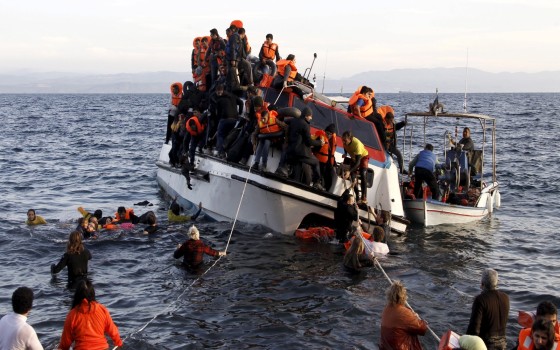
More than 300 million migrants—half of whom are women and girls—are at risk due to misinformation and the misuse of artificial intelligence.

- Europe and Arabs
- Wednesday , 4 November 2026 8:12 AM GMT
Geneva – Europe and the Arabs
Amy Pope, Director General of the International Organization for Migration (IOM), has warned that the rapid spread of misinformation regarding migration—increasingly amplified by artificial intelligence—is transforming concern into suspicion and turning migrants into targets. This comes at a time when public trust in how migration is managed is under growing pressure worldwide, according to the United Nations daily news bulletin, a copy of which was received on Wednesday morning.
Speaking at the opening of the "International Dialogue on Migration" in Geneva the day before yesterday, Pope noted that economic uncertainty, conflicts, and climate-related pressures are posing difficult challenges for governments and societies alike.
"People’s concerns are real, and we must take them seriously," she stated. "We must also be honest about the shortcomings in our systems. Facts and figures alone will not be enough to restore public trust. Institutions must listen and take action—even when the opinions they hear are uncomfortable."
Misinformation Deepens Polarization
The organization warned that false and misleading narratives about migrants—spread via social media and generative artificial intelligence—are deepening polarization and eroding trust within societies.
As trust diminishes, governments face mounting public resistance and a reduced capacity for cooperation, leaving migrants exposed to greater risks during their journeys. This occurs at a time when development funding is in decline and mechanisms for international cooperation are under severe strain. More than 304 million people live outside their countries of birth, including 168 million migrant workers. Women and girls account for nearly half of all international migrants, and many face heightened risks of discrimination, abuse, and exploitation.
Remittances sent by migrants to their home countries reach approximately one billion people—roughly one in every eight people globally—and are used to cover the costs of food, education, and healthcare.
Three Areas for Action
The Director-General of the International Organization for Migration (IOM) has called for action in three key areas:
First, joint planning among countries along the same migration routes to expand regular pathways, strengthen protection, manage borders humanely, and support dignified returns.
Second, early investment in communities affected by recurring floods and crop failure, enabling people to remain where they are whenever possible, and to move safely when they are compelled to do so.
Third, placing reliable data and the perspectives of affected individuals at the heart of decision-making, while utilizing technology that protects personal privacy and prevents bias.
"Trust is built step by step," said Pope. "Every agreement we honor and every individual we treat fairly contributes to strengthening cooperation."
Upcoming International Milestones
This warning comes at a critical juncture, following a gathering of a record number of states and stakeholders at the International Migration Review Forum in May, where they reaffirmed their commitment to safe, orderly, and regular migration. In July 2027, the United Nations will review global progress toward achieving the Sustainable Development Goal (SDG) targets related to the well-managed governance of migration. This will be followed by the "SDG Summit" in September 2027, which will mark the beginning of discussions on the post-2030 Agenda.
The International Dialogue on Migration—the organization’s primary forum for policy discussions on migration—is celebrating its 25th anniversary. It brings together governments, UN agencies, representatives from the private sector and local authorities, researchers, and young people.
The outcomes of this dialogue will contribute to the work of the International Organization for Migration (IOM) Council in December, which will host a high-level panel discussion on "Building Political Trust for Migration Governance."



No Comments Found