

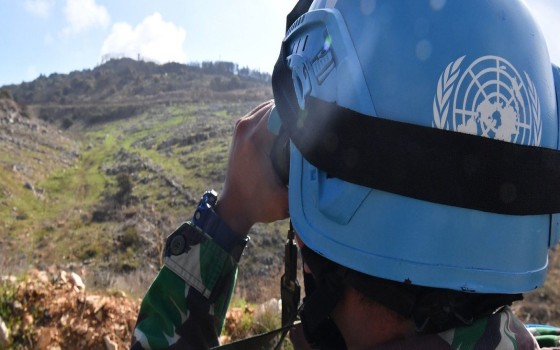
UN Under-Secretary-General for Peacekeeping Operations: The end of the MINURSO mandate in Western Sahara came as a surprise; UNIFIL’s mission in southern Lebanon continues, and a report on our mission in Sudan is expected today.

- Europe and Arabs
- Thursday , 5 November 2026 6:24 AM GMT
New York: Europe and the Arabs
Under-Secretary-General for Peacekeeping Operations Jean-Pierre Lacroix affirmed that the United Nations Interim Force in Lebanon (UNIFIL) continues to carry out its duties, implement its mandate, monitor developments within its area of operations, and report any violations.
Lacroix spoke to reporters regarding his recent tour of the Middle East, the status of the United Nations Mission for the Referendum in Western Sahara (MINURSO), and the operations of the United Nations Interim Security Force for Abyei (UNISFA). He is scheduled to brief the Security Council today, Thursday, on the mission’s work in Abyei, according to the UN’s daily news bulletin, a copy of which was received on Thursday morning.
Conclusion of the MINURSO Mandate
Regarding the expiration of the mandate of the United Nations Mission for the Referendum in Western Sahara (MINURSO) on October 31, the UN official stated, "This development came somewhat unexpectedly; however, we are working very closely with the UN Department of Operational Support—which is currently taking the lead—to ensure that the liquidation process is carried out in an orderly manner."
He reiterated his deep gratitude to all military and civilian personnel who served with MINURSO, often under extremely harsh conditions and in very remote locations.
He further echoed the Secretary-General’s call for all concerned parties to exercise the utmost restraint and to refrain from any actions that could exacerbate tensions or undermine regional stability. Regarding UNIFIL, Lacroix stated that the UN mission’s peacekeepers "continue to maintain channels of communication and coordination to prevent clashes between the parties involved, and they facilitate the delivery of humanitarian aid to southern Lebanon—a task of critical importance."
He noted that they are awaiting guidance from the Security Council on the next steps following the expiration of the mission’s mandate on December 31, recalling proposals previously put forward by the UN Secretary-General concerning the UN’s presence in Lebanon after the conclusion of UNIFIL’s mission.
He also spoke of his meetings with Lebanese officials, during which they discussed concerns regarding what might occur in the absence of a third party between the Lebanese Armed Forces and Israeli forces, as well as the implications of having no monitoring and reporting operations along the Blue Line—the demarcation line between Lebanon and Israel.
"We aspire to a successful political process, with UN Security Council Resolution 1701 serving as the compass," Lacroix said. "This process should create the conditions for the UN to continue supporting stability and the well-being of the Lebanese people, ultimately leading to a situation where the security concerns of both Lebanon and Israel are fully addressed."
The role of UNDOF gains greater significance
Regarding his visit to Syria, where he met with the leadership of the United Nations Disengagement Observer Force (UNDOF), Lacroix remarked that, given the current circumstances in the mission’s area of operations, its role in coordination and disengagement has become increasingly important.
He emphasized that the mission maintains regular contact with the civilian population on the ground—people who are bearing the brunt of the impact caused by the presence of Israeli forces in the region. Lacroix stated: "On several occasions, through these coordination efforts, we have succeeded in securing the release of detained individuals, as well as the recovery of property. While we have not achieved a 100% success rate, this is an accomplishment we can be proud of."
He reiterated a point from the Secretary-General’s latest report, expressing grave concern regarding the impact of the presence of Israeli forces within the mission’s area of operations on the civilian population.
UNISFA and Ongoing Efforts
The Under-Secretary-General also spoke about the United Nations Interim Security Force for Abyei (UNISFA), whose current mandate is set to expire on November 15.
He commended the role played by UNISFA in providing support to those affected by drone attacks last month in the Abyei region—situated between Sudan and South Sudan.
Lacroix noted that the mission has intensified its patrols and engagement with local communities and relevant authorities to help prevent further acts of violence.
He added: "These attacks reflect the complexity of the threats we face, including those posed by drones."
He reported that steps are being taken to address the challenge of drones, which represent a threat not only to UN missions but also to the populations those missions serve.
Lacroix concluded: "I believe that, moving forward, mobilizing support and engaging with relevant stakeholders—and anyone who can assist us in preventing or mitigating these evolving threats—will be of critical importance."


No Comments Found