

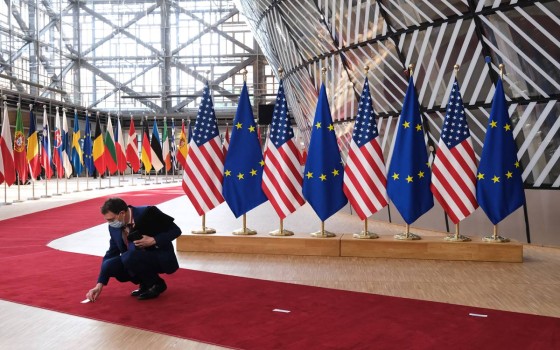
The European Union and a Democrat-Controlled Congress: A Potential for Greater Openness, Responsiveness, and Collaboration on Sanctions Against Russia, Artificial Intelligence, and a Transatlantic Forum

- Europe and Arabs
- Friday , 6 November 2026 6:12 AM GMT
Brussels: Europe and the Arabs
Lawmakers and officials in the European Union, based in Brussels, hope that the victories secured by the Democrats in the midterm elections will translate into a diplomatic opportunity with Washington. This could pave the way for cooperation on a range of issues—from sanctions against Russia to artificial intelligence and the revitalization of a transatlantic forum. According to the Brussels edition of *Politico’s* "Playbook" newsletter, the "blue wave" seen earlier this week has handed control of Congress to the Democrats, bringing new faces to Washington. As reported by NPR, at least 99 new members will join Congress—a record number—due to retirements, deaths, and incumbent members seeking other offices.
Breaking the Stalemate: Brando Benifei, chair of the European Parliament’s delegation to the United States, stated that there is "ample room with this new Congress to strengthen our level of cooperation," noting that European lawmakers might now be able to "advance projects that were previously frozen."
Top Priorities: A European diplomat based in Washington told *Playbook* that the implementation of sanctions against Russia, intelligence sharing with the U.S., and arms-related issues top the list of priorities. Meanwhile, Kaja Kallas, the EU’s top diplomat, has urged the new Congress to exert "more pressure" on Moscow, remarking: "Let’s see what happens now." Another key objective is the "Transatlantic Legislators’ Dialogue," a platform for parliamentary exchange between members of the European Parliament and the U.S. Congress. Benifei explained that the idea of "institutionalizing" this group is back on the table, while a senior EU official indicated that Brussels intends to gauge the interest of Congress in developing and strengthening this forum. (Like others, this official requested anonymity, given the sensitive nature of the internal plans under discussion.)
Planting seeds for the future: Another European diplomat remarked, "A new Congress like this opens up diplomatic opportunities for the EU delegation in Washington and for European embassies there." He added that laying the diplomatic groundwork now will bear fruit in six months, a year, or perhaps even further down the line.
There is a sense of cautious optimism in Brussels that a Congress under Democratic control might prove to be a more open and responsive partner. "The relationship with Congress under Speaker Mike Johnson wasn't bad, but it was marked by some tensions," the official noted, adding that the EU will wait to see the extent of the shift that may follow Hakeem Jeffries’ potential assumption of the role of Speaker of the House in January. Other objectives: Benifei anticipates the emergence of "new opportunities" for cooperation on artificial intelligence legislation, pointing specifically to the House Committee on Ways and Means—which oversees trade issues—as a key partner that could help mitigate the threat of tariffs from Trump. (The chairmanship of this committee is set to shift from a Republican to a Democrat in 2027.)
A quick reality check: European officials are under no illusion that a Democratic-controlled Congress would automatically mean a return to the transatlantic dynamic that existed under Joe Biden. Another senior European official noted that they expect Democrats to be heavily preoccupied with domestic political issues.
Nevertheless, the midterm elections could open channels for cooperation in specific areas that have remained closed for years. For Brussels, any improvement—however incremental—in the relationship would be a welcome development following two years of stagnation under Trump’s policies.




No Comments Found