

"A failure of the international community" to end the deteriorating humanitarian conditions in Gaza, Yemen, and Sudan
a warning of an escalating humanitarian crisis in Gaza; documentation of over 70 civilian deaths and the displacement of 340,000 Yemenis since August; and a disregard for the protection of civilians, leading to "unbearable losses" for the Sudanese people.

- Europe and Arabs
- Wednesday , 18 November 2026 7:1 AM GMT
New York: Europe and the Arabs
Following his visit to the Gaza Strip, a UN official stated that the situation there is not merely a humanitarian crisis, but rather "a failure of the international community to uphold international law, human rights, and basic dignity."
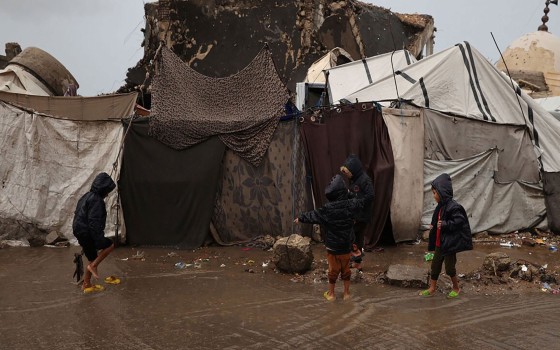
During a press briefing by UN agencies in Geneva on Tuesday, Karl Baker, head of the International Organization for Migration (IOM) program in Gaza, reported that the first heavy rainfall in the territory has damaged or destroyed tens of thousands of makeshift tents. Furthermore, the death of an infant has been reported—the first fatality linked to the cold weather this winter season. According to the United Nations’ daily news bulletin, at least five people have died following the collapse of a sand embankment. Furthermore, UN partners have reported the deaths of two children in fire-related incidents, which occurred as families—in a "desperate" attempt to stay warm or cook food—resorted to using heat sources inside their tents.
Baker emphasized that all these tragedies could have been avoided, noting that humanitarian organizations had warned for months of mounting needs. "Yet, the greatest threats to survival in Gaza today remain a lack of funding and restricted access."
Near-impossible conditions
He explained that his organization alone faces a funding shortfall of approximately $173 million for winter shelter support. This includes at least $9 million earmarked for site management—a measure described as "one of the fastest and most effective ways to protect more than 1.7 million displaced Palestinians in Gaza this winter."
Baker added that local communities are doing their utmost with the limited resources at their disposal, "despite near-impossible conditions." However, they also require assistance to obtain the tools and resources necessary for their own protection—"they literally need simple items like shovels, sandbags, and nails."
He urged UN member states to leverage their influence with the Israeli authorities to demand the opening of additional crossings and the immediate entry of supplies, including more durable and sustainable shelter materials. He stressed that "people cannot survive the winter in tents and under plastic sheeting."
A multifaceted crisis
For his part, Sean Hughes, the World Food Programme’s (WFP) Country Director for Palestine, stated that the situation in Gaza represents "a shelter crisis, a sanitation crisis, and a food security crisis" all at once.
He noted that food stocks kept by families inside their tents have been ruined by flooding, while cooking gas and firewood have become either unavailable or so prohibitively expensive that families cannot afford them. He added, "Most people are burning trash to cook their food, but even the trash is now soaked."
"An Ordinary Monday"
Hughes addressed the severe cuts to aid that the WFP has been forced to implement due to a lack of funding. He shared with reporters the story of Hanan, a mother of four who lost her husband. Her tent was flooded, and the little food they had left was washed away; she is no longer able to buy vegetables or meat to feed her children, and the provision of cooked meals in her camp has ceased entirely.
"I had no answers for Hanan’s questions about how they might survive the coming winter months," he said.
The WFP Country Director pointed out that hostilities continue in Gaza—including three airstrikes that occurred near the camps he visited last week in the northern part of the strip, accompanied by Baker—remarking, "This is what an ordinary Monday looks like." "When you are in Gaza, you do not feel that any ceasefire exists."
Hughes stated that the Israeli military controls approximately 70% of the Gaza Strip, leaving residents with almost no space to grow their own food, while fishing at sea has become "prohibited—and, in fact, life-threatening."
With unemployment rates exceeding 80%, Hughes noted that people have virtually no alternative means of survival other than the meager humanitarian aid they receive, warning that "the fragile gains made since last year’s famine could easily be lost."
Separately, the UN Office for the Coordination of Humanitarian Affairs (OCHA) reported that the bloody conflict in Yemen continues to drive displacement and exacerbate humanitarian needs, warning that civilians are paying the heaviest price.
The UN Office of the High Commissioner for Human Rights has documented more than 300 civilian casualties—including over 70 deaths—since the beginning of August. Children account for more than a third of these casualties and nearly half of those killed.
These figures are limited to cases that the UN has been able to verify; the actual toll is likely much higher.
According to the International Organization for Migration (IOM), more than 340,000 people have been forced to flee their homes since the beginning of August, two-thirds of whom are from Taiz Governorate. Furthermore, restrictions on major transport routes threaten to further hinder the delivery of life-saving aid.
Ongoing aid Despite the Challenges
The Office for the Coordination of Humanitarian Affairs (OCHA) confirmed that the United Nations and its partners continue to deliver aid, despite the challenges. Emergency assistance has reached more than 270,000 displaced people—approximately two-thirds of the total displaced population—while over 202,000 individuals have received emergency cash assistance.
Partners in the health sector have managed to reach more than 103,000 displaced people, and a vaccination campaign against measles and rubella, launched on November 7, has successfully vaccinated over 600,000 children.
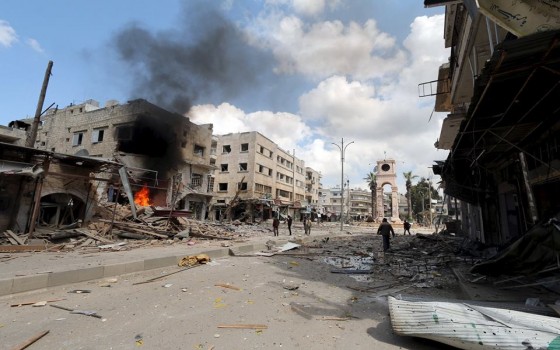
OCHA stated that repeated strikes in Hodeidah, which targeted fuel infrastructure—including the Ras Issa terminal—have led to a sharp decline in port activity.
It added that fuel shortages will disrupt food supply chains in northern Yemen, while also affecting water pumping and health services.
Clashes Reach a Refugee Camp
The UN Refugee Agency (UNHCR) has expressed grave concern over the spread of clashes to the Kharaz refugee camp in Lahj Governorate, placing approximately 9,600 refugees at heightened risk.
Hundreds of refugee families have already fled the fighting taking place inside and around the camp. Furthermore, the hostilities have restricted the ability of the UNHCR and its partners to provide protection and assistance.
The Office for the Coordination of Humanitarian Affairs (OCHA) has called on all parties to ensure the safety of refugees, asylum-seekers, and other civilians, and to secure safe passage for refugees leaving the camp.
It also called for safe, sustainable, and unimpeded humanitarian access throughout Yemen, including access to displaced persons and refugees affected by the ongoing violence.
Sudan
The UN Human Rights Office stated that the persistent disregard for the protection of civilians continues to inflict an "intolerable toll" on the Sudanese people. It reported that at least 1,390 civilians were killed in the conflict during the first half of the year, with more than 80% of these casualties resulting from drone attacks—a tactic that has become a "defining feature" of this war.
This information was included in a report released by the office on Tuesday, covering the first half of 2026 and documenting trends and patterns that have remained consistent throughout the conflict. The Office stated that the total number of civilian deaths between January and the end of October exceeded 2,230, with more than 1,630 of these fatalities caused by drone strikes.
UN High Commissioner for Human Rights Volker Türk remarked that the report’s findings "provide further evidence—if any more were needed—of the ongoing, unbearable civilian suffering caused by the war in Sudan, and of the persistent, blatant disregard for the laws of war by the parties to the conflict."
A Worrying Trend
According to the report, civilians in the Kordofan region were the most severely affected, accounting for more than two-thirds of all documented civilian casualties, followed by the Darfur region, where most of the remaining casualties occurred. Eastern and central Sudan were also impacted by drone strikes—notably White Nile State, where at least 41 civilians were killed during the period covered by the report.
Between January and June 2024, the Office documented at least 39 drone attacks on markets, 20 on civilian vehicles, 17 on fuel tankers and storage facilities, and 16 on healthcare facilities.
The report noted that drone strikes on markets, compounded by looting and restrictions on movement, have severely undermined access to food.
Furthermore, the report warned that the recent intensification of drone strikes targeting power generation plants and fuel supply infrastructure represents a worrying trend. The report emphasized that accountability—regardless of the perpetrators' affiliations—is essential for breaking cycles of violence and preventing further violations and abuses. As the High Commissioner stated, "The world is watching."
Enormous Health Needs
Meanwhile, Dr. Abdinasir Abubakar, the World Health Organization (WHO) representative in Sudan, warned that health needs in the states of White Nile and North Kordofan are "enormous." This assessment follows a mission led by Dr. Abubakar to the city of Kosti (in White Nile) and El-Obeid (the capital of North Kordofan) between November 7 and 12.
"We urgently need to expand basic health services in peripheral areas and camps for displaced persons," Dr. Abubakar added.
The WHO mission highlighted persistent gaps in electricity supplies, medicines, operational resources, and access to care in both states. The organization noted that 21 million people across Sudan require health assistance, while 37% of health facilities are currently non-functional.
WHO support for the Kosti Teaching Hospital reached more than 24,000 people between November 2025 and April 2026. In El-Obeid, the organization’s support during 2025 and 2026 contributed to the provision of approximately 344,500 health services, including 90,000 medical consultations.






No Comments Found