

Iranian Resistance: Formation of a Provisional Government and the Ten-Point Plan are the Path to the Country's Future... Categorical Rejection of Reza Pahlavi's Choice

- Europe and Arabs
- Wednesday , 4 March 2026 4:47 AM GMT
Washington: Europe and the Arabs
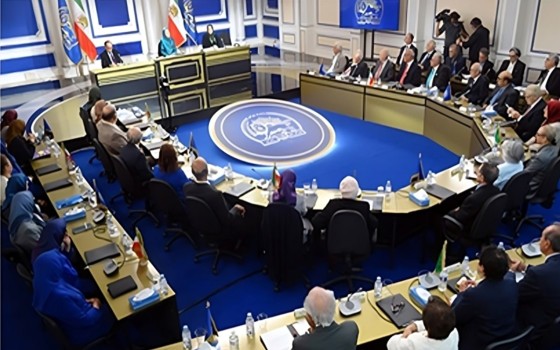
Fox News hosted Ali Reza Jafarzadeh, Deputy Director of the National Council of Resistance of Iran's (NCRI) Representative Office in the United States, on its news program to discuss the rapidly evolving situation and growing momentum within Iran. During the interview, Jafarzadeh explained the extent of popular rejection of both the mullahs' dictatorship and the Shah's regime, highlighting the announcement of the formation of a provisional government to manage the transitional phase and transfer sovereignty to the people based on clear democratic principles. According to a press release issued by the NCRI, a copy of which we received, and titled "Popular Momentum and Decisive Rejection of Dictatorship," Jafarzadeh emphasized at the outset that the popular momentum against the regime inside Iran has not ceased but has been steadily increasing for months and years. He noted that protests have taken place in 400 cities across all 31 provinces of Iran, demonstrating the people's overwhelming desire to end the rule of the mullahs and establish political pluralism and democracy.
Jafarzadeh highlighted the radical slogans chanted by the demonstrators, such as "Death to Khamenei" and "Death to the oppressor," whether it be the Shah or Khamenei. He emphasized that these chants clearly demonstrate that Iranians categorically reject a return to the dictatorship of the Shah's regime and aspire solely to building a free future.
The Interim Government and the Transfer of Sovereignty
Regarding the political alternative, the Iranian Resistance leader explained that Mrs. Maryam Rajavi, the President-elect of the National Council of Resistance of Iran, has announced the formation of an interim government. He clarified that the primary objective of this government is to manage the transitional period following the inevitable fall of the Ayatollahs' regime, ensuring the peaceful and complete transfer of sovereignty to the Iranian people.
The Ten-Point Plan and the Features of the New Republic
Jafarzadeh stressed that the path of this interim government is entirely based on the Ten-Point Plan proposed by Mrs. Rajavi. This plan affirms that the ballot box is the sole criterion for political legitimacy in the country. The plan also includes indispensable principles for building a modern state, including: the complete separation of religion and state, full equality between men and women, and guarantees of public freedoms such as freedom of religion, the press, and political parties, along with a free market economy and recognition of the rights of different nationalities. Jafarzadeh concluded the interview by emphasizing the commitment to establishing a non-nuclear republic, noting that the Iranian people are closer than ever to achieving this desired future.
In a separate statement, the Iranian Resistance reported that in a special television interview with CNN's Jim Sciutto, Ali Safavi, a member of the National Council of Resistance of Iran (NCRI), discussed the prospects for change in Iran amidst the rapidly evolving situation. Safavi asserted that airstrikes alone will not topple the regime, stressing that fundamental change must originate from within, led by the Iranian people and the organized resistance, represented by the People's Mojahedin Organization of Iran (PMOI/MEK). He also launched a scathing attack on Reza Pahlavi, rejecting any attempt to reinstate the Shah's dictatorship. The End of Tyranny and Change from Within
Safavi began by describing Khamenei's assassination as the end of 47 years of religious tyranny and despotism that had ruled Iran. Responding to American hopes that the Iranian people would complete the task, Safavi made it clear that, based on past experience, airstrikes alone would not bring about regime change. He emphasized that the regime's downfall must be achieved on the ground through the combined efforts of the Iranian people and the organized and structured opposition.
A Provisional Government and Immense Sacrifices
Safavi addressed the strategic step taken by the National Council of Resistance of Iran (NCRI) in announcing the formation of a provisional government. He explained that this government's mission would be limited to holding free and fair elections to form a constituent assembly tasked with drafting a new constitution for the republic.
He noted that this path is paved with blood and immense sacrifices, recalling the execution of more than 100,000 dissidents, including his brother, in addition to the 30,000 political prisoners executed in the 1988 massacre on Khomeini's direct orders. Daring Operations by Resistance Units
To underscore the resistance's capabilities on the ground, Safavi revealed details of a daring attack carried out by 250 fighters from the People's Mujahedin Organization of Iran (PMOI/MEK) last Monday against Khamenei's heavily fortified compound. Although 100 fighters were either killed or captured during the operation, 150 others successfully withdrew, confirming that resistance units remain active and continue to conduct operations in various Iranian cities.
A Firm Rejection of Reza Pahlavi and the Legacy of the Shah's Regime
In a decisive response to a question about Reza Pahlavi's self-appointment, Safavi described him as a relic of the past, asserting that he derives his fame solely from his father's infamous reputation. He criticized Pahlavi's future agenda, stating that it concentrates legislative, judicial, and executive powers in the hands of one man, representing a dictatorship with a different brand.
Safavi emphasized that the Iranian people have fought for the past 120 years against four dictatorships: those of Pahlavi's grandfather, his father, Khomeini, and Khamenei. He concluded by saying that Pahlavi had done nothing for 47 years except live a lavish life in Washington, while the resistance was paying a heavy price on the ground, stressing that the future of Iran could not include any trace of the Shah's dictatorship or the mullahs' dictatorship.



No Comments Found