

Attacks on ships, soaring oil prices, and a worsening humanitarian crisis... all due to the war in the Middle East

- Europe and Arabs
- Friday , 13 March 2026 3:44 AM GMT
Beirut – Tehran: Europe and the Arabs
The repercussions of the crisis in the Middle East continue to reverberate throughout the region and beyond. Oil prices have surged to nearly $100 a barrel, as attacks on ships and energy infrastructure have disrupted vital supply routes. With the ongoing exchange of fire between Israel, Hezbollah, and Iran, and reports of damage to ships in the Strait of Hormuz and the Gulf of Oman, fears of wider shocks to global markets have emerged. Meanwhile, UN agencies are working to expand humanitarian relief efforts as displacement intensifies and the needs of civilians across the region worsen.
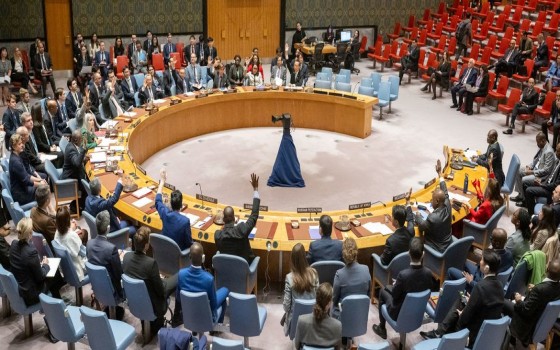
The UN Security Council convened on Thursday in New York to hear a briefing on the committee overseeing sanctions related to Iran's nuclear program.
Iran's UN representative stated that yesterday's UN Security Council resolution was unjust and politically motivated, according to Cairo News Channel.
The representative added that the United States and Israel have responded to Iran's diplomacy with aggression, and that Tehran's nuclear program has been subject to rigorous monitoring and inspection.
He further stated that Iran's nuclear program is peaceful and that the United States and Israel are waging an illegal war against Iran.
Bloomberg reported that work on a major cable project by the Meta company in the Gulf has been halted due to the Iranian war.
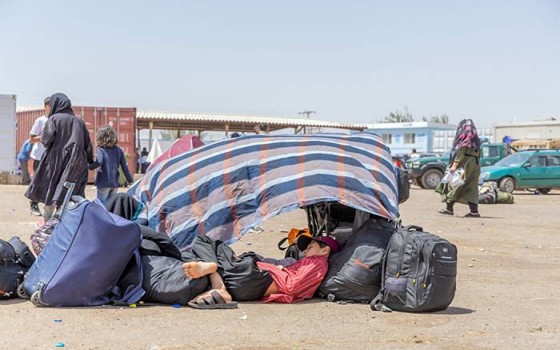
The Security Council established the committee in 2006. It monitors sanctions imposed after Iran failed to halt its uranium enrichment activities. These measures include restrictions on the transfer of technology and materials related to the nuclear program, as well as the freezing of assets of individuals and entities associated with it. Meanwhile, aid organizations in Afghanistan are preparing for a potential influx of returnees from Iran. Humanitarian aid groups estimate that up to 800,000 Afghans could return if the crisis continues.
Aid organizations warn that the ongoing conflict and border restrictions are complicating supply and aid delivery, forcing the World Food Programme to seek alternative supply routes. The unrest in Iran and along the Pakistani border is slowing the movement of life-saving food aid.
More than 3 million Iranians displaced
The UN Refugee Agency (UNHCR) reported that initial estimates indicate that 3.2 million people (between 600,000 and 1 million Iranian families) have been temporarily displaced within Iran as a result of the ongoing conflict.
UNHCR explained that most are fleeing Tehran and other major cities toward the north of the country and rural areas in search of safety. This number is likely to rise as hostilities continue, signaling a worrying escalation in humanitarian needs. Refugee families residing in the country, mostly Afghans, are also affected. They are particularly vulnerable due to their already precarious situation and limited access to support networks. These families are fleeing affected areas amidst escalating insecurity and restricted access to basic services.
In a statement released yesterday, Ayaki Ito, Director of the Division of Emergency and Programme Support and Regional Refugee Emergency Response Coordinator for the Middle East, said that UNHCR is adapting its response to meet the growing needs, working with national authorities and partners to assess emerging requirements and enhance preparedness as population movements increase.
In Lebanon, the United Nations Interim Force in Lebanon (UNIFIL) also expressed grave concern over the dangerous escalation of hostilities along the Blue Line.
The mission reported that it had observed more than 120 projectiles fired from Lebanese territory into Israel, and that Israel had responded with seven airstrikes and more than 120 artillery shelling incidents. The mission noted that all these actions constitute grave violations of Resolution 1701.
UNIFIL warned that the recent escalation along the Blue Line is once again causing the displacement of hundreds of thousands of residents and widespread destruction of neighborhoods and villages. Hundreds have reportedly been killed and others injured.
The mission affirmed that its forces remain on the ground, monitoring and reporting developments impartially, coordinating between the parties, and facilitating, where possible, the delivery of humanitarian assistance and the protection of civilians. In a statement issued yesterday, Thursday, it urged the parties to end hostilities and recommit to the full implementation of Resolution 1701, for the safety and security of civilians on both sides of the Blue Line.
The UN Secretary-General warned that the Middle East is being pushed to the brink of collapse. He said that the massive military strikes launched by the United States and Israel, and the subsequent Iranian attacks on several countries, which the Security Council strongly condemned, pose a serious threat to international peace and security and are causing immense suffering for civilians. In his acceptance speech for the Atatürk International Peace Prize in Ankara, Turkey, Secretary-General António Guterres stressed that de-escalation and dialogue are the only way forward.
He urged all parties to cease hostilities, abide by international law, protect civilians, and return immediately to the negotiating table.
The United Nations and Continuous Work for Peace
The Secretary-General thanked the people and government of Turkey for the honor, saying he accepted the award on behalf of UN staff around the world who work daily to promote peace and provide assistance in the world’s most dangerous regions, and on behalf of the peacekeepers who maintain the fragile ceasefire.
"We hear a lot of talk about peace around the world, but we see very little of it," he said upon receiving the award.
The Secretary-General’s visit to Turkey is part of his annual Ramadan solidarity visits. Guterres said he chose Turkey as his final Ramadan destination before the end of his term later this year in recognition of the country’s and its people’s generosity in hosting millions of refugees—the largest number hosted by any country during his tenure at the United Nations. Following talks with the Turkish President, the Secretary-General met with representatives of NGOs supporting refugees. He also visited the Ankara Provincial Directorate of Migration, highlighting the importance of cooperation between NGOs and government institutions in assisting refugees. He also met with the UN Country Team.




No Comments Found