

US Attempts to Engage with Iran Remain Unanswered… Europe Demands Trump Clarify His Goals in the War… On the 17th Day: Explosions in Tehran, Tel Aviv, and Beirut, and Trump Calls for Securing Navigation in the Strait of Hormuz

- Europe and Arabs
- Monday , 16 March 2026 7:47 AM GMT
Washington – Tehran: Europe and the Arabs
US President Donald Trump claimed that the United States is in contact with Iran, but that Tehran has not yet reached the point of being ready to conclude an agreement to end the war, which has entered its third week.
Trump told reporters aboard Air Force One that contacts with the Iranians are ongoing, indicating that they are “getting close” to an understanding, but he simultaneously expressed his doubts about this, without revealing details or the nature of these talks. According to a report published by the European news network in Brussels, "Euronews"
The Republican president reiterated his assertion that the US and Israeli strikes have “devastated” Iran, after having previously stated that the operations had almost completely destroyed its military capabilities.
In contrast, Iranian Foreign Minister Abbas Araqchi denied the existence of any negotiations with Washington, emphasizing that Tehran sees no point in dialogue while the attacks continue.
In an interview with CBS, he said that his country is “stable and strong enough to defend its people,” adding that Iran had been holding talks with the Americans before they decided to attack it. In a related development, Bloomberg, citing informed sources, reported that European capitals are pressuring Trump to clarify the objective of the war against the Islamic Republic, at a time when oil prices have surpassed $100 a barrel amid disruptions to shipping in the Strait of Hormuz.
According to the report, Brussels believes that Trump's repeated statements about destroying Iranian military capabilities may be a prelude to announcing the end of military operations. However, European officials say the US president remains vague about the political goal of the war.
The agency added that European leaders posed direct questions to Trump during a phone call with G7 leaders, demanding clarification of his actions. Trump merely stated that he has "several objectives" he seeks to achieve, while affirming his desire to end the war soon, without providing further details.
On the seventeenth day of the direct military confrontation between the United States and Israel on one side, and Iran on the other, areas within Israel witnessed simultaneous missile attacks attributed to Iran and Hezbollah. As the repercussions of the Strait of Hormuz closure on global energy markets continue, US President Donald Trump called on countries that benefit from the strait to participate in its protection and defense. He stated that the military operation in Iran is progressing "well," hinting at the possibility of targeting Iran's Kharg Island again.
In response, the Iranian Revolutionary Guard announced that an attack on Kharg Island could lead to a "new and harsh equation" in global energy prices and distribution mechanisms.
On the Lebanese front, Israel carried out airstrikes on Beirut's southern suburbs, as well as several cities and towns in southern Lebanon, including Khiam and Bint Jbeil.
In the Gulf, Qatar and Saudi Arabia reiterated their condemnation of the Iranian attacks targeting their territories and those of other Gulf states during a phone call between Qatari Prime Minister and Foreign Minister Sheikh Mohammed bin Abdulrahman bin Jassim Al Thani and the Saudi Foreign Minister.
This comes as the US administration has begun to lower its previous estimates of the duration of the military campaign. After the White House initially indicated that operations could last between four and six weeks, officials are now saying the campaign is “ahead of schedule.”
Bloomberg quoted US sources as saying that exaggerating the results of the military strikes may be part of a political strategy to declare the end of the military operation and portray it as a “victory,” allowing Washington to avoid being drawn into a protracted war of attrition.
International Coalition to Reopen Hormuz and Control the Gulf
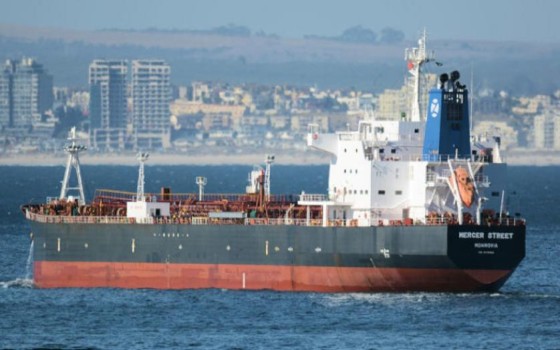
Meanwhile, Axios revealed that Trump is working to form an international coalition to reopen the Strait of Hormuz by force if the disruption of shipping and the seizure of oil tankers in the Gulf continues. The coalition is expected to be announced in the coming days.
According to the website, participating countries will be asked to contribute warships and drones, in addition to support in command and control.
A senior US administration official was quoted as saying that most of the oil passing through the strait is not destined for the United States, adding that countries benefiting from these supplies “should contribute to securing the maritime passage.” The US administration is also considering a more escalatory option: seizing the vital oil facility on Iran’s Kharg Island. This could deliver a severe economic blow to Tehran by reducing its oil revenues. However, this scenario would require deploying ground troops and could provoke Iranian retaliation targeting energy facilities and pipelines in the Gulf states, particularly in Saudi Arabia.
According to the same source, closing the Strait of Hormuz would make it difficult for Trump to end the war, even if he wanted to withdraw.
Trump on the Strait of Hormuz: “Actually, I’m asking these countries to step in and protect their territory, because it’s their territory… They should help us. One could say maybe we shouldn’t be there at all, because we don’t need to. We have plenty of oil.”
For his part, Trump said he is asking NATO countries and major oil-importing nations to participate in securing the strait, explaining that Washington is in talks with several countries to join the mission and confirming that he has received a “good response,” although some countries have declined to participate.
Trump had previously called on China, France, Japan, South Korea, and Britain to join what he called the “Hormuz Coalition.” However, reports indicate that China may not be interested in participating in any military coalition to reopen the Strait of Hormuz, especially given the continued flow of Iranian oil to its markets.
In this context, Samir Madani, co-founder of TankerTrackers.com, told CNBC that Iran has exported at least 11.7 million barrels of crude oil through the Strait of Hormuz since the war began on February 28, and all of the shipments were destined for China.


No Comments Found