

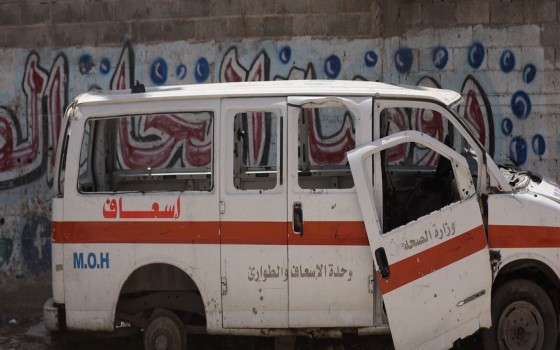
Gaza: The health situation is catastrophic... mounting pressure and limited resources

- Europe and Arabs
- Tuesday , 7 April 2026 7:37 AM GMT
Gaza – New York: Europe and the Arabs
As the world commemorates World Health Day, the health sector crisis in Gaza worsens, amid the ongoing repercussions of the war that left widespread destruction in hospitals and medical centers. More than six months after the ceasefire was declared, doctors and healthcare workers warn that the health system in Gaza is on the verge of collapse. According to the UN daily news bulletin, "The number of patients is rising, and skin and respiratory diseases are spreading in the Gaza Strip. The ability to treat those with chronic illnesses and cancer patients is declining, with many facing the risk of a slow death due to shortages of medicines and medical supplies."
According to the Palestinian Ministry of Health, more than 1,800 health facilities were damaged, either partially or completely, during the war.
The UN Office for the Coordination of Humanitarian Affairs (OCHA) says that only about 42% of health facilities in the Gaza Strip are currently functioning, and most are providing only partial services, while restrictions are hindering the entry of equipment and materials needed to rehabilitate the health system.
"The health situation is catastrophic." Inside Al-Shifa Medical Complex, one of the largest hospitals in the Gaza Strip, the effects of the war are evident everywhere, from the destruction of buildings and infrastructure to the decline in operational capacity due to shortages of electricity, equipment, and medicines.
Dr. Hassan Al-Shaer, the medical director of Al-Shifa Complex, says that the health crisis is no longer limited to receiving the wounded and injured, but has affected various medical specialties, most notably the treatment of cancer patients.
Al-Shaer added that The available cancer medications cover only a small fraction of the actual need, he explained, adding that "medications are very scarce, not exceeding 15% of the total medications these patients require."
He also warned of the worsening environmental and health threats associated with the accumulation of rubble and garbage in Gaza City, noting the emergence of additional problems, including the spread of rodents and the accompanying new health hazards.
Alternative Medical Points Offering the Minimum
With a large number of health facilities out of service or operating at limited capacity, some schools and shelters have been transformed into alternative medical points providing the minimum level of healthcare to displaced persons and residents.
In one of the schools belonging to the United Nations Relief and Works Agency for Palestine Refugees (UNRWA), which is now being used as both a shelter and a medical clinic, patients line up daily to receive basic treatment, a scene that reflects the depth of the crisis facing the health sector.
Mahmoud al-Najjar, an elderly man from the al-Shati refugee camp west of Gaza City, says he is forced to visit this medical point almost daily due to his chronic illnesses, given the closure of hospitals or their inability to provide treatment. Necessary.
He adds that the available services do not exceed first aid or some simple painkillers, emphasizing that patients cannot find the medications they need, or even the minimum supplies for treatment or anesthesia.
Increasing Pressure and Limited Resources
The suffering of patients is not separate from the suffering of the medical staff themselves, who continue to work under escalating pressure and with extremely limited resources.
Dr. Khaled Siam, who works at a medical point inside one of the UNRWA displacement centers, says that the center receives between 150 and 200 cases daily, while there are only a very small number of staff available.
He explained that the pressure is not only related to direct injuries, but also includes diseases prevalent among the population, especially skin and respiratory diseases, which require continuous monitoring and treatment, in the absence of hospitals and sufficient medical equipment.
He added that the staff are trying to adapt to what is available and provide medical services with minimal resources, but the scale of the need far exceeds the capacity to respond.
Recovery is Far from Away
Despite the ceasefire declared months ago, the health system in Gaza is still far from any real recovery, with The continued restrictions on the entry of medical equipment and rehabilitation materials, and the immense pressure on the remaining functioning facilities.
As the world commemorates World Health Day on April 7 – emphasizing the importance of providing care and ensuring equity in health – the people of Gaza find themselves facing a starkly different reality, where access to treatment has become a daily struggle in a health sector ravaged by war and which the truce has not afforded any real opportunity to recover.






No Comments Found