

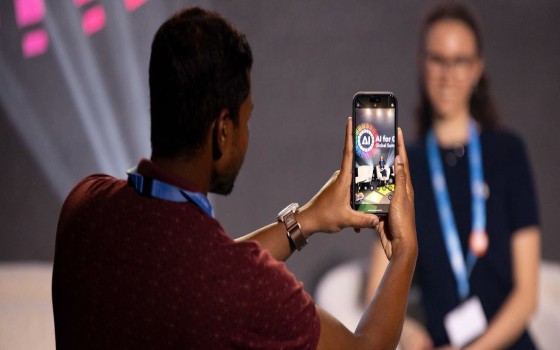
Numbers point to both sexism and racism… Artificial intelligence reproduces stereotypes and exacerbates bias against women

- Europe and Arabs
- Tuesday , 23 June 2026 7:20 AM GMT
Geneva – New York: Europe and the Arabs
UN Women has warned that artificial intelligence (AI) is reproducing old gender stereotypes, exacerbating online abuse and excluding women from decisions that will shape the future of the digital world.
This warning comes as the latest studies show that as generative AI enters the daily lives of billions of people, inequalities are also being reinforced through discriminatory algorithms. According to the news bulletin,
Ahead of the UN Global Dialogue on AI Governance and the AI for Good Global Summit in Geneva in early July, UN Women urged governments, businesses, and developers to ensure that gender equality is integrated into the design, deployment, and governance of AI systems.
Sexism and Racial Bias
Evidence suggests that the problem is widespread. A study of 133 AI systems showed that 44% exhibited gender bias, while more than a quarter displayed both sexism and racial bias.
Large language models have long associated women with home, family, and childcare, while men have been linked to business, leadership, and career success. In some cases, AI systems have even produced responses that portray women as sexual objects or subservient to men.
According to UN Women, when researchers asked large language models to complete sentences beginning with a person's gender, nearly one in five responses were sexist or misogynistic, with some even describing women as property or objects.
A policy gap, not a design flaw
Experts say these findings are not random errors or AI glitches, but rather a pattern documented across systems at scale.
UN Women noted that this is a predictable outcome for AI systems trained on decades of unequal representation of women and men.
In an interview with UN News, Jayathma Wickramanayake, UN Women's digital technology officer, explained that AI models "derive their biases from decades of texts written by people about people, in a world where women were categorized as domestic and family matters, and men as work and career matters." For Wickramanayake, the most worrying aspect is that this isn't a design flaw, but rather "a real policy gap that has been left unaddressed."
Of the 138 countries surveyed globally, the results of which were published by UN Women, only 24 referenced gender in their national AI strategies, and only 18 included substantive gender-sensitive measures.
For the UN Women digital technology expert, this isn't a software bug that can be fixed in the next update, but rather "a choice we make time and time again in training data, in design rooms, and in policy documents that ignore half the population."
Cyber violence and fabricated content
For many women and girls, the risks extend beyond stereotypes. Women already face disproportionate levels of online abuse, and AI facilitates the creation and dissemination of some forms of violence. According to data from UN Women, nearly one in four women surveyed—human rights defenders, activists, and journalists—reported experiencing cyber violence aided by artificial intelligence. Twelve percent said their personal photos were published without their consent, while 6 percent reported being targeted with fabricated content or manipulated images and videos.
As AI-generated content becomes more prevalent, concerns are growing about the difficulty of detecting and preventing image-based harassment, manipulation, and abuse.
Underrepresentation
At the same time, women remain underrepresented in the industries that develop the technology, raising concerns that the future of AI is being built without considering their perspectives in its design.
Although AI is expected to drive growth across various technology-focused sectors, women represent only 30% of the global AI workforce, according to the International Labour Organization. UN Women warns that the people developing these systems are not adequately representative of the diversity of the communities they are meant to serve.
Without greater participation from women and other underrepresented groups, existing biases threaten to permeate future technologies, the agency says.
Economic repercussions: The economic impact of AI may also be uneven. Women are almost twice as likely as men to hold jobs at risk of automation outside the AI sector. These effects can be exacerbated by other factors, including race, disability, income, and geographic location.
According to UN Women, addressing bias is not just a rights issue, but also a business imperative. As AI increasingly impacts marketing and content creation, organizations that integrate inclusion into their AI processes are likely to benefit, while those that do not may face reputational and commercial risks.
A choice that shapes the future: UN Women emphasizes that when developed responsibly, AI can help identify stereotypes, broaden representation, and improve accessibility. Ahead of a meeting of governments, technology companies and international organizations in Geneva next month, the agency sent a clear message that if women and girls are not involved in building the future of artificial intelligence, the inequalities that prevailed in the past will be carried over into tomorrow's technologies. She emphasized that artificial intelligence, when designed with safety in mind and used consciously, is capable of detecting stereotypes rather than reproducing them, broadening representation rather than narrowing it, and improving broad accessibility for groups often overlooked by current AI systems.


No Comments Found