

Disrupting the Education of an Estimated 258 Million School-Age Children and Adolescents Worldwide: Conflict, Displacement, and Climate Shocks

- Europe and Arabs
- Wednesday , 24 June 2026 6:59 AM GMT
New York: Europe and the Arabs
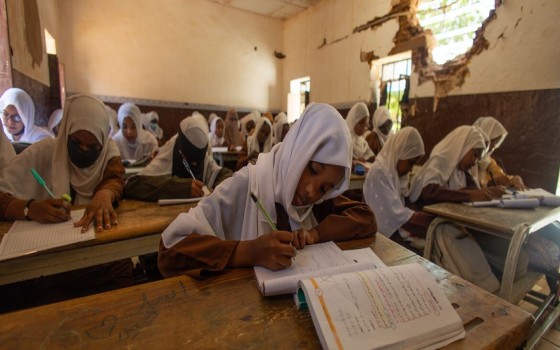
Conflict, displacement, and climate shocks are disrupting the education of an estimated 258 million school-aged children and adolescents worldwide, raising concerns that millions of children risk losing not just years of schooling, but their entire future prospects.
This was revealed in a new report released Tuesday by the Education Cannot Wait fund, which provides the clearest picture yet of the worsening education emergency in some of the world's most vulnerable and fragile communities.
The report confirmed that 93 million children are completely out of school, while millions more remain enrolled but are unable to learn effectively under conditions that undermine their progress and increase the likelihood of them eventually dropping out.
Needs are concentrated in emergencies.
The report concluded that educational needs are increasingly concentrated in the world's most severe emergencies.
Of the 182 million children living in the 20 most severe crises, 74 million are out of school – nearly 80% of all crisis-affected out-of-school children included in the study, according to the UN Daily News, a copy of which we received Wednesday morning.
Researchers warned that educational exclusion goes beyond simply access to school. In many crisis zones, children fall behind in acquiring basic skills at an early age and are never able to catch up.
In some contexts, fewer than one in ten children demonstrate basic reading proficiency in the early grades, and learning gaps widen over time, eventually preventing them from continuing their education.
Disproportionate Burdens
Children forced to flee their homes face some of the most difficult challenges. Analysis of data from Burkina Faso, the Central African Republic, the Democratic Republic of Congo, Mali, and Somalia showed that displaced children have lower grade progression rates, experience slower educational advancement, and are significantly more likely to be past the typical age for their grade level compared to their non-displaced peers.
Furthermore, girls, refugees, and children with disabilities face significant and disproportionate barriers to continuing their education, and conflict appears to exacerbate and prolong learning losses.
By the sixth grade, reading proficiency is only 30% in conflict-affected countries, compared to 47% in countries primarily affected by socioeconomic crises and 63% in countries affected by natural disasters.
Prioritizing Education
However, the report also highlighted the resilience of families, who continue to prioritize education despite insecurity and financial hardship. Nearly 80% of school dropouts are attributed to financial constraints and school closures due to conflict, indicating that circumstances, rather than a lack of appreciation for education by families, are the primary drivers of children's absence from the classroom.
Maysa Jalbout, Executive Director of Education Cannot Wait, stated that supporting education in crises "is the insurance policy that families, governments, and donors need to protect their long-term investments in education and economic opportunities."
Jalbout warned that conflict and climate change are eroding years of progress and called for urgent investments to prevent educational losses from becoming permanent.
The fund stated that it has reached more than 14 million children affected by crises since its inception and aims to reach another 10 million by 2030. Education Cannot Wait is a global fund established by the United Nations to support education in emergencies and protracted crises.






No Comments Found