

Escalation in the Middle East and the Strait of Hormuz: Rising Prices and Food Insecurity for 220 Million Women and Girls Across 28 Countries—Including Yemen, Palestine, Egypt, Iraq, Syria, and Sudan

- Europe and Arabs
- Saturday , 3 October 2026 5:17 AM GMT
Geneva – Europe and the Arabs
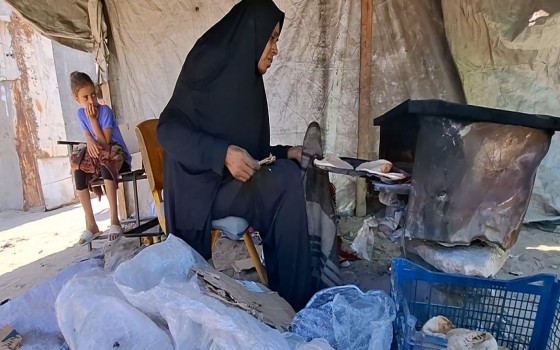
UN Women has warned that an additional 11.7 million women and girls across 28 countries could face food insecurity by the end of the year. This projection stems from the ongoing escalation in the Middle East and instability in the Strait of Hormuz, which have led to rising food prices and damaged livelihoods both within the region and beyond.
In a new analysis released on Friday, the agency concluded that under a "medium scenario," an additional 22 million people could face food insecurity—53% of whom are women and girls. This is in addition to the estimated 208 million women and girls in these countries who were already suffering from food insecurity or undernutrition, according to the UN daily news bulletin received on Saturday morning.
Presenting the report to journalists in Geneva, Nyaradzayi Gumbonzvanda, UN Women’s Deputy Executive Director, noted that the most populous nations account for the highest numbers of women and girls at risk of food insecurity. However, she pointed out that countries such as South Sudan, Sudan, Haiti, Yemen, and Palestine face more acute risks, as "multiple sources of vulnerability facing women and girls overlap."
In Lebanon, the additional number of women and girls potentially facing food insecurity represents nearly 4% of the country's total female population—the second-highest proportion among the nations covered in the report. Inequalities
Nyaradzayi Gumbonzvanda added: "We know from past crises that when food becomes scarce, women eat less and are the last to eat. They often switch to foods with lower nutritional value or skip meals entirely to prioritize the needs of others. Gender inequalities determine who gets food and who possesses the resources to obtain it."
Gumbonzvanda noted that existing inequalities in employment and access to financial services limit the resources available to many women—resources that would otherwise enable them to withstand crisis-induced shocks.
She pointed out that in Egypt, Iraq, Palestine, Sudan, and Syria, for instance, more than 80% of women are outside the workforce; furthermore, fewer than one in five women holds a bank account or a mobile money account in Iraq, Lebanon, and Yemen.
An Integrated Response
The Deputy Executive Director called for an integrated response based on three pillars:
Combining food and cash assistance with programs for nutrition, protection, livelihoods, and agricultural support, while ensuring women have access to land, credit, services, and other productive assets.
Directing resources in a timely manner to areas where women and girls face multiple risks—such as conflict, internal displacement, climate impacts, humanitarian funding gaps, and structural inequalities. Highlighting the experiences of women and girls in data is essential to pinpointing where food insecurity is worsening and identifying the groups suffering from it—including those who have lost their livelihoods, are shouldering increasing burdens of unpaid care work, or are facing nutrition- and protection-related risks.
Gombezvanda emphasized that this is the required response, adding, "But more importantly, to end the suffering of women and girls, we need peace and security."
She further noted that UN Women "does not merely call for de-escalation and respect for international law, but advocates for lasting solutions; we call for a safe world and join the Secretary-General’s appeal to all parties concerned to work toward diplomatic solutions that foster peace and security at both regional and international levels."






No Comments Found