

Gaza – Families Living Under the Threat of Home Collapse

- Europe and Arabs
- Sunday , 4 October 2026 1:2 AM GMT
Gaza: Europe and the Arabs
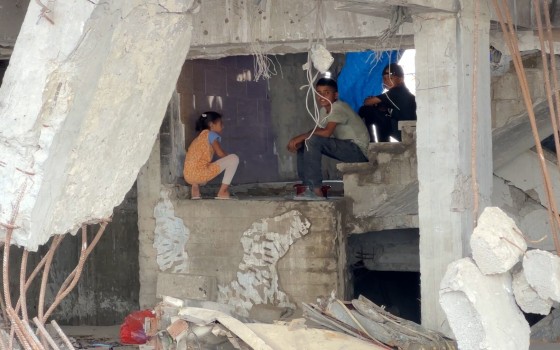
Palestinians in Gaza City neighborhoods are living in buildings severely damaged during the war—despite the risk of collapse—due to a lack of alternative housing and stalled reconstruction and repair efforts nearly a year after the ceasefire was announced.
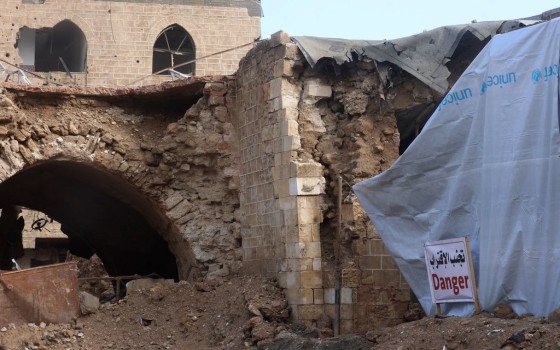
In the Al-Nasr and Al-Karama neighborhoods of Gaza City, families have returned to damaged homes or the parts of them still standing, using fabric to cover gaps left by collapsed walls, while children live inside buildings that residents describe as unsafe. This was reported in an investigation featured in the United Nations' daily news bulletin.
Umm Muhammad, a resident of the Al-Karama neighborhood living in a building at risk of collapse, said that the fear of the building falling down constantly haunts her family.
"We expect the building to collapse at any moment, any hour. We live in terror and fear... What are we missing to live a good, comfortable life like everyone else?" she said.
Concerns regarding the safety of damaged buildings have mounted following the collapse of a residential building in Gaza City on September 16, which killed 21 people, including children.
The UN Office for the Coordination of Humanitarian Affairs (OCHA) stated that many residents continue to live in unsafe buildings due to the unavailability of better housing options.
Mohammed Safi, who lives with his neighbors in a building at risk of collapse, says that about 20 families—comprising more than 120 people, including around 30 children and five elderly individuals—reside in the building. Safi stated that moving into tents is not a practical option for the families living there, adding that residents are awaiting temporary housing or any solution that provides a safer place.
"We do not know when we will receive temporary housing," he said. "It is difficult for more than 120 individuals to move into tents. We urgently call for support for the residents."
The latest UN estimates indicate extensive damage to the housing sector. The UN Office for the Coordination of Humanitarian Affairs (OCHA) stated that a satellite analysis conducted by the UN Satellite Centre (UNOSAT) showed that, as of June 16, 2026, approximately 201,290 buildings in the Gaza Strip had been damaged—an estimated 82 percent of all buildings—including more than 134,000 classified as destroyed. The analysis estimated the number of damaged housing units at approximately 328,627.
Estimates regarding the extent of the damage vary depending on the assessment methodology and the timeframe covered. A comprehensive assessment prepared by the UN, the World Bank, and the European Union—published in April—concluded that more than 371,000 housing units were destroyed or damaged during the war. It found that the housing sector sustained physical damage estimated at $18 billion, representing the largest share of the total damage inflicted on infrastructure.
In a report published on September 24, the Office of the UN Special Coordinator for the Middle East Peace Process stated that more than 60 percent of Gaza's population had lost their homes and that approximately 1.9 million people had been displaced, many of them multiple times. He added that more than 350,000 housing units have been destroyed or damaged, and that the lack of shelter is one of the most pressing humanitarian needs.
Michel Nteil, who has returned to live in a damaged section of his home in the Al-Nasr neighborhood, says the absence of alternatives has forced his family to live in unsafe conditions.
"We have nothing," he said. "We are living like this—under a roof that could fall in and in a building that could collapse. We live among reptiles and insects. I stay awake all night beside the children, fearing that rats might bite them."
The United Nations states that efforts to assess buildings, carry out repairs, and clear rubble are hampered by shortages of heavy equipment, fuel, spare parts, and construction materials. It also warned that tens of thousands of families returning to damaged homes require emergency repairs and basic shelter materials.
Nearly a year after the ceasefire took effect on October 10, 2025, the UN reports that recovery and reconstruction have not yet reached the necessary scale, while vast areas of the Strip remain inaccessible to residents or subject to access restrictions. Sporadic Israeli strikes and acts of violence also continue despite the fragile ceasefire.
A joint assessment by the United Nations, the World Bank, and the European Union estimated that Gaza requires approximately $71.4 billion for recovery and reconstruction over the next ten years, with $26.3 billion needed during the first eighteen months alone. For families who have returned to their buildings in Gaza City neighborhoods, the scale of reconstruction remains a distant prospect compared to the immediate danger: finding a place to live without the risk of the roof collapsing on the occupants.







No Comments Found