

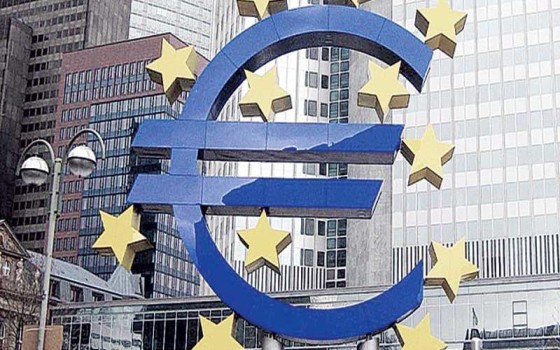
During a ministerial meeting in Brussels: Agreement reached on establishing a European Savings and Investment Union through deepening capital markets... A German proposal to enhance resilience and competitiveness

- Europe and Arabs
- Tuesday , 17 February 2026 7:11 AM GMT
Brussels: Europe and the Arabs
Meetings of the European Council of Economic and Financial Affairs Ministers continue today, following a meeting of Eurozone finance ministers on Monday. At the close of Monday evening's meeting, Eurogroup President Kyriakos Perakakis said, "This meeting comes just days after a crucial meeting of the EU Heads of State and Government. I am pleased to say that today's meeting, as well as the upcoming Eurogroup meetings, will address several urgent priority areas identified by our leaders: the savings and investment union, energy prices, and competitiveness. We began Monday's meeting with a short but crucial topic for the work of the Eurogroup. We agreed on a draft Council Recommendation on the Eurozone Economic Policy for 2026. This Eurozone Recommendation carries significant political weight and is all the more important given the current complex geoeconomic environment. It includes a wide range of policy recommendations for Eurozone member states and calls for decisive action, both individually and collectively, within the Eurogroup in key areas essential for the competitiveness and resilience of our financial system and economy. This calls, in particular, on ensuring fiscal sustainability while simultaneously prioritizing our budgets." National security needs to accommodate the increase in defense spending in the medium term.
Furthermore, following our leaders’ meeting last week, we are committed to accelerating the creation of a European Savings and Investment Union by deepening and integrating our capital markets to mobilize investment in key areas such as research and innovation and support for European startups. We will also continue to remove barriers to access to the single market and work to simplify regulatory procedures.
We will incorporate these recommendations, on which we reached a common understanding today, into our future policy discussions in the Eurogroup.
We then moved on to discuss the international role of the euro. In the face of increasing geopolitical fragmentation, we need to reassess the role of our currency in the international monetary system and the potential implications for our monetary sovereignty and economic resilience.
Commissioner Dombrovskis gave a presentation on the drivers of the euro’s international role and the key pillars of a strategy to strengthen it. There was broad agreement that the euro’s international role depends heavily on progress in several other priorities we have already identified to strengthen the EU economy, such as the Savings and Investment Union and the Competitiveness Programme. And the development of digital finance.
We agreed to integrate the international role of the euro as a key dimension of our work in these areas going forward.
We then welcomed our colleagues from outside the eurozone for an extensive discussion on global imbalances. We were also honored to host the Honourable François-Philippe Champagne, Minister of Finance of Canada, as our guest of honor. Canada is a close friend, and this meeting was an opportunity to further strengthen our already excellent economic ties. Professor Hélène Re, who chairs the G7 Academic Group on Global Imbalances, was also a guest speaker.
As you know, the issue of global macroeconomic imbalances is very much on the table right now.
I think everyone agreed with the European Commission's point that global imbalances need to be viewed holistically, not just in terms of the flow of goods between countries, but also in terms of the whole of our interdependent financial and economic relationships. We also agreed with the European Central Bank's point that while we are not the epicenter of global imbalances, we are an integral part of the overall picture, and that the fragility of the global economy poses a risk to us.
One aspect of this discussion focused on strengthening dialogue. Regarding the shared challenges to economic prosperity and stability, particularly within the G7 and, more broadly, the G20, we all have a common interest in this dialogue: to try to mitigate geoeconomic risks.
German Finance Minister Klingbeil gave a brief overview of the recent initiative launched by six EU member states to discuss ways to strengthen Europe’s sovereignty, resilience, and competitiveness. The Federal Finance Minister explained that this is an informal and temporary format designed to facilitate convergence on key priorities already being discussed at the EU level, within the framework of the Union’s institutional arrangements.
Finally, some administrative matters. I am very pleased to announce that the Eurogroup has appointed Thomas Saarinheim for another term as Chair of the Eurogroup. Thomas has done an outstanding job over the past six years, and we are delighted to draw on his expertise for a fourth two-year term, beginning on April 1st.


No Comments Found