

The United Nations warns of the risk of the conflict in Sudan turning into a regional war... A thousand days of brutal war have devastated Africa's largest country.

- Europe and Arabs
- Friday , 20 February 2026 7:5 AM GMT
Khartoum – New York: Europe and the Arabs
Under-Secretary-General for Political and Peacebuilding Affairs Rosemary DiCarlo stated that a thousand days of brutal war in Sudan have nearly devastated Africa's third-largest country. She warned of the risk of the conflict escalating into a regional war.
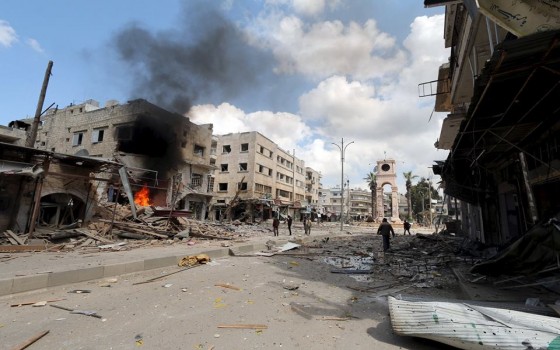
Addressing the UN Security Council meeting on Sudan, the UN official warned of the expanding fighting in Sudan – as the war approaches its fourth year – with front lines shifting in the states of North Darfur, North Kordofan, South Kordofan, and Blue Nile.
She spoke of North Kordofan, which remains a hotspot of conflict, warning that any ground fighting in El Obeid, the state capital, would "have dire consequences and deal a severe blow to the chances of achieving a ceasefire."
She also noted that, both on and off the battlefields, the use of long-range drones and airstrikes by both sides has become a defining characteristic of the conflict. The UN official addressed the recent Rapid Support Forces (RSF) attack on El Fasher, stating, "It is now time to act to prevent a recurrence of such atrocities in other parts of the country."
The risk of the conflict escalating regionally
The Under-Secretary-General also said that "the risk of the conflict becoming a regional one is a major concern," pointing to several potential flashpoints in the Sudanese war that could destabilize the entire region, including, for example, reports of armed groups moving across the border between Sudan and South Sudan in both directions.
At the same time, she noted the growing efforts to find a path to peace, welcoming the progress made in the initiative led by the Quartet – Egypt, Saudi Arabia, the United Arab Emirates, and the United States – to secure a humanitarian truce in Sudan.
She said, "These efforts offer a critical opportunity for an urgently needed de-escalation and could pave the way for a sustainable cessation of hostilities," urging both parties to the conflict (the Sudanese Armed Forces and the RSF) to engage in this initiative in good faith and without preconditions. A Political Vision for Sudan’s Future
DiCarlo also stressed the importance of making progress in developing a political vision for Sudan’s future. She said, “We must anchor any ceasefire in a credible political process that paves the way for an inclusive transition.” She emphasized the importance of all of Sudan’s partners uniting behind the peace efforts.
She explained that this requires ensuring the flow of weapons to the warring parties is cut off, adding, “The war has dragged on for so long and has intensified, largely due to the support the parties have received from abroad.”
DiCarlo stressed that unifying the message and decisive action by the Security Council is more important than ever.
Also addressing the Security Council was Hala El-Karb, Regional Director of the Strategic Initiative for Women in the Horn of Africa, representing civil society. She stated that more than 1,000 days after the start of the war, and despite repeated warnings, the Security Council has taken no action.
She added that all red lines, including blockades, forced displacement, man-made famine, genocide, and mass rape, have been crossed. She warned that "every day this war continues, it is destroying the lives of Sudanese women and girls and brutally mutilating their bodies."
She further cautioned that "the worst atrocities already committed during this war are likely to be repeated, and civilians will pay the price."
She stated that women, regardless of their identity, face systematic violence from all sides and are targeted because of their ethnicity, skin color, poverty, abilities, political affiliations, and other factors.
She added that sexual and gender-based violence against Sudanese women and girls is "a defining feature of this conflict."
Hala Al-Karb pointed out that cases of sexual violence, arbitrary arrest, and enforced disappearance of women in areas controlled by the Rapid Support Forces (RSF) remain underdocumented due to deliberate access restrictions imposed by these forces, systematic communication blackouts, and reprisals against anyone who speaks out.
She also explained that women continue to suffer even after fleeing to safer areas or after the RSF is expelled from certain regions. They still face deeply entrenched legal discrimination, she noted, citing reports that more than 840 women have been detained by local police and military intelligence in areas controlled by the Sudanese Armed Forces.
“This horrific sexual violence has not only destroyed lives, but has also torn our communities apart,” al-Karb added.
She further pointed out that the collapse of Sudan’s health system means that survivors of sexual and gender-based violence lack adequate medical care and psychosocial support.
Addressing the Security Council, al-Karb said, “This war is designed to disenfranchise women. Therefore, you must ensure that Sudanese women, in all their diversity, are effectively included in all efforts to resolve the conflict. This Council must do everything in its power to prevent further atrocities and ensure that Sudan is not forgotten.”
Edem Sornou, Director of the Crisis Response Division at the UN Office for the Coordination of Humanitarian Affairs (OCHA), noted the deteriorating situation in most parts of Darfur and Kordofan since the beginning of the year. In her briefing, she noted that the ongoing clashes around El Obeid are hindering the movement of humanitarian and commercial supplies, exacerbating shortages and deprivation. She also reported that communities in Darfur continue to face immense hardship.
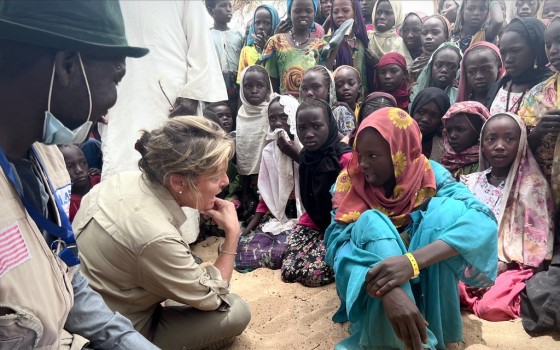
Wosorno added, "For more than 12 million women and girls, this is a crisis within a crisis. Violence against women and girls in Sudan has reached catastrophic levels. The demand for life-saving prevention and response services has increased by 350 percent since the start of the conflict."
She added that "sexual violence against women and girls has reached appalling levels," noting that documented cases have nearly tripled, "but this represents only a fraction of the true extent, given the barriers to reporting."
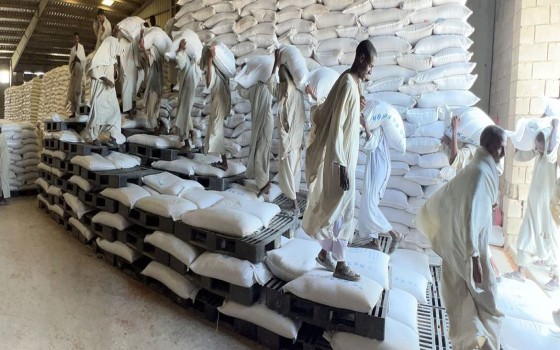
She reiterated the Integrated Food Security Phase Classification (IPC) warning that the number of children, pregnant women, and breastfeeding mothers at risk of acute malnutrition has now reached 4.2 million.






No Comments Found