

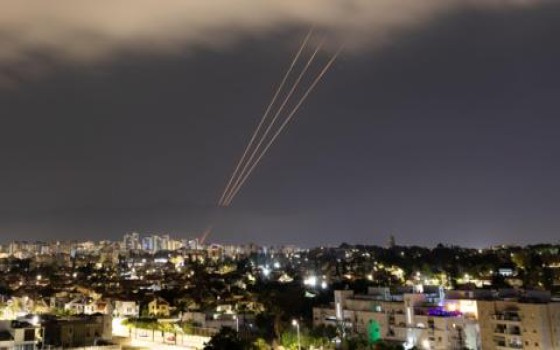
A new Supreme Leader in Iran... The first week of the war cost $6 billion... A qualitative shift from airstrikes to limited and precise ground operations targeting centers of gravity, and an alternative scenario for an Israeli withdrawal.

- Europe and Arabs
- Monday , 9 March 2026 4:57 AM GMT
Brussels: Europe and the Arabs
The US administration, in close coordination with Israel, is seriously considering the option of sending special forces units into Iranian territory at a later stage of the war. The aim is to secure Tehran's stockpile of highly enriched uranium and prevent its conversion into a nuclear weapon. According to a report by the Brussels-based European news network Euronews, the discussions behind the scenes, as reported by Axios citing US administration officials, have not been limited to uranium alone. They also extend to the possibility of seizing the strategic island of Kharg, through which approximately 90% of Iran's crude oil exports pass, potentially placing the Iranian economy under significant additional pressure.
According to an exclusive report by Axios, based on four sources familiar with the details of these secret discussions, the potential operation represents a qualitative shift in war strategy, moving from airstrikes to limited and highly precise ground operations within fortified underground facilities. Israel's Channel 12 reported that the second week of operations will focus on what are known as "centers of gravity," including Iran's defense industries, air force, and weapons production facilities.
According to a report by Channel 12, the Israeli political leadership has begun discussing possible exit strategies from the war should the military operation fail to achieve its objectives, chief among them the overthrow of the Iranian regime.
As the escalating military confrontation between Iran and the US-Israeli alliance enters its second week, warnings are mounting of a qualitative shift in the nature of the conflict.
Researchers at the Center for Strategic and International Studies (CSIS) believe the next phase could be more dangerous, with the conflict shifting from reliance on expensive ballistic missiles to intensive attacks using low-cost drones. This tactic aims to exhaust air defenses and prolong the engagement, while simultaneously increasing pressure on energy infrastructure, airports, and ports. The War Bill: $6 Billion in the First Week
Preliminary estimates from the Center for Strategic and International Studies (CSIS) indicate that the first week of the war cost the US alone approximately $6 billion. Pentagon officials briefed Congress on these figures this week.
Republicans anticipate that the administration will request additional funding through supplemental appropriations, especially since the majority of these expenses (around $3.5 billion) were not included in the original budget, according to The New York Times.
According to details provided by CSIS, the first 100 hours of military operations cost Washington $3.7 billion, averaging $891.4 million per day. These costs were distributed as follows:
Operational costs: Approximately $196 million (of which $178 million was pre-allocated)
Multiple munitions replacement: The largest expense, at $3.1 billion, with no funding allocated in the original budget
Loss compensation and infrastructure repairs: Estimated at an additional $350 million not included in the budget.
Mark Cancian, senior advisor, and Chris Park, associate fellow at the center, stated, "These unallocated costs will likely require additional funding from the U.S. Department of Defense, either through supplemental appropriations or another settlement bill."
They added, "The shift toward less expensive U.S. munitions and the sharp decline in Iranian drone and missile launches will reduce costs. However, future costs will depend primarily on the intensity of operations and the effectiveness of Iranian responses." 2,700 Iranian Missiles and Drones… and a Regional Response
The institute indicated that Tehran launched approximately 2,700 missiles and drones in the initial days, at a cost of billions of dollars.
This Iranian response followed the joint US-Israeli military campaign on February 28, which targeted sites across Iran and resulted in the death of Iranian Supreme Leader Ayatollah Ali Khamenei. This marked one of the most dangerous conflicts in the Middle East, pushing global financial markets into a state of instability and volatility.
Tehran retaliated by launching drones and missiles toward Arab countries in the region, targeting US interests and Washington's allies.
The Iranian Assembly of Experts elected Mojtaba Khamenei as the new Supreme Leader, succeeding his late father, Ali Khamenei. He became the third person to hold the highest office in Iran since the Islamic Revolution led by Ayatollah Ruhollah Khomeini in 1979. His name had emerged as a potential successor to his father, who was assassinated on February 28, 2016, in a US-Israeli attack. The raid also killed his son, wife, and mother.
According to sources who wished to remain anonymous, Mojtaba's election took place despite reservations from some members of the Assembly of Experts who expressed fears that the late Supreme Leader's son might be assassinated by the United States and Israel.
He is also considered the preferred candidate of the Revolutionary Guard, which was wary of choosing a less hardline figure.
Who is Mojtaba Khamenei?
The new Supreme Leader was born in Mashhad on September 8, 1969, where he received his primary education. After completing his secondary education, he studied Islamic theology under his father and another scholar, Ayatollah Mahmoud Hashemi Shahroudi, who served as head of the Iranian judiciary from 1999 to 2009.
Mojtaba Khamenei completed his religious studies before teaching Islamic theology at the Qom Seminary. He holds the title of Hojjat al-Islam, a rank several levels below Ayatollah in the Shia clerical hierarchy. He also had an important political and military role, as he held the position of deputy head of his late father’s office, where he was entrusted with managing political and security affairs since 1997.
Mojtaba is the second son of Ali Khamenei and is considered the most influential member of the late Supreme Leader's family. He has been a powerful figure in the Iranian government for many years and participated in the Iran-Iraq War, serving on the front lines between 1987 and 1988. His influence later grew within the security apparatus and political bodies of the Islamic Republic.
His name became prominent during the protests that followed the announcement of the 2009 presidential election results, which saw former President Mahmoud Ahmadinejad declared the winner. He commanded the Basij militia and is said to have played a role in suppressing the widespread demonstrations at the time, given his considerable power and influence over the Basij forces.
US Sanctions
In 2019, the US Treasury Department added Mojtaba Khamenei to its sanctions list due to his ties to the Quds Force of the Islamic Revolutionary Guard Corps (IRGC), which has close links with Hezbollah in Lebanon, the Popular Mobilization Forces (PMF) in Iraq, and Hamas and Islamic Jihad in Palestine. The Trump administration justified the decision at the time as part of Washington's policy of targeting figures close to the late Supreme Leader, accusing him of playing a role in Tehran's policies both within and outside the Islamic Republic.
A fortune in billions?
Western media reports indicate that Mojtaba is a wealthy businessman with a fortune estimated in the billions of dollars. Bloomberg reported last January that he had used intermediaries since 2011 to transfer Iranian oil revenues out of the country. The name of banker Ali Ansari emerged in managing these transactions. The Financial Times also revealed that the value of Mojtaba's real estate holdings in Europe alone was estimated at more than €460 million.



No Comments Found