

Joint Statement on the Outcomes of the 25th ASEAN-EU Ministerial Meeting: Discussions Covered Regional and International Issues, as well as Economic, Political, and Security Matters

- Europe and Arabs
- Tuesday , 28 April 2026 6:53 AM GMT
Brussels: Europe and the Arabs
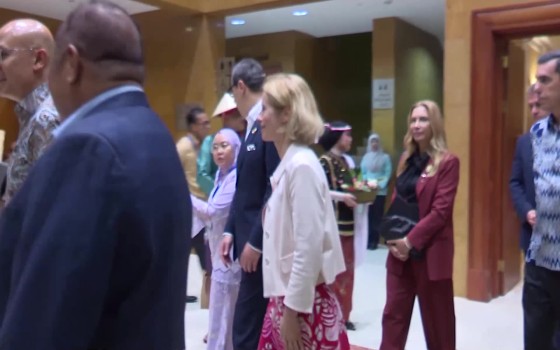
The Association of Southeast Asian Nations (ASEAN) and the European Union held their 25th Ministerial Meeting on April 27 and 28, 2026, in Bandar Seri Begawan, Brunei Darussalam. The meeting was co-chaired by Dato' Erywan Pehin Yusof, Minister of Foreign Affairs of Brunei Darussalam, in his capacity as Country Coordinator for ASEAN-EU Dialogue Relations, and Kaja Kallas, High Representative of the European Union for Foreign Affairs and Security Policy/Vice-President of the European Commission. The meeting was attended by the foreign ministers of ASEAN and EU member states, as well as representatives from the ASEAN Secretariat. This was stated in a joint communiqué distributed in Brussels on Tuesday.
2. We, the Ministers of Foreign Affairs of the Association of Southeast Asian Nations (ASEAN) and the European Union, and the High Representative for Foreign Affairs and Security Policy/Vice-President of the European Commission,
reaffirmed the shared values and mutual interests that have underpinned the ASEAN-EU dialogue for 49 years,
and noted with satisfaction the comprehensive and multifaceted nature of our partnership.
We noted the good progress made in implementing the ASEAN-EU Action Plan (2023-2027) and stressed the importance of further strengthening our strategic partnership.
3. We recalled the key outcomes of the 24th ASEAN Ministerial Meeting held in Brussels, Belgium, in 2024,
which reaffirmed the commitment to deepening relations based on international law,
common interest, mutual benefit, and equality.
We reaffirmed our shared interest in maintaining peaceful, stable, and prosperous regions in our region, upholding multilateralism,
and respecting international law and the rules-based international order. We reaffirmed our shared commitment to maintaining peace, security, and stability, including through sustainable development, and to promoting and protecting human rights, including the rights of persons with disabilities, gender equality, fundamental freedoms, and others.
4. We look forward to the 50th anniversary of ASEAN-EU dialogue relations in 2027 and the anticipated proposal for a commemorative ASEAN-EU Summit, which will serve as a renewed impetus to enhance cooperation between the two sides and elevate the partnership to new heights, guided by our shared aspirations for peace, progress, and sustainable development.
5. We reaffirmed our commitment to further strengthening ASEAN-EU dialogue relations and to taking more concrete, practical, and mutually beneficial initiatives to advance the strategic partnership. ASEAN expressed its appreciation for the EU's intention to establish a comprehensive ASEAN-EU strategic partnership, and both sides look forward to further discussions to achieve this goal. We emphasized that any study to establish such a mechanism must be purposeful, objective, and mutually beneficial, based on concrete, practical cooperation that delivers real value to both regions, and guided by ASEAN-centricity, established principles, and agreed processes.
6. We noted that both the ASEAN Indo-Pacific Vision and the EU Indo-Pacific Cooperation Strategy share relevant fundamental principles for fostering an ASEAN-centric, open, inclusive, transparent, flexible, rules-based Indo-Pacific architecture that upholds international law. We expressed our intention to explore practical cooperation in the four priority areas of the ASEAN Indo-Pacific Vision, consistent with the ASEAN Charter, the Treaty of Amity and Cooperation in Southeast Asia, and international law, through relevant ASEAN-led mechanisms. We reaffirmed the pivotal role of the Indo-Pacific region in shaping regional cooperation and welcomed the European Union’s continued support for aligning the EU Indo-Pacific Cooperation Strategy with this region, including through the Fourth EU-Indo-Pacific Ministerial Forum held in Brussels on 21 November 2025. We acknowledged that promoting peace, stability, security, and prosperity in the Indo-Pacific region remains a shared strategic interest.
7. We welcomed the Sixth ASEAN-EU Human Rights Policy Dialogue held on 15 October 2025, reaffirming our commitment to continued cooperation and advancing the promotion and protection of human rights in both regions. We also noted the adoption at the 47th ASEAN Summit of two ASEAN human rights instruments: the ASEAN Declaration on the Right to a Safe, Clean, Healthy, and Sustainable Environment and the ASEAN Declaration on Promoting the Right to Development and the Right to Peace for Inclusive and Sustainable Development. We encouraged cooperation on human rights among stakeholders, including the exchange of experiences on national action plans relating to business and human rights, in collaboration with national human rights institutions and civil society, as appropriate. We looked forward to continuing work in areas of common interest, including institutional linkages and capacity building. In this regard, we noted ASEAN’s ongoing work to promote regional cooperation on human rights mechanisms, including through the Association of Southeast Asian Nations (ASEAN) Intergovernmental Commission on Human Rights (AICHR). Recognizing the impact of landmines on all human rights, as well as the importance of mine action for national rehabilitation and sustainable development, ASEAN encouraged the European Union to support the ASEAN Regional Mine Action Centre (ARMAC).
8. We expressed our appreciation to Malaysia for its chairmanship of ASEAN in 2025 and for the progress made under the theme of “Inclusivity and Sustainability.” We welcomed the Philippines as the ASEAN chairmanship in 2026 under the theme “Shaping Our Future Together,” and expressed our support for its three priority pillars: peace and security, corridors of prosperity, and people empowerment. We also welcomed the adoption by ASEAN leaders at the 46th ASEAN Summit of ASEAN 2045: Our Shared Future, including the ASEAN Community 2045 Vision: “Resilient, Innovative, Dynamic, and People-Centric” (ASEAN Community 2045 Vision) and its strategic plans. We look forward to strengthening ASEAN-EU cooperation to support the priorities of the 2026 ASEAN Chairmanship and the first year of implementation of ASEAN 2045: Our Shared Future, including its four strategic plans and the Fifth ASEAN Integration Initiative (IAI) Action Plan (2026-2030), through practical initiatives and increased cooperation.
9. We welcomed Timor-Leste's accession to the 25th Meeting of the ASEAN Emergency Management Mechanism as the eleventh member state of the Association, and reaffirmed our continued commitment to supporting Timor-Leste's full integration, including through the continued implementation of the ASEAN Roadmap for Timor-Leste's full membership after its accession, as well as through targeted capacity-building initiatives.
10. We reaffirmed the importance of maintaining and promoting peace, security, prosperity, safety, and stability, and the peaceful settlement of disputes, including full respect for legal and diplomatic processes, without resorting to the threat or use of force, in accordance with international law, including the 1982 United Nations Convention on the Law of the Sea.
11. We reaffirmed our firm commitment to upholding international law in the maritime domain, and the freedom of navigation and overflight, in accordance with the 1982 United Nations Convention on the Law of the Sea. We referred to UN General Assembly resolution A/RES/76/72, which, in its preamble, affirmed the universality and uniformity of the 1982 United Nations Convention on the Law of the Sea (UNCLOS), reaffirmed that the Convention provides the legal framework within which all activities in the oceans and seas must be conducted, that it is of strategic importance as a basis for national, regional, and global action and cooperation in the maritime sector, and that its integrity must be preserved. We reaffirmed our commitment to maintaining and enhancing stability in our maritime domains to achieve peace, security, stability, and comprehensive prosperity in our regions, in accordance with international law, including the 1982 UNCLOS.
12. We emphasized that the Association of Southeast Asian Nations (ASEAN) and the European Union face increasingly complex security challenges, and that the security of the two regions is more interconnected than ever. We remained committed to cooperation in key areas such as maritime security, countering foreign information manipulation and interference, cybersecurity, counter-terrorism, space security, and others, and to strengthening synergies, with full respect for the Charter of the United Nations. We noted EU-funded projects such as the Indo-Pacific Maritime Routes (CRIMARIO) project, the Enhanced Security Cooperation in Asia and the Indo-Pacific (ESIWA+) project, the EU Cyber Network, the EU Direct Cyber Security Initiative, and the Global Port Safety (GPS) project. We emphasized the importance of respecting the rule of law, the sovereignty and territorial integrity of states, maritime security and safety, freedom of navigation and overflight, unimpeded legitimate maritime trade, and other internationally legitimate uses of the sea. We stressed the need for an effective response, in accordance with the principle of comprehensive security, to all forms of transnational threats, crimes, and challenges. In this regard, we encouraged the exchange of best practices on comprehensive societal resilience models to better prepare for and respond to multifaceted crises. He also reminded us of the importance of strengthening cooperation in efforts to combat money laundering and terrorist financing in order to improve the detection, analysis and investigation of terrorist financing and laundering of the proceeds of crime, in accordance with the standards of the Financial Action Task Force (FATF), through workshops and seminars to build capacity to combat international economic crimes, such as money laundering and the financing of the proliferation of weapons. 14. We welcomed the ongoing efforts of the Association of Southeast Asian Nations (ASEAN) to enhance maritime cooperation through relevant ASEAN sectoral bodies and ASEAN-led mechanisms, as well as ASEAN-led processes, including the ASEAN Maritime Forum (AMF) and the Expanded ASEAN Maritime Forum (EAMF), and the increasing cooperation in maritime safety and security operations through capacity-building programs, the exchange of best practices in emergency response, search and rescue, humanitarian assistance and disaster relief, early warning systems, maritime domain awareness, combating piracy and armed robbery, maritime cybersecurity, human trafficking, arms and drug smuggling, promoting sustainable and responsible fisheries, protecting the marine environment, conserving biodiversity, reducing marine plastic waste, and protecting and securing underwater infrastructure, such as cables and subsea pipelines.
15. We affirmed that the resilience of critical maritime infrastructure is essential to our security and prosperity, and that its effective protection requires concerted and coordinated efforts. To this end, we continued to foster a shared understanding of existing and emerging threats and challenges to interconnected critical infrastructure, and encouraged enhanced cooperation through the exchange of best practices and responses, in accordance with international law.
16. We welcomed the entry into force of the Convention on the Law of the Sea on the Conservation and Sustainable Use of Marine Biological Diversity in Areas Beyond National Jurisdiction (BBNJ Convention). We will work to promote the ratification and implementation of the BBNJ Convention to ensure its effective implementation, starting with the first Conference of the Parties.
17. We welcomed the European Union’s continued support for ASEAN-centricity and its active participation in ASEAN-led mechanisms, including the ASEAN Regional Forum and the Post-Ministerial Conference. ASEAN noted with appreciation the European Union’s interest in participating in the activities of the Expert Working Group of the ASEAN Defence Ministers’ Meeting (Evolved) through the Observer Programme, in accordance with ASEAN’s established principles, methods, processes, and practices. 18. We welcomed the European Union’s support for maritime security and maritime domain awareness, which complements the priorities of the Association of Southeast Asian Nations (ASEAN) within the framework of the Peace and Migration in the Pacific (PMP) Agreement, through technical cooperation, joint awareness-raising, capacity-building, knowledge sharing, and the exchange of expertise. We noted the efforts to enhance information sharing, inter-agency coordination, and the implementation of relevant standards and recommended practices of the International Civil Aviation Organization (ICAO) and the International Maritime Organization (IMO) Conventions, in accordance with international law.
19. We looked forward to celebrating the 50th anniversary of the Convention on Maritime Technical Cooperation (TAC) in 2026 and reaffirmed its continued importance as a key instrument for promoting peace, stability, and cooperation in the region. We emphasized the enduring principles of the TAC—peaceful coexistence, non-interference, the renunciation of the threat or use of force, and the peaceful settlement of disputes—to which all signatory States are committed and which remain essential in an increasingly complex global environment. We welcomed the continued support of the European Union for the Agreement on Technical Cooperation on the Sea (ATCS) as part of efforts to strengthen the centrality of the Association of Southeast Asian Nations (ASEAN) and maintain an open, transparent, inclusive, resilient, rules-based regional architecture centered on ASEAN and upholding international law. ASEAN also welcomed the continued interest of EU Member States in acceding to ATCS.
20. We welcomed the ongoing cooperation in mitigating risks associated with chemical, biological, radiological, and nuclear (CBRN) materials, building on the existing collaboration between the ASEAN CBRN Defense Expert Network and the EU CBRN Risk Mitigation Centres of Excellence initiative, including through capacity-building activities.
21. We reaffirmed our unwavering support for safeguarding and strengthening the nuclear disarmament, non-proliferation, and arms control architecture. We will continue to work towards a successful 2026 Review Conference of the Parties to the Treaty on the Non-Proliferation of Nuclear Weapons (NPT), building on our participation throughout the current review cycle. We reaffirmed our unwavering support for the Treaty on the Non-Proliferation of Nuclear Weapons (NPT) as the cornerstone of the global nuclear non-proliferation regime, the essential foundation for pursuing nuclear disarmament in accordance with Article VI, and a crucial element in the development of peaceful applications of nuclear energy in accordance with Article IV. This is of paramount importance for the maintenance of international peace and security.
22. We reaffirmed the importance of the full and effective implementation of the Treaty on the ASEAN Nuclear-Weapon-Free Zone (ANFZ), including through the Action Plan to Enhance the Implementation of the ANFZ (2023-2027).
We noted that the Executive Committee of the ANFZ Commission continues to explore the possibility of allowing nuclear-weapon States wishing to sign the Treaty to do so.
Ratification of the Protocol to the Treaty on the Southeast Asia Nuclear-Weapon-Free Zone (SAN-Weapon-Free Zone) without reservation, and provision of a formal prior written guarantee of this commitment to proceed with signature.
We noted that the Association of Southeast Asian Nations (ASEAN) welcomes any nuclear-weapon state willing to do so.
We congratulated Timor-Leste on its accession to the Treaty on the Southeast Asia Nuclear-Weapon-Free Zone in 2025. We welcomed continued engagement with all nuclear-weapon states, including those with reservations, with a view to resolving outstanding issues in accordance with the objectives and principles of the Treaty on the Southeast Asia Nuclear-Weapon-Free Zone, and we welcomed efforts to promote global nuclear disarmament and non-proliferation.
23. We welcomed the continued cooperation in combating transnational crime within the framework of the ASEAN Consultative Meeting and the European Union Senior Officials Meeting on Transnational Crime (SOMTC+EU), in accordance with the ASEAN-EU Action Plan on Countering Terrorism and Transnational Crime (2022-2027), and looked forward to its further implementation.
We also noted the comprehensive sectoral Monitoring, Evaluation, Reporting, and Learning (MERL) framework, established under the ASEAN Multi-Sectoral Action Plan to Combat Trafficking in Persons 2023-2028 (Bohol Action Plan to Combat Trafficking in Persons 2.0), which strengthens ASEAN’s coordinated efforts to combat trafficking in persons.
24. We recognized the importance of enhancing cooperation on non-traditional security challenges, including cyber threats, online fraud and related crimes, and countering disinformation and misinformation. We encouraged enhanced cooperation between ASEAN bodies and centers and European Union institutions, agencies and specialized projects to strengthen cyber resilience and incident response, and to promote an open, secure and stable, accessible and peaceful information and communication technology (ICT) environment, consistent with the 2019 ASEAN-EU Statement on Cybersecurity Cooperation. In this context, we also stressed the importance of ASEAN-EU cooperation to promote responsible state behaviour and the applicability of international law in cyberspace, including through the UN Global Mechanism. We reaffirmed our commitment to leverage the ARF to enhance ASEAN-EU cooperation on cyber issues, including through confidence building measures. 25. We remained committed to combating the global scourge of online fraud and recognised global instruments, including the United Nations Convention against Cybercrime, and initiatives, including the Call for Action of the Global Fraud Summit of 2026 and the Bangkok Joint Statement by the Global Partnership against Online Scams, that can be instrumental to that end. We noted ASEAN and the EU’s intention to support prevention measures, effective law enforcement actions and support and protect victims, as noted in the ASEAN Declaration on Combatting Cybercrime and Online Scams and the ASEAN Guide on Anti-Scam Policies and Best Practices, as well as in the ProtectEU European Internal Security Strategy. We stressed the need to strengthen the sharing of expertise and cooperation. We recognised the need to stop the rising number of scam centres, especially in Southeast Asia, and dismantle the organised criminal groups establishing and operating those centres, as they pose a major challenge to regional security and human rights. These centres often capitalise on local border conflicts and weak regulatory environments to facilitate fraudulent operations worldwide. We recognised the need for assistance of victims of human trafficking, who are coerced and exploited within these centres to facilitate their recovery and repatriation. 26. We acknowledged the EU as a strategic economic partner for ASEAN. In the current context of rising challenges for the stability and the predictability of the global economy, such as industrial overcapacities and trade tensions, ASEAN and the EU share the ambition to uphold a predictable, transparent, free, fair, inclusive, sustainable, and rules based multilateral trading system. As such, we agreed to intensify efforts to further strengthen trade and investment relations. We welcomed the convening of the regular ASEAN-EU Business Summit to boost trade and investment ties in key priority areas between the two regions. We welcomed the endorsement of the ASEAN-EU Trade and Investment Work Programme (TIWP) 2026-2027 at the 21st ASEAN Economic Ministers (AEM)-EU Trade Commissioner Consultation in September 2025, which will strengthen the strategic economic partnership between both sides. We also welcomed the progress in the bilateral free trade agreements between the ASEAN Member States and the EU as a critical step towards deepening the economic ties between the EU and ASEAN. 6 Furthermore, we emphasised that these agreements will not only enhance mutual ASEAN-EU trade but also serve as a catalyst for elevating our broader strategic partnership. We are confident that our evolving trade relationships will foster long-term prosperity and stability for both ASEAN and the EU. 27. We noted that deepening trade and investment cooperation will be increasingly important in navigating global economic uncertainty and geoeconomic challenges and building a resilient diversified and sustainable supply chain. In this context, we welcomed the work undertaken by the ASEAN-EU Joint Working Group on Trade and Investment (JWG-TI), in areas of digital trade, green services and green technologies and supply chain resilience, including the results of the joint study on digital trade, which showed potential for future cooperation between ASEAN and the EU. We welcomed the recommendation of the 21st AEM-EU Trade Commissioner Consultation to consider working towards a set of non-binding ASEAN-EU Digital Trade Principles, building on the results of the joint study to strengthen cooperation on digital issues and encourage convergence around common principles. We noted the progress already made by the JWG-TI in advancing discussions on the Digital Trade Principles, which will strengthen our partnership and support an open and trustworthy environment for digital trade. We also welcomed the SCOPE Trade project, which supports resilient value chains and digital trade. We reaffirmed our efforts in making continued and tangible progress in sectoral cooperation and in advancing towards a region-to-region ASEAN-EU Free Trade Agreement (FTA) in the longer term. 28. We acknowledged the importance of critical minerals for the development of crucial technologies for the clean and digital transitions. We looked forward to exploring meaningful cooperation in upstream-to-downstream minerals development, promote sustainable practices and technology adoption, and build human capacity to foster responsible investment, production, and trade across the value chain. 29. We welcomed the deepening cooperation between ASEAN and the EU under the ASEAN-EU 2025 Digital Work Plan, and looked forward to the implementation of the ASEAN-EU 2026 Digital Work Plan, including enhanced exchange and cooperation in secure and trusted connectivity, AI governance, digital platforms and online scams, digital standards, digital trade, and Earth observation. We also acknowledged the progress of the ongoing Global Gateway projects, namely the EU-ASEAN Sustainable Connectivity Package (SCOPE)-Trade, SCOPE-Investment Facility, and SCOPE Digital. We looked forward to the signing of the ASEAN Digital Economy Framework Agreement (DEFA) this year to further strengthen ASEAN’s digital integration and enhance inter-regional digital trade opportunities. 30. We welcomed the EU-ASEAN High-Level Dialogue on Science, Technology and Innovation held in Jakarta on 19 June 2025, which reaffirmed the importance of strengthening ASEAN-EU cooperation in research and innovation. We highlighted the role of science, technology and innovation in addressing shared global challenges and supporting sustainable and inclusive growth. We also welcomed the continued strengthening of cooperation in this field through Horizon Europe and other dedicated 7 instruments, and encouraged greater participation of ASEAN researchers and institutions. We further noted progress in the implementation of priorities agreed with the ASEAN Committee on Science, Technology and Innovation (COSTI), including the adoption of the ASEAN Regional Research Infrastructure (RRI) Strategy, and expressed our intention to explore further practical cooperation in areas such as science diplomacy, talent mobility and support for technology transfer capacities, including through relevant ASEAN-EU mechanisms. 31. We acknowledged the EU’s support for advancing ASEAN’s enforcement and advocacy capabilities in competition and consumer protection policies, and agreed to strengthen our cooperation, including through the convening of the first ASEAN-EU Heads of Competition Agencies Roundtable in May 2026. 32. We looked forward to further cooperation in the development and promotion of ASEAN micro, small and medium-sized enterprises (MSMEs), including through enhanced cooperation, technical assistance, capacity-building initiatives to strengthen their ability to meet EU relevant standards and regulatory requirements, and to support their adaptation and sustainable transition. 33. We welcomed the ongoing implementation and continued development of ASEAN-EU cooperation on intellectual property (IP) under the SCOPE-IPR project, which has delivered tangible outcomes, including through capacity-building programmes and the facilitation of knowledge exchange, IP support for innovators, creators, MSMEs, and underserved groups, and enhanced cooperation on IP enforcement. We also encouraged enhanced cooperation in creative economy. 34. We welcomed the continued cooperation between ASEAN and the EU in the field of transport and looked forward to the 9th ASEAN-EU Senior Transport Officials’ Dialogue that will take place in the Philippines in November 2026. We noted the extensive support being provided through different projects under the Sustainable Connectivity Package to increase the safety, sustainability, resilience and interoperability of the ASEAN transport system across modes, and encouraged ASEAN and the EU to further deepen collaboration in the coming years, in line with the ASEAN Transport Sectoral Plan 2026 2030. We noted progress in the implementation of ASEAN-EU Comprehensive Air Transport Agreement (CATA), the first region-to-region aviation agreement, and recalled the Record of Statements made on the occasion of its signature, which enables the provisional application of the Agreement, pending its entry into force. We also encouraged continued efforts towards ratification in order to fully realise the Agreement’s potential in facilitating business, trade, tourism and people-to-people exchanges. 35. We noted the work of the Joint Working Group (JWG) on Palm Oil between the EU and Relevant ASEAN Member States, and the voluntary attendance of Member States at the JWG’s Meetings, to promote mutual understanding on the sustainable production of vegetable oils and addressing challenges in this sector in a holistic, transparent, and non-discriminatory manner. through different projects under the Sustainable Connectivity Package
to increase the safety, sustainability, resilience and interoperability of the ASEAN
transport system across modes, and encouraged ASEAN and the EU to further deepen
collaboration in the coming years, in line with the ASEAN Transport Sectoral Plan 2026
2030. We noted progress in the implementation of ASEAN-EU Comprehensive Air
Transport Agreement (CATA), the first region-to-region aviation agreement, and
recalled the Record of Statements made on the occasion of its signature, which enables
the provisional application of the Agreement, pending its entry into force. We also
encouraged continued efforts towards ratification in order to fully realise the
Agreement’s potential in facilitating business, trade, tourism and people-to-people
exchanges.
35. We noted the work of the Joint Working Group (JWG) on Palm Oil between the EU and
Relevant ASEAN Member States, and the voluntary attendance of Member States at
the JWG’s Meetings, to promote mutual understanding on the sustainable production of
vegetable oils and addressing challenges in this sector in a holistic, transparent, and
non-discriminatory manner.
8
36. We welcomed the publication of the ASEAN Taxonomy for Sustainable Finance
(Version 4) and emphasised the importance of ensuring its interoperability with
international standards, including the EU Taxonomy. In this context, we highlighted the
importance of mobilising investment for circular business models through
implementation of sustainable finance taxonomies that recognise circularity as a key
environmental objective.
37. We welcomed the EU’s support through the EU-ASEAN Green Initiative and the ASEAN
Catalytic Green Finance Facility. We further welcomed the launch of the ASEAN Centre
of Excellence for MSMEs in the Green Transition at the 47th ASEAN Summit, and looked
forward to continued ASEAN-EU cooperation on circular economy initiatives, including
the ASEAN Circular Economy Stakeholder Platform hosted by the ASEAN Centre for
Sustainable Development Studies and Dialogue (ACSDSD). We agreed to enhance
cooperation on resource efficiency and to share best practices on sustainable product
design and life-cycle assessments.
38. We welcomed the third ASEAN-EU Energy Dialogue in 2025 and looked forward to its
next iteration in June 2026, building on ongoing initiatives such as SCOPE Energy
projects. We also appreciated the engagement on energy during the Global Gateway
Forum in October 2025. We reaffirmed the importance of energy efficiency, and noted
ASEAN's Energy Efficiency and Conservation (EE&C) programme under the ASEAN
Plan of Action for Energy Cooperation (APAEC), as well as the EU's “Energy Efficiency
First” principle. We recognised that the energy transition should be just and inclusive,
towards ensuring that the transition away from fossil fuels is undertaken in a just,
inclusive and orderly manner, while creating local jobs, supporting regional structural
change, and maintaining energy affordability for all.
39. We acknowledged the EU’s support for the ASEAN Power Grid (APG) and agreed to
further explore cooperation on renewable energy, energy efficiency, low-carbon
technologies and sustainable finance, while recognising the importance of energy
security, affordability and reliability during energy transition. We welcomed the EU’s
support for APG implementation, including through the SCOPE-Energy initiative, as well
as the Green Team Europe Initiative (GTEI) and its Technical Assistance Facility (TAF).
We also welcomed the EU’s proposed support in science diplomacy, start-ups,
bioeconomy, and gender equality in research.
40. We welcomed the ASEAN Leaders’ adoption of the ASEAN Connectivity Strategic Plan
(ACSP) 2026-2035, which includes an increased emphasis on the mainstreaming and
implementation of the AOIP. We commended the joint collaboration among the EU, the
ASEAN Committee on Sustainable Infrastructure (ACSI), and other relevant ASEAN
Sectoral Bodies in advancing connectivity and sustainable infrastructure cooperation,
including through the ongoing implementation of the SCOPE-Investment Facility
supporting early-stage preparation of Global Gateway investments in ASEAN countries.
9
41. We encouraged the EU to explore collaboration to support the implementation of the
ASEAN Leaders’ Declaration on the Blue Economy, the ASEAN Blue Economy
Framework, and the ASEAN Blue Economy Implementation Plan for Sustainability and
Prosperity, to harness the potential of the Blue Economy as a new engine of growth for
ASEAN, promoting inclusive, equitable, and sustainable economic development across
coastal and landlocked States in accordance with international law, including the 1982
UNCLOS. We welcomed the progress of the ASEAN Blue Economy Implementation
Plan (2026-2030) and expressed commitment to strengthening cooperation in
sustainable fisheries, maritime connectivity, and marine biodiversity.
42. We encouraged the EU’s continued support for sub-regional cooperation frameworks in
ASEAN, including the Mekong subregion, Brunei Darussalam-Indonesia-Malaysia
Philippines East ASEAN Growth Area (BIMP-EAGA), Indonesia-Malaysia-Singapore
Growth Triangle (IMS-GT), and Indonesia-Malaysia-Thailand Growth Triangle (IMT
GT), to promote inclusive and equitable development across ASEAN.
43. We welcomed the strengthened partnership between ASEAN and the EU, as well as
the EU’s support and sharing of best practices and experiences, which can assist
ASEAN’s efforts to narrow the development gap among ASEAN Member States as well
as between ASEAN and the rest of the world, achieve the UN Sustainable Development
Goals (SDGs), and enhance ASEAN’s competitiveness as a region, including through
the implementation of the IAI Work Plan V, as well as taking into account existing sub
regional cooperation frameworks.
44. We appreciated ongoing cooperation in labour, social protection for migrant workers and
people in vulnerable situations, gender equality, public health and education, and
welcomed the ASEAN-EU SCOPE Higher Education Programme (SCOPE-HE) (2024
2028), supporting higher education, Technical and Vocational Education and Training
(TVET), digital skills development and research partnership.
45. We encouraged the EU’s continued support for ASEAN’s priorities in climate action,
biodiversity conservation, mitigation of transboundary haze pollution, safe and
sustainable low-carbon energy, and public health, by deepening engagement with the
relevant ASEAN Centres, including the ASEAN Centre for Climate Change (ACCC),
ASEAN Centre for Biodiversity (ACB), ASEAN Coordinating Centre for Transboundary
Haze Pollution Control (ACC THPC), ASEAN Specialised Meteorological Centre,
ASEAN Centre for Energy (ACE), ASEAN Centre for Active Ageing and Innovation
(ACAI), as well as the ASEAN Centre for Public Health Emergencies and Emerging
Diseases (ACPHEED) once established, as practical platforms to advance ASEAN-EU
cooperation in these areas.
46. We committed to deepening cultural cooperation between ASEAN and the EU to foster
mutual understanding, preserve shared cultural heritage, and promote creative
exchanges, thereby strengthening the people-to-people dimension of our Strategic
Partnership.
10
47. We looked forward to receiving the EU’s proposal to establish an ASEAN-EU Centre in
Europe as an important step towards strengthening engagement between our regions.
We acknowledged its potential to promote closer collaboration in areas such as trade
and investment facilitation, innovation and emerging technologies, sustainability,
entrepreneurship, and people-to-people exchanges, while contributing to shared
economic and social development.
48. We appreciated the EU’s support in facilitating orderly, safe, regular and responsible
migration in the region, including through the development of the second edition of the
ASEAN Employment Outlook.
49. We recognised that the triple planetary crisis – climate change, biodiversity loss and
pollution – is an existential threat to which immediate responses are needed, requiring
urgent and accelerated collective action. We reaffirmed our commitment to enhancing
environmental protection, combating climate change, including by pursuing efforts to
limit the global temperature increase to 1.5°C above pre-industrial levels, addressing
biodiversity loss and deforestation as well as land degradation, desertification and
drought, including through the effective implementation of the United Nations
Framework Convention on Climate Change (UNFCCC) and the Paris Agreement, taking
into account the outcomes of the Global Stocktake (GST), as well as the Convention
on Biological Diversity (CBD) and the Kunming-Montreal Global Biodiversity
Framework, and the United Nations Convention to Combat Desertification (UNCCD), to
promote sustainable development and address the global challenges of climate change,
biodiversity loss, and environmental protection, leaving no one behind, through relevant
ASEAN-EU platforms and dialogue mechanisms. We recommitted to defending science
as the foundation of our climate and environmental action to support the International
Intergovernmental Panel on Climate Change (IPCC) and the Intergovernmental
Science-Policy Platform on Biodiversity and Ecosystem Services (IPBES). We
underlined the role of the ocean in the fight against climate change and called on
countries to preserve and restore ocean and coastal ecosystems and scale up, as
appropriate, ocean-based mitigation action.
50. We reaffirmed the importance of effectively implementing the Paris Agreement and our
respective Nationally Determined Contributions, in line with the 1.5°C above pre
industrial levels temperature goal. We will explore how to enhance our cooperation and
exchanges to further enhance climate action, including on areas such as carbon pricing
and markets and resilience, in view of the 50th anniversary of the ASEAN-EU relations
in 2027. We reaffirmed the critical role of the financial sector in mobilising private
investment for climate-neutral technologies and cooperation on transition finance to
support hard-to-abate sectors in their transition towards net-zero.
51. We welcomed cooperation on climate action and environment through the ASEAN-EU
TAF-GTEI and the Climate Action Programme (CAP), the upcoming Small Grants
Programme Phase III: Strengthening Biodiversity Conservation and Community
Resilience (SGP III) as well as the Nature Solutions Finance Hub. ASEAN noted the
EU's Nature Solutions Finance Hub, aimed at supporting ASEAN Member States’ efforts
11
in biodiversity conservation. We welcomed the first convening of the ASEAN-EU
Ministerial Dialogue on Environment and Climate Change on 4 September 2025 in
Langkawi, Malaysia, and the endorsed ASEAN-EU Proposed Work Programme (2025
2026) where both sides reaffirmed their commitment to address climate change,
biodiversity loss and pollution, as well as opportunities of collaboration on carbon
markets, and looked forward to the second edition in 2027 to continue advancing our
cooperation on environmental and climate topics.
52. Both sides remained committed to developing an international legally binding instrument
to end plastic pollution, including in the marine environment, by addressing the full
lifecycle of plastics, as mandated by United Nations Environment Assembly (UNEA)
Resolution 5/14. We will work together to ensure effective global measures underpinned
by robust science-based considerations, particularly reducing the use of single-use,
avoidable, and problematic plastic products to advance plastic circularity and support a
circular economy.
53. We encouraged strengthened cooperation in Disaster Risk Management, which
includes support for the implementation of the ASEAN Declaration on One ASEAN One
Response: ASEAN Responding to Disasters as One in the Region and Outside the
Region, and the recently adopted ASEAN Agreement on Disaster Management and
Emergency Response (AADMER) Work Programme 2026-2030. We also appreciated
the EU’s collaboration with the ASEAN Coordinating Centre for Humanitarian
Assistance on disaster management (AHA Centre) through the “Integrated Programme
in Enhancing the Capacity of AHA Centre and ASEAN Emergency Response
Mechanisms” (EU-SAHA), as well as the Administrative Arrangement between the AHA
Centre and European Commission Humanitarian Aid and Civil Protection Directorate
General (DG ECHO) signed in October 2024. We underscored the importance of forging
stronger partnerships to strengthen climate and disaster resilience in the region,
including to further develop an enabling framework for sustainable resilience.
54. We welcomed the continued collaboration in sharing best practices and knowledge
sharing in the areas of poverty reduction and rural development, as envisioned under
the ASEAN-EU Plan of Action (2023-2027).
55. We exchanged views on regional and international issues of common interest and
concern. We reaffirmed our respect for sovereignty, political independence and
territorial integrity of all nations and reiterated the need to comply with the UN Charter
and international law. We underscored the importance of upholding multilateralism and
we reaffirmed our commitment to the rules-based international order based on
adherence to international law, including the UN Charter, for the maintenance of peace,
stability, security and prosperity, as well as sustainable development. We will work
together in driving forward the UN reform process – the UN80 Initiative – to ensure the
UN remains effective, cost-efficient and responsive towards advancing peace,
development and sustainability. We envisaged cooperating on the prevention of
sanctions circumvention in accordance with the UN Charter and the international
treaties of which we are members.
12
56. We recognised the benefits of having the South China Sea as a sea of peace, stability,
and prosperity. We reaffirmed the need to enhance mutual trust and confidence,
exercise self-restraint in the conduct of all activities and avoid actions that could increase
tensions and the risk of accidents, misunderstandings and miscalculations, and pursue
peaceful resolution of disputes in accordance with international law, including the 1982
UNCLOS. We underscored the importance of the full and effective implementation of
the 2002 Declaration on the Conduct of Parties in the South China Sea (DOC) in its
entirety. We encouraged all states to avoid any unilateral actions that endanger peace,
security and stability in the region. We emphasised the need to maintain and promote
an environment conducive to the Code of Conduct in the South China Sea (COC)
negotiations. We looked forward to the early conclusion of an effective and substantive
COC that is in accordance with international law, including the 1982 UNCLOS.
57. We expressed deep concern over the escalation of conflicts and humanitarian situation
in Myanmar. We reaffirmed that the ASEAN Five-Point Consensus remains the main
reference to address the political crisis in Myanmar and further reaffirmed the relevant
Leaders’ decisions. We denounced the continued acts of violence and urged all parties
involved to take concrete action to immediately halt indiscriminate violence, to facilitate
humanitarian access and create conducive environment for inclusive national dialogue
through a Myanmar-owned and -led comprehensive political resolution, while reaffirming
that Myanmar remains an integral part of ASEAN. We appreciated the ASEAN Chairs’
continuing efforts through its respective Special Envoys of the ASEAN Chair on
Myanmar, and called for the continued support of ASEAN’s External Partners, including
the UN, as well as neighbouring countries of Myanmar, to work with ASEAN towards
the concrete implementation of the ASEAN Five-Point Consensus.
58. We expressed concern over the recent developments on the Korean Peninsula,
including the Democratic People’s Republic of Korea’s (DPRK) intercontinental ballistic
missile testing and ballistic missile launches, which are in violation of relevant UN
Security Council (UNSC) resolutions. We stressed the importance of resuming peaceful
dialogue among all concerned parties in order to realise lasting peace and stability in a
denuclearised Korean Peninsula. We called on the DPRK to comply fully with all
relevant UNSC resolutions. We called for the full implementation of all relevant UNSC
resolutions and supported international efforts to bring about the complete, verifiable,
and irreversible denuclearisation of the Korean Peninsula in a peaceful manner. We
reiterated our readiness to play a constructive role, including through utilising ASEAN
led platforms such as the ARF, in promoting a conducive atmosphere to peaceful
dialogue amongst the concerned parties.
59. On Ukraine, we reiterated our positions as expressed in other fora, where most
members expressed deep concern over the ongoing war, which continues to cause
immense human suffering and carries global consequences. As for all nations, we
continued to reaffirm our respect for sovereignty, political independence, and territorial
integrity. We called for a sustainable ceasefire, and for the protection of civilians and
civilian infrastructure in accordance with international humanitarian law. We expressed
13
support for efforts towards the achievement of a comprehensive, just and lasting peace
in Ukraine through dialogue and diplomacy, based on the principles of the UN Charter
and of international law.
60. We remained gravely concerned over the deteriorating situation in the Occupied
Palestinian Territories. We deplored the continuing catastrophic humanitarian situation
in Gaza, despite the ceasefire and initial steps toward implementing the Comprehensive
Plan to End the Gaza Conflict (“Gaza Peace Plan”), facilitated by the United States. We
condemned all attacks against civilians and civilian infrastructure, and called for rapid,
safe, sustained and unimpeded humanitarian access to all those in need, including
through increased capacity at border crossings, including by sea. We recalled the need
to ensure the protection of civilians at all times. We called for the full implementation by
all parties of the ceasefire and of all other provisions of UNSC Resolution 2803 (2025),
in line with relevant UNSC Resolutions, which endorses the Gaza Peace Plan and
provides for the establishment of a temporary International Stabilisation Force (ISF) in
Gaza, with a view to achieving a permanent end to hostilities. We underlined the
importance of its full and effective implementation in accordance with international
humanitarian law and international human rights law, taking into account the inalienable
rights of the Palestinian people, including the right to self-determination and to their
homeland of the Palestinian people. We reiterated our support for a comprehensive and
durable solution to achieve just and long-lasting peace in the Middle East based on the
two-State solution in accordance with international law and the relevant UN resolutions.
We emphasised the need for all parties to refrain from actions that could escalate
tensions or widen the conflict.
61. On the situation in the Middle East, we welcomed the ceasefire between the United
States and the Islamic Republic of Iran, mediated by the Islamic Republic of Pakistan,
with the support of other concerned parties, and continue negotiations in good faith to
bring about a lasting resolution to this conflict. We reaffirmed the importance of
maintaining maritime safety and security, and upholding freedom of navigation in and
overflight above straits used for international navigation, in accordance with international
law, as reflected in the 1982 UNCLOS. We expressed deep concern over any
discriminatory or unilateral measures, that may impede or obstruct vessels passing
through the Strait of Hormuz, or any straits used for international navigation, which are
inconsistent with international law, as reflected in the 1982 UNCLOS, and called for the
restoration of the safe, unimpeded, and continuous transit passage of vessels and
aircraft in the Strait of Hormuz, in accordance with the 1982 UNCLOS, as well as for all
parties to ensure the safety of seafarers and ships in accordance with the International
Convention for the Safety of Life at Sea (SOLAS), minimising disruption to the flow of
food, energy and essential goods, and mitigating its adverse impact on global economic
stability. We urged all parties involved to maintain conducive conditions for the full and
effective implementation of the ceasefire, by exercising utmost restraint, ceasing all
hostilities, and avoiding any acts that may aggravate the situation. We underscored the
importance of maintaining regional peace, stability and prosperity, upholding
international law and promoting genuine dialogue and diplomacy in addressing conflicts
and tensions, including the need for a complete and immediate cessation of hostilities
14
across all fronts in the Middle East. We further reaffirmed the obligations of all States to
resolve their differences through peaceful means, and to respect the sovereignty and
territorial integrity of all nations, to protect civilians and civilian infrastructure in armed
conflicts, and to ensure the safety and security of UN peacekeepers and humanitarian
personnel, in accordance with international law, the UN Charter, and relevant UNSC
resolutions.
62. We expressed concern over the continuing humanitarian crisis and human rights
situation in Afghanistan. We also expressed concern over ongoing tensions and
underscored the importance of restraint and de-escalation by all sides, as well as efforts
to support dialogue and regional stability. We called for unhindered access to the
delivery of basic needs and humanitarian assistance to all regions and all people,
including women and children, in the country. We encouraged further coordinated efforts
from the international community to help address the crisis. We stressed the importance
of an inclusive and fully representative government, based on the rule of law, respect
for human rights and fundamental freedoms of all persons living in Afghanistan,
particularly women, girls and children.
63. In line with the principles of the UN Charter, international law, including applicable
international human rights law, we reaffirmed our commitment to continue encouraging
dialogue and understanding and promoting the spirit of peaceful co-existence in full
respect of the cultural, religious and linguistic diversity of both regions.



No Comments Found