

Elections: A Choice Between the EU or Russia? Some See It as a Fundamental Struggle Over Armenia's Identity, Where the State Stands Against the Church. Moscow Exerts Pressure, and Support Comes from Brussels and Washington.

- Europe and Arabs
- Sunday , 7 June 2026 7:13 AM GMT
Brussels: Europe and the Arabs
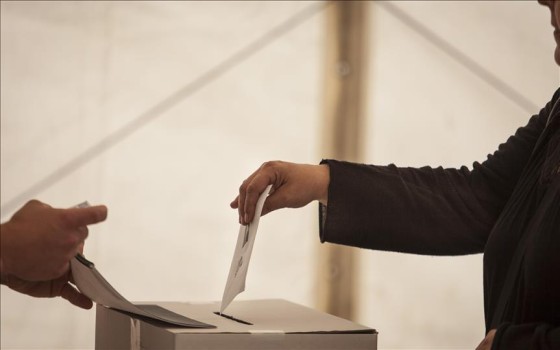
Armenians went to the polls on Sunday. In much of the Western media, this election is portrayed as a simple choice: will the country choose a pro-EU path or remain aligned with Russia? The reality, however, is far more complex. It is a fundamental struggle over Armenia's identity and soul, pitting the state against the church. According to Dutch media, including the New Rights website, Armenia is not only internally divided but also situated at a crucial geopolitical crossroads between Russia, Iran, Azerbaijan, and Turkey. Therefore, Pashinyan's secular, pro-Western stance is of paramount strategic importance to the West. In May, Pashinyan hosted the presidents of the European Commission and the European Council in Yerevan, elevating relations to a strategic partnership. A month later, Macron played the piano with the prime minister in a friendly atmosphere, sending a message to Moscow that Europe supports Armenia.
According to a report by the Brussels-based news network Euronews: Armenians are poised to decide their future amid a Russian-Western clash, with the European Union and the United States backing Prime Minister Pashinyan's cautious move toward the West. Meanwhile, Russia is intensifying its economic and political pressure on Yerevan to keep the former Soviet republic within its sphere of influence.
Polling stations will open at 8:00 AM local time (6:00 AM Central European Time) for approximately 2.4 million eligible Armenians. Initial results are expected to be released from Sunday evening until Monday morning. This crucial election will determine the future of this South Caucasus nation, and indeed the entire region. Russia has warned Yerevan against a "Ukraine scenario," while the European Union and the United States have aligned themselves to support Armenian Prime Minister Nikol Pashinyan's cautious shift toward the West following his historic peace agreement with Azerbaijan.
Voters will choose between Pashinyan and his centrist Civic Contract party, and a fragmented, pro-Russian opposition that enjoys open support from the Kremlin. The Armenian-Russian billionaire Samvel Karapetyan, running from house arrest, leads the Strong Armenia party as its main figure, alongside former president Robert Kocharyan, who also campaigned with a pro-Moscow stance.
A poll conducted by the Previs Institute and published days before the vote showed Armenians giving Pashinyan a decisive mandate, with over 60% of those with specific voting intentions supporting him. This would solidify the country's strategic realignment in the South Caucasus toward a pro-Western path, putting it on a collision course with the Kremlin and cementing the historic peace agreement with Azerbaijan over Nagorno-Karabakh.
The poll also indicated that no opposition party was expected to surpass 12%.
On the eve of the vote, the Armenian Investigative Committee detained six candidates from the opposition Strong Armenia party on Saturday, after the Central Election Commission announced it had authorized legal proceedings against them on charges of money laundering and offering material incentives to voters. On the same day, media reports indicated a sharp increase in the number of Armenians arriving in Yerevan from Russia to cast their votes, amid accusations from Armenian media and civil society organizations of widespread Russian-led disinformation campaigns and efforts to influence the vote—accusations Moscow denied.
During the final stages of the volatile election campaign, both the European Union and the United States declared their unequivocal support for Pashinyan, as he gradually, but steadily, began reorienting Armenia's foreign policy toward the West following the peace agreement with Azerbaijan. This put the nation of nearly three million people on a collision course with Russia.
The European Commission announced that it "stands firmly" behind Pashinyan, unveiling an economic support package to counterbalance escalating Russian economic sanctions against Yerevan for its pro-Western and pro-EU shift.
European Commission President Ursula von der Leyen said in a statement on Thursday that Moscow had "weaponized economic relations for political leverage" by tightening restrictions on exports of Armenian products. She added: "We know this recipe very well. That's why Europe stands firmly with Armenia."
US President Donald Trump called on Armenians to "Make Armenia Great Again," declaring his "full and complete support" for Pashinyan's re-election.
Trump said that "Nikol (Pashinyan) fully shares my vision of peace and prosperity for Armenia and the entire South Caucasus region," marking the first time a US president has endorsed a candidate in a country within Russia's regional sphere of influence.
Trump described Pashinyan as "a great friend and a great leader," adding that he is "making his country strong, rich, and very safe," referring to the Armenian prime minister's signing of a historic peace agreement at the White House with Azerbaijani President Ilham Aliyev last year, an agreement that paved the way for significant US investment in the country. Pashinyan ran a fervent election campaign, assuring Armenians that their future was at stake, and openly confronting his critics and opponents who accused him of abandoning Karabakh and thus betraying the country, in a pivotal message that he had closed the chapter on the conflict with Azerbaijan in order to build a peaceful and prosperous future for the South Caucasus region.
Pashinyan stressed that "abandoning Karabakh was the greatest service I have rendered to Armenia," explaining that "a trap had been set for us, and had we continued down that path, we would have lost Armenia and the Armenian state."
He said it was time for Armenia to look to the future, declaring, "We cannot pass on this bleeding wound from one generation to the next; we must bequeath peace to our children." He added, "Today, we are more independent, more prosperous, and possess greater statehood than ever before."
However, as Moscow began imposing a series of economic restrictions on essential Armenian imports and threatened Yerevan with cutting off vital oil and gas supplies, Pashinyan took cautious steps during the final week of the campaign to de-escalate tensions with Russia, reaffirming his commitment to a multi-pronged foreign policy with Armenia's interests at its core. On Thursday, he said he had agreed with Russian President Vladimir Putin to travel to Moscow "for a meeting and to resolve all current issues," adding, "We will not engage in a war of words with Russia, but will calmly defend Armenia's positions."
During an election rally, he affirmed, "We will not act against Russia's interests, but conversely, we will not act against our own."
Days earlier, he stated that Armenia's potential application to join the European Union remained "theoretical" for now, and that Yerevan "will continue to work calmly and systematically, without conflict, within the Eurasian Economic Union, and I am convinced that we have further potential in this direction that we will invest in the near future."
The Prime Minister added that "relations with Russia are undergoing a transformation," but he considered this process "positive," emphasizing that his country's relations with Moscow remain "open and sincere, and we have not left any dark corners in that relationship."



No Comments Found