

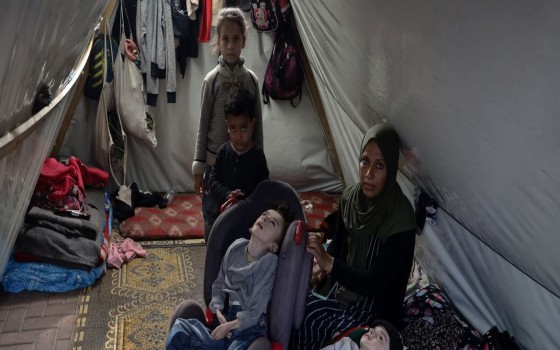
Palestinian women face deteriorating conditions, and funding shortages threaten life-saving services. Gaza – Humanitarian efforts face obstacles.

- Europe and Arabs
- Wednesday , 17 June 2026 5:43 AM GMT
Gaza-New York: Europe and the Arabs
The representative of the United Nations Population Fund (UNFPA) in Palestine warned of the continued deterioration in the situation of women and girls in Gaza and the West Bank, stressing that the humanitarian crisis, movement restrictions, escalating violence, and funding shortages are having serious repercussions on women's physical and mental health.
UN official Nestor Omohangi told UN News that the situation in Gaza "remains dire," despite a slight improvement compared to the worst periods of the war, while in the West Bank, access to health services is facing increasing challenges due to checkpoints and escalating settler violence.
He noted that UNFPA supports reproductive health services and the protection of women, but faces a significant funding gap that threatens the continuity of these services, particularly for pregnant women and survivors of gender-based violence. He stated that the Fund supports approximately 70% of maternal health services in Gaza, having contributed to supporting 45,000 of the 60,000 births that took place in the Strip in 2025.
He also warned of escalating domestic violence, child marriage, and severe psychological distress, noting an increase in cases of women experiencing suicidal thoughts. He discussed the assistance provided to them at centers supported by the Fund. Regarding the situation of women and girls in Palestine and the extent of their needs, Nestor Omohangi said: “Usually, when I am asked such a question, I always wish to say that the situation is good and fair, and that it is improving. Unfortunately, for both Gaza and the West Bank, the situation is bad. The situation of women and girls is not improving.
In Gaza, there was utter misery during the total lockdown between May and August, when the situation was extremely dire. My colleagues there were emaciated and hungry. Since the ceasefire on October 10th of last year, there has been a slight improvement. But the situation remains extremely difficult, although not as bad as it was when I was there in July of last year.” When asked about the West Bank, there is another set of challenges. Nestor Omohangi said: “I have been working in Palestine for two years, and the situation is getting worse every week. Before I arrived, I had read about the difficulties women face in accessing services, the checkpoints, and the gates, but I hadn’t seen it firsthand. I didn’t experience it until I took a donor to visit one of our projects. We encountered one checkpoint after another, and it took a full hour to reach the site.”
Besides the checkpoints, which are of great concern to us because they significantly impact childbirth, we see a lot of settler violence. In fact, the UN Office for the Coordination of Humanitarian Affairs (OCHA) records around six incidents of settler violence every day. This includes violence in schools and health facilities.
Our biggest concern stems from the fact that we know there are 350 births in the West Bank every day. How many of these women will have to cross a checkpoint or a gate?” In the same vein, the United Nations and its humanitarian partners continue to respond to needs across Gaza, calling for a more conducive operational environment and increased funding to reach the most vulnerable.
Partners report that shortages of fuel, motor oil, and spare parts continue to hamper vital water and sanitation operations, including water production and distribution, as well as solid waste management. Fuel has been prioritized, and water production, treatment, and trucking have continued, albeit at a reduced pace, said UN Spokesperson Stéphane Dujarric.
At his daily press briefing, Dujarric said that the organization's partners are continuing to implement the pest control plan in light of the widespread infestation. The United Nations Development Programme (UNDP) is leading the pesticide spraying efforts, while UNICEF and UNRWA are supporting community mobilization and safety awareness campaigns.
Regarding food security, partners reported that nearly 420,000 people received food assistance during the first two weeks of this month, covering approximately 75% of their minimum daily caloric needs. To support livelihoods, UN-supported partners distributed animal feed to some 2,200 herders between June 1 and 9.
Since late March, partners have provided cash assistance of $2,500 per farmer to more than 1,000 farmers to support the revitalization of local agricultural production across the Gaza Strip.
Dujarric stressed that the UN is doing its utmost, “but the needs remain immense.” He reiterated the critical importance of continued humanitarian access, sufficient fuel supplies, and increased funding to sustain and expand life-saving efforts.






No Comments Found