

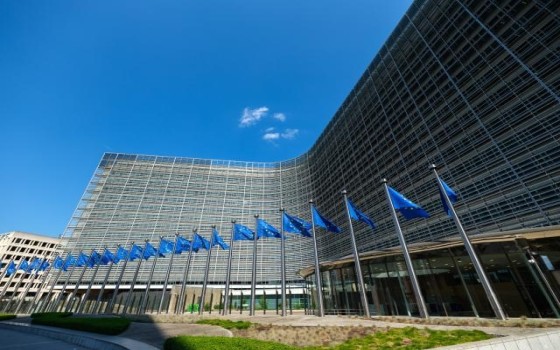
Partners from Arab and African countries, among others, will benefit from an agreement between EU institutions to strengthen the External Action Guarantee (EAG) – Global Europe

- Europe and Arabs
- Tuesday , 27 January 2026 5:45 AM GMT
Brussels: Europe and the Arabs
The Presidency of the Council of the Member States and the European Parliament have reached a preliminary political agreement on specific amendments to the Regulation Governing the Neighbourhood, Development and International Cooperation Instrument – Global Europe (NDICI), with the aim of increasing the efficiency and effectiveness of the External Action Guarantee (EAG). The EAG is the EU’s main instrument for supporting investments outside the EU by mitigating financial risks and mobilizing public and private financing. The provisional agreement will now be approved by the Council and Parliament before its formal adoption.
This agreement will enable the EU to use available resources more effectively and strategically to support its external action priorities, including mobilizing sustainable investments through the European Fund for Sustainable Development Plus (EFSD+). The agreement maintains the objectives, principles, and guarantees of the NDCI framework, while introducing practical improvements that allow the EU to respond more quickly and consistently to global challenges. By simplifying certain procedures and allowing for more flexible use of guarantee resources, these amendments enhance the EU’s capacity to deliver development cooperation and external action, manage risks responsibly, and act as a reliable strategic partner in an increasingly competitive global environment. The Cypriot Presidency of the European Union stated, "This agreement enhances the efficiency of the EU's external investment instruments without altering their mandate or objectives. It allows us to mobilize more investment where it is most needed, while fully respecting the EU's values, political objectives, and budgetary guarantees. In today's complex geopolitical and geo-economic context, this is a concrete, timely, and necessary step that strengthens the EU's ability to achieve its objectives and reinforces our global engagement and our role as a reliable strategic partner." This statement was attributed to Constantinos Koumbous, Minister of Foreign Affairs of the Republic of Cyprus.
Key Elements of the Agreement
The agreement includes the following key elements:
More efficient use of guarantee resources, allowing the use of surpluses from the previous European Sustainable Development Fund (ESDF) guarantee to provide budgetary guarantees for the enhanced ESDF, thus increasing the overall guarantee capacity within the current Multiannual Financial Framework.
Improved risk coverage, through more efficient use of the EU guarantee within the European Investment Bank's dedicated investment window, enabling the guarantee to support more projects. Streamlining procedures for implementing partners by simplifying the framework for integration and guarantee processes, including reduced reporting requirements, will facilitate faster and more predictable project implementation and mobilize large-scale private investment.
Guarantees and alignment with the principles and objectives of the Integrated Finance for Fragile Countries (IFFC) initiative, including a differentiated approach for fragile contexts and least developed countries, and alignment with the EU's treaty external action objectives.
According to the European statement distributed in Brussels, the External Action Guarantee (EAG) is a key component of the NDICI-Global Europe instrument and the broader Global Gateway strategy. It supports the EFSD+ initiative and enables the EU to support investment in partner countries through budgetary guarantees. Backed by substantial EU funds (up to €53.4 billion), this guarantee acts as a financial anchor, catalyzing private finance for investments in areas such as climate, infrastructure, and reconstruction, with the European Investment Bank (EIB) playing a pivotal role in the process. Through the External Action Guarantee, the European Union supports a wide range of initiatives, including green hydrogen projects in Namibia, submarine cable links connecting Europe with Africa and Asia, vaccine production in Africa, and efforts to enhance carbon sequestration in the Amazon rainforest.
In light of the increasing demand for EFSD+ operations and evolving geopolitical priorities, the Commission proposed in May 2025 specific amendments to the Regulation Establishing the NDICI-Global Europe Instrument to improve the efficiency and flexibility of the External Action Guarantee within the existing budgetary framework.



No Comments Found