

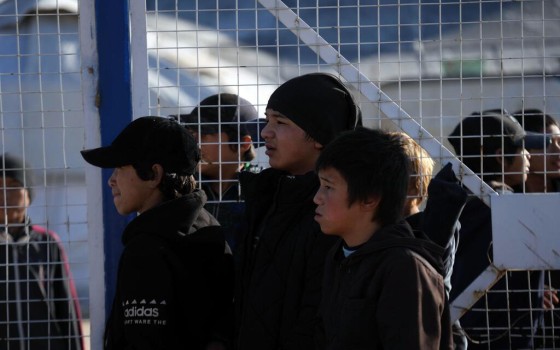
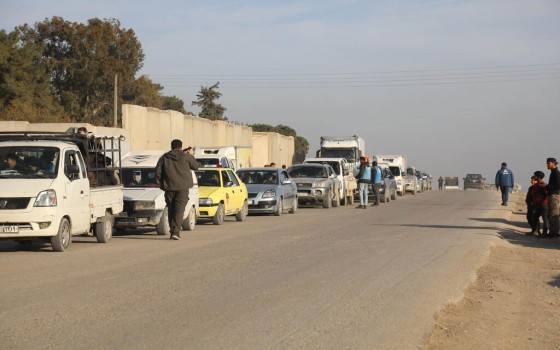
Following the agreement between the Syrian government and the SDF forces, there is an international call to allow the return of displaced persons and the delivery of aid, and a demand for countries to repatriate their citizens, especially children and widows of ISIS

- Europe and Arabs
- Saturday , 31 January 2026 7:20 AM GMT
Damascus – New York: Europe and the Arabs
UN Secretary-General António Guterres welcomed the agreement between the Syrian government and the Syrian Democratic Forces (SDF) and expressed his appreciation to all those who worked to support it. He urged all parties to work urgently to ensure the agreement's implementation, particularly with regard to the peaceful integration of northeast Syria, the rights of Syrian Kurdish citizens, the safe, dignified, and voluntary return of displaced persons, and working together to rebuild the country.
In a statement issued by his spokesperson, the Secretary-General urged all parties to fully honor their commitments, prioritize stability in Syria and the wider region, and ensure the protection of civilians so they can live in safety, dignity, and freedom from fear.
The Independent International Commission of Inquiry on Syria also welcomed the ceasefire agreement reached on Friday between the Syrian government and the SDF and called for continued efforts to protect civilians, including allowing the return of displaced residents and the delivery of aid to northeast Syria. According to the UN Daily News Bulletin:
Paulo Pinheiro, Chair of the Independent International Commission of Inquiry on Syria, welcomed efforts to stabilize the region, expressing hope for a complete cessation of hostilities and a sustainable solution, including addressing the humanitarian crisis and ensuring a stable supply of food, water, and electricity.
He also welcomed the recent Syrian presidential decree recognizing the cultural, linguistic, and citizenship rights of Syrian Kurds, rights that had been "denied to them for a long time by successive governments under the Assad regime."
The Commission urged all parties to ensure strict adherence to international humanitarian law in any further operations related to the escalation in northeast Syria – including the principles of distinction, proportionality, and precaution – and called on all parties in particular to protect civilians and civilian infrastructure from further harm.
Commission member Mounia Ammar said: "We are disturbed by reports of the killing of fighters who had laid down their arms and other civilians, as well as the desecration of bodies." The commission explained that it is investigating alleged violations of international human rights and humanitarian law in connection with these events, and "will report on them in due course."
Aid workers are assisting displaced families in Syria as they flee from Aleppo towards the Afrin region, providing essential services including drinking water, protection, psychosocial support, and health guidance.
Unimpeded Aid Delivery
The commission stressed the ongoing need for unimpeded humanitarian access and the safe passage of civilians, expressing its regret over reported obstacles hindering this. The harsh winter weather—coupled with shortages of electricity, water, food, and heating—poses a catastrophic threat to the most vulnerable, as evidenced by reports of infants dying from the cold in displacement camps in neighboring Idlib and in Kobani (Ayn al-Arab).
The Committee reiterated its grave concern for the safety and well-being of all children in the region, recalling the special respect and protection afforded to children under international humanitarian law, including the prohibition against the recruitment and use of children in hostilities. This special protection extends even to children who have participated in hostilities.
Concern about the situation of detained children
The Committee also expressed concern about the situation of detainees, particularly children, as detention facilities have been transferred from one entity to another. This follows the withdrawal of the Syrian Democratic Forces from al-Aqtan prison near Raqqa, which held detainees allegedly affiliated with ISIS.
The Committee noted alarming reports of the arbitrary detention and ill-treatment of more than 100 children there. It also expressed concern about the situation of more than 17,000 children and young people arbitrarily detained in al-Hol or Roj camps or in so-called “rehabilitation centers.” Committee member Fionnuala Ní Aoláin welcomed the resumption of aid deliveries to Al-Hol camp but stressed the need to strengthen current efforts to ensure adequate electricity, water, food, and medical supplies for the camps. She added, “We urge the Syrian authorities currently controlling the area to facilitate the voluntary, safe, and dignified return of the approximately 16,500 Syrian women and children still detained there, many of whom have been unlawfully deprived of their liberty by the Syrian Democratic Forces for nearly seven years.” The Committee reiterated its call on other Member States to repatriate all children of their nationality detained in northeast Syria, giving the highest priority to unaccompanied children for reunification with their extended families and reuniting others with their mothers, in accordance with the best interests of the child. Regarding the transfer of former ISIS fighters from prisons in northeast Syria to other countries, the Committee emphasized the absolute prohibition of torture and ill-treatment and the right of all detainees to have their detention reviewed in accordance with the law. The Commission expressed its deep concern regarding the risks of forced return and enforced disappearance.
It also stressed the need for prompt, effective, transparent, and impartial investigations into all reported violations and abuses, particularly those that may amount to war crimes.
The Commission reiterated the need to investigate any former ISIS fighter suspected of involvement in international crimes, including war crimes, crimes against humanity, and genocide, and to ensure fair trials with full respect for the rights of the accused and their victims. The Human Rights Council established the Independent International Commission of Inquiry on the Syrian Arab Republic on 22 August 2011. The Commission's mandate is to investigate all alleged violations of international human rights law committed in Syria since March 2011.


No Comments Found