

Ukraine – Four Years of War, Thousands Killed and Wounded, and a Funding Crisis Threatens to Collapse the Humanitarian Response

- Europe and Arabs
- Sunday , 22 February 2026 7:14 AM GMT
Kyiv-Geneva: Europe and the Arabs
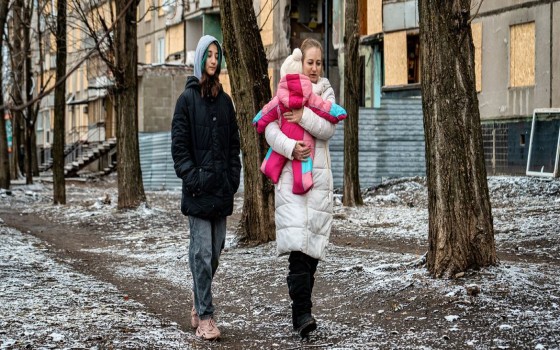
UN Women reported that during the four years of Russia’s full-scale invasion of Ukraine, more than 5,000 women and girls have been killed and 14,000 others injured, with 2025 being the deadliest year to date.
The organization warned that as the war intensifies and attacks cripple the energy infrastructure essential for daily life, another crisis is worsening for women and girls: the collapse of funding for women’s and women’s rights organizations, the lifeline that keeps them alive, protected, and supported. According to the UN Daily News, Sofia Kaltorp, Chief of Humanitarian Affairs at UN Women, speaking at a press conference for UN agencies in Geneva after returning from a visit to Ukraine, stated that "power outages are not just technical malfunctions; they directly undermine women's safety, protection, and economic security." Kaltorp explained that prolonged darkness, lack of street lighting, and disruption of transportation "severely restrict women's movement and increase their vulnerability to harassment and accidents." She added that many Ukrainian women work in sectors most affected by prolonged power cuts, such as education, health, social services, and retail, and are now losing their jobs. Weakening Women's Organizations
The UN Women official noted that despite these challenges, Ukrainian women are "driving the country forward," and that women-led organizations are at the heart of the humanitarian response. She added that these organizations provide vital protection, psychosocial support, emergency assistance, and livelihood opportunities for hundreds of thousands of Ukrainians, but are now under threat. Dangerous due to funding cuts.
Sabine Fraser-Gonich, UN Women Representative in Ukraine, said that due to funding cuts in 2025 and 2026, women's organizations in Ukraine are expected to lose at least $53.9 million by the end of the year.
She added: "If this situation continues, some 63,000 women are expected to lose access to services in 2026, such as support for survivors of conflict-related sexual violence."
She also warned that this means women's political representation will decrease, their economic opportunities will diminish, and economic growth in Ukraine will decline. She said: "Weakening women's organizations at this moment threatens to weaken the entire humanitarian and relief infrastructure of Ukraine."
Darkness burdens communities
Jaime Wah, Deputy Head of Delegation of the International Federation of Red Cross and Red Crescent Societies in Ukraine, said that when power outages occur, "the most vulnerable groups often bear the brunt of the consequences."
She added: "For the elderly, people with disabilities, and those with illnesses..." “This is chronic, and it poses a serious threat to their lives.” Speaking via video link from Kyiv, she explained that while “cold homes increase the spread of disease,” the psychological and social impact of power outages is “equally serious.” She warned that “prolonged darkness, isolation, and constant uncertainty are taking a toll on communities,” adding that many have experienced traumatic events, yet access to specialized mental health services and psychosocial support remains limited. Attacks on Healthcare
At the same press conference, WHO spokesperson Christian Lindmeier warned that the devastating toll the conflict is taking on health is being exacerbated by what he described as “severe and widespread” attacks on healthcare. He reported that over the past four years, the WHO has verified more than 2,870 confirmed attacks, resulting in 233 deaths and 937 injuries among healthcare workers and patients. “Health facilities are operating beyond capacity, with severe staff shortages and damaged infrastructure,” Lindmeier said. He explained that the number The number of people with reported disabilities has increased by approximately 390,000, or over 10%, since February 2022.
He added that the figures alone do not tell the whole story, including the lack of support, restrictions on freedom of movement, and shortages of supplies needed by people with disabilities.


No Comments Found