

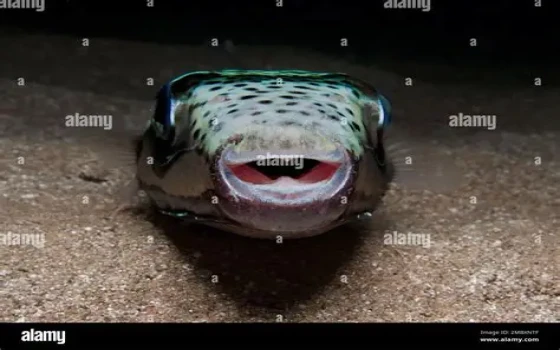
Dangerous Pufferfish Attack Tourists on Mediterranean Beaches... Bite Feet, Buttocks, and Genitals

- Europe and Arabs
- Monday , 22 June 2026 14:23 PM GMT
Brussels – Athens: Europe and the Arabs
The Greek Red Cross has warned tourists about the spread of the dangerous pufferfish in the Mediterranean Sea. According to Belgian media reports in Brussels, the Greek Red Cross sounded the alarm after beachgoers in popular tourist destinations were stung by the invasive and venomous pufferfish. This fish bites the legs and buttocks with its powerful jaws.
Although biologists have confirmed there is no cause for panic, the Greek Red Cross is currently distributing official first aid guidelines to beachgoers.
The rabbit-headed pufferfish (Lagocephalus sceleratus) originates from the Indian and Pacific Oceans but reached the Mediterranean Sea via the Suez Canal. Since it was first spotted in Greece in 2005, this fish has been reproducing very rapidly and has few natural predators.
Stings usually occur on the legs, but sometimes on the buttocks or genital area. This fish has now become a permanent resident around Crete, in the Saronic Gulf, near the Dodecanese Islands, and along the coast near Athens. This is causing problems on and around the beach. Bleeding Wounds
Although eating this fish can be fatal due to the neurotoxin tetrodotoxin, the immediate danger to swimmers lies in its mouth. The bite is not poisonous, but its powerful jaws can inflict serious wounds.
According to marine biologists, pufferfish have become more aggressive, swimming in groups more frequently and losing their shyness around humans. Greek media have reported that several victims have been hospitalized in recent months after being attacked.
An elderly woman was bitten in Varkizka, a suburb of Athens, among other locations. Bites usually affect the legs, but sometimes the buttocks or genital area.
Red Cross Guidelines
The Greek Red Cross is currently distributing guidelines to victims. Anyone bitten should immediately wash the wound with clean water and soap. Those affected should seek medical attention for stitches and possibly a tetanus shot. In case of severe bleeding, call the emergency number 112 immediately.
There is no problem on 99.5% of the coastline.
Anastasia Milio, from the Hellenic Institute for Marine Environmental Protection, says there is no need to panic. She told the Greek news site N Newspaper: "The problem is mainly with the fishing industry. As for swimmers, I think it's being exaggerated. There is no problem on 99.5% of the coastline."
Belgian media outlets published a photo they claimed showed a school of pufferfish in Antalya, Turkey. They added:
However, pufferfish are a disaster for the local fishing industry, destroying nets and consuming commercial fish. To contain the infestation, authorities are intervening. Greece wants to pay fishermen six euros for every kilogram of pufferfish they catch. Similar incentive schemes are in place in Cyprus (4.80 euros per kilogram) and Turkey.


No Comments Found