

On the International Day Against the Use of Child Soldiers: Education, Justice, and Hope are the Pillars of Peace,, Documentation of Violations in 26 Conflicts Around the World, Most Notably in Syria, Somalia, Sudan, and Gaza

- Europe and Arabs
- Friday , 13 February 2026 7:25 AM GMT
Brussels – New York: Europe and the Arabs
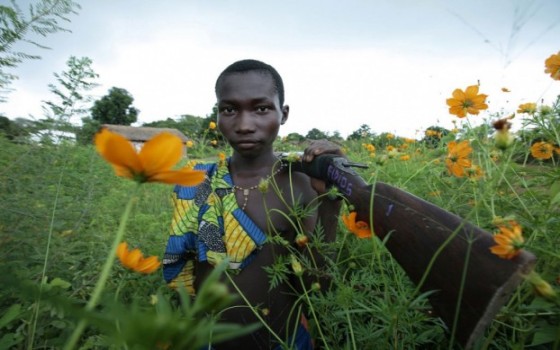
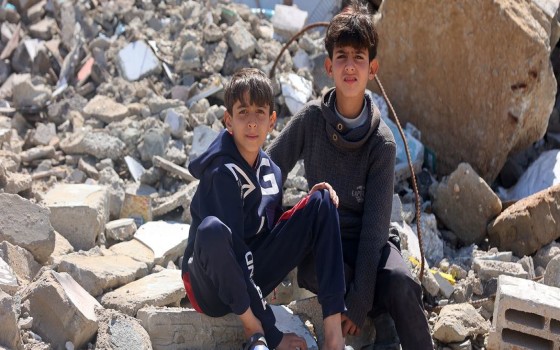
A joint statement issued by the European Union, the United Nations, and the African Union on the International Day against the Use of Child Soldiers reads: “We reaffirm the importance of protecting children from the scourge of war, as we witness the enormous scale of contemporary conflicts and their devastating impact on children. One in five children worldwide lives in conflict-affected areas. Children are often the first victims of armed conflict and are always the most vulnerable. Survivors suffer severe physical and psychological trauma, prolonged displacement, and disruption to education and livelihoods – consequences that can irreparably threaten their future and well-being. In 2024 alone, the UN verified the recruitment and use of 7,402 children by parties to conflict. A third of the affected children were girls, who face grave and specific risks, including forced marriage and sexual exploitation. At least 3,018 children were deprived of their liberty due to their actual or alleged association with armed parties to conflict. Multilateral action is facing…” Under increasing pressure, strong partnerships are more important than ever. Cooperation between the European Union, the African Union, and the United Nations remains essential to achieving the shared goal of protecting children affected by conflict and paving the way for sustainable peace.
We reaffirm our unwavering commitment to protecting children affected by armed conflict and ending and preventing the recruitment and use of children by armed forces and armed groups worldwide.
We are equally committed to addressing the root causes of child recruitment. We call on all parties to conflicts to fully comply with international law, immediately and unconditionally release all children from their ranks, and ensure that children associated with parties to conflict are treated primarily as victims. Criminalizing the recruitment and use of children and establishing preventive measures, such as age verification mechanisms, are essential to eliminating child recruitment and use, as is adopting protocols for the transfer of children to civilian actors. Universal ratification and effective implementation of the Convention on the Rights of the Child and its Optional Protocol on the Involvement of Children in Armed Conflict, and the African Charter on the Rights and Welfare of the Child, remain crucial to preventing this and other grave violations. Against children, and to end it.
The international community must also prioritize sustainable reintegration and accountability. Beyond emergency aid, children affected by conflict need comprehensive, long-term assistance, including health, psychosocial, and educational support, as well as livelihood opportunities. Without sustained support, children remain vulnerable to re-recruitment, perpetuating cycles of violence and instability.
Protecting children is the foundation of peace itself. Their voices must guide and enrich our collective action. As Gabriela Mistral rightly said, “Children cannot wait.” So let us not jeopardize their future.
In the same vein, and according to the UN News Daily, a copy of which we received, three decades after the establishment of her office’s mandate, the Special Representative of the Secretary-General for Children and Armed Conflict reiterated her determination to remind the world that preventing and protecting against violations go hand in hand. She stated that every statistic on the recruitment and use of children represents an innocent child robbed of their childhood.
In an interview with UN News, UN official Vanessa Fraser discussed the increase The alarming violations against children and the urgent need to protect their future.
Coinciding with the International Day against the Use of Child Soldiers, Fraser said: “The recruitment and use of children remains one of the most widespread violations. In 2024 alone, more than 7,400 children were recruited or used by armed forces or groups.” This figure represents only documented cases.
She stated that over the past 30 years, her office has contributed to the release of more than 220,000 children from armed groups.
A Growing Crisis in Conflicts
Ms. Fraser’s office monitors situations related to some 26 conflicts around the world. She said, “The most widespread violations are in the Democratic Republic of Congo, Nigeria, Somalia, Syria, and Myanmar.” However, she also pointed to alarming trends in Sudan, where children are specifically targeted for use as guards, laborers, or even fighters.
Behind these statistics and information are young lives forever changed, as the UN official stated: “Every number in our reports represents a child whose childhood has been violated.”
From Abduction to Reintegration
In addition to documenting violations, the Office of the Special Representative for Children and Armed Conflict engages directly with combatants to negotiate the release and return of children. Vanessa Fraser believes that one of the strengths of her office’s mandate is its ability “to negotiate directly with armed groups for the handover of children.” UNICEF and its partners then work to reintegrate children into society to ensure they receive psychosocial support, education, and the opportunity to reclaim their childhood. However, reintegration is often fraught with stigma, as Fraser explained: “Girls who return home may be ostracized from their communities, especially those who have given birth and return with their children. For societal reasons, some girls are unable to fully reintegrate and are viewed as defective goods.”
Prevention and Accountability
For Ms. Fraser, the primary objective is to prevent these violations against children. She explained this in an interview with UN News, saying, “Prevention is better than cure. That’s why we strongly advocate – even in times of war and armed conflict – for children to remain in school. When they can’t stay in school, they become more vulnerable to recruitment, whether they are forced to or not.”
Accountability also plays a crucial role, said Ms. Fraser, the former Maltese ambassador to the UN who presided over the Security Council during a critical period in the Gaza war.
Ms. Fraser pointed to prosecutions before national courts and the International Criminal Court, stating, “One of the most important tools for deterrence is justice and accountability. When warlords or leaders of armed groups are prosecuted and convicted for recruiting children – including in national courts and at least three cases before the ICC – it sends a powerful message. Justice and accountability are deterrents; they show armed groups that this crime has real consequences.” Fraser's conviction stems from firsthand experiences meeting survivors of Boko Haram kidnappings in Nigeria and listening to women enslaved by the Lord's Resistance Army in Uganda.
"We hear the story of a 13-year-old girl carrying her baby," said Vanessa Fraser, "and we realize how conflict steals childhood. When you hear stories like these, you understand that the numbers in our reports are about people—children who should have had their futures ahead of them."
Very moved, Ms. Fraser spoke of her deep commitment to her mission: "Children are the epitome of innocence. They take no sides in wars, yet their innocence and childhood are violated. Children should never be seen as collateral damage in war." She said that the path to sustainable peace begins with protecting and empowering these children: “Sustainable peace depends on children’s right to drive peace forward. When they are rescued from conflict, they must have access to education and the opportunity for full integration into society so they can aspire to become doctors, nurses, lawyers, politicians, and engineers. This can only be achieved through education.”
A Message of Hope
The Special Representative spoke about her “Prove It Matters” campaign, which encourages children affected by war to send messages to leaders folded in the shape of a dove – the universal symbol of peace. She said: “One child wrote to me saying, ‘I still have hope that there will be peace in the world, that no girl will ever again be the wife of a fighter in an armed group, and that no child will ever again be part of an armed group. Let’s save childhood and families too.’ It’s an innocent plea, but it captures the essence of our mission.”
Fraser reiterated her conviction that education, justice, and hope are the pillars of peace. She concluded the interview by saying: “We must preserve the innocence of children, even during conflicts. It’s about ensuring a peaceful and sustainable future for the whole world.”


No Comments Found