

Rapid and Dangerous Shift in Ebola Outbreak: 900 Cases and 220 Deaths... WHO Declares Public Health Emergency of International Concern

- Europe and Arabs
- Tuesday , 26 May 2026 7:5 AM GMT
Geneva: Europe and the Arabs
The Director-General of the World Health Organization (WHO), Dr. Tedros Adhanom Ghebreyesus, announced that more than 900 suspected cases of Ebola, caused by the Bundibugyo virus, have been recorded in the Democratic Republic of Congo (DRC), along with approximately 220 suspected deaths.
This latest outbreak of the deadly disease – which the WHO has declared a Public Health Emergency of International Concern – is spreading faster than health workers can contain it, according to the UN Daily News, a copy of which we received Tuesday morning. In the DRC, the epicenter of the outbreak, the WHO raised its national risk assessment from "high" to "very high." Neighboring countries – including Uganda, which has confirmed five cases and one death – also face a particularly high risk.
Treatment centers set ablaze
The response to the disease is facing significant obstacles, particularly in the volatile eastern regions of the Democratic Republic of Congo, due to a lack of trust in external authorities by local communities, which greatly increases the risk of transmission. In recent days, two treatment centers in this region, already plagued by violent clashes that have displaced more than 100,000 people, have been set on fire.
In this context, Marie-Roslyn Pellissier, Emergency Response Manager at the WHO Regional Office for Africa, told UN News that these attacks are linked to disinformation campaigns circulating on social media, which are significantly slowing down case investigations and limiting the ability of health teams to reach affected communities.
Although the outbreak has been ongoing for nearly 20 years, there are still no approved vaccines or treatments for Bundibugyo virus.
The World Health Organization (WHO) has recommended prioritizing two antibodies in clinical trials and evaluating the antiviral drug upuldisevir in a clinical trial as a treatment for high-risk contacts.
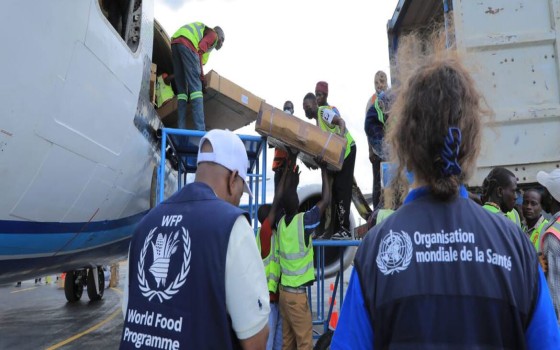
The WHO is urgently scaling up its field operations, including contact tracing, establishing treatment centers, strengthening laboratory capacity, managing cases, infection prevention and control, raising risk awareness, and engaging the community.
These statements come as a rapid development, as just days earlier, WHO Director-General Dr. Tedros Adhanom Ghebreyesus stated that the deadly Ebola outbreak in the Democratic Republic of Congo (DRC) and Uganda did not constitute a global pandemic emergency, although the risk level remained high at both the regional and national levels.
In a briefing to journalists in Geneva last Wednesday on the rapidly evolving situation in eastern DRC, Dr. Tedros said that in addition to dozens of confirmed cases of Bundibugyo Ebola, there were approximately 600 suspected cases and 139 suspected deaths. He said: “We expect these numbers to continue to rise, given the length of time the virus has been circulating before the outbreak was detected.”
Dr. Tedros emphasized that this is an extremely rare strain of Ebola, last identified in 2007. With no vaccine or treatment available, WHO teams are already working with community leaders in Ituri province, the epicenter of the outbreak, to help prevent its wider spread.
Decades of violence in the mineral-rich east of the Democratic Republic of Congo have created chronic vulnerability among the population, including healthcare workers who find themselves caught in a constant state of insecurity.
According to the UN Refugee Agency (UNHCR), there are more than two million internally displaced people in the two affected provinces of Ituri and North Kivu, while the rebel group M23 controls the capital, Goma. At the press conference, Dr. Marie-Roslyn Pellissier, Acting Regional Emergency Director for the World Health Organization (WHO), confirmed that the organization has a permanent team in Goma and continues to provide support to the population there.
She said, "We will continue this work throughout this outbreak. We never left Goma during the period of security unrest the city experienced, and we will remain to ensure the protection and safety of the community we serve."
Area of Risk
Emphasis on the "inherently challenging" task of monitoring the Ebola outbreak in Ituri province, WHO Regional Director for Africa, Dr. Mohammed Yacoub Djanabe, explained that effective disease surveillance depends on reliable community reporting, the continued functioning of local health facilities, and laboratory confirmation of infection.
He said, "In remote or insecure areas, identifying cases can take a long time," noting that the Bundibugyo Ebola virus was only identified after samples were transported nearly 1,700 kilometers across the country to the capital, Kinshasa. Dr. Anaïs Legendre, the World Health Organization's technical lead on viral hemorrhagic fevers, confirmed that the organization provided support to the Democratic Republic of Congo to conduct investigations as quickly as possible as soon as it was notified of the outbreak.
She added, "Investigations are still underway to determine exactly when and where this outbreak began. Given the scale and scope of the outbreak, we believe it began several months ago, but investigations are ongoing, and our real priority right now is breaking the chain of transmission."
The press conference followed a meeting of the WHO's Emergency Committee in Geneva, where it confirmed that the Ebola outbreak constitutes a Public Health Emergency of International Concern, but does not yet meet the threshold of a global pandemic emergency.
The committee chair, Professor Lucille H. Blomberg, emphasized that Ebola is transmitted through direct contact with the blood and bodily fluids of an infected person, which likely occurred in the case of a patient who died on May 5 in Bunia after his family decided to replace the coffin used to transport his body.
She stated, "Therefore, the infection is not transmitted through casual contact, nor is it airborne. I think we need to recognize this fact. This relates to the issue of travel restrictions, which are not supported by the recommendations of the International Health Regulations."
Professor Blomberg also highlighted the challenges facing efforts to control the outbreak, given the ongoing humanitarian crisis, existing security challenges, high rates of population mobility, and the geographical proximity to numerous international borders.
She stressed the urgent need to provide resources, mobilize additional personnel, conduct research, and develop countermeasures against the virus, noting that this includes intensifying surveillance and identifying individuals who may have been in contact with infected persons.





No Comments Found