

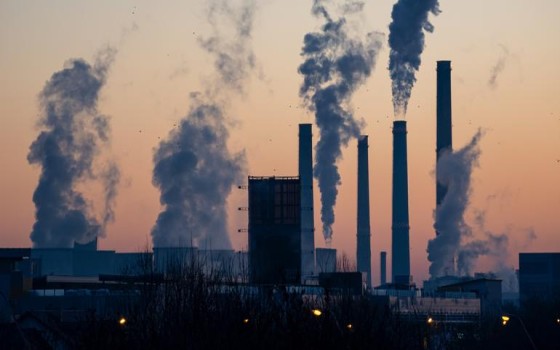
Due to rising energy prices, concerns from the European industrial sector, and pressure from member states, the Brussels Commission intends to relax climate change regulations and promote the energy transition.

- Europe and Arabs
- Friday , 17 July 2026 9:56 AM GMT
Brussels: Europe and the Arabs
The European Commission will announce two major proposals: one aimed at weakening the EU's main policy for combating climate change, and the other at accelerating the energy transition. The first proposal, the long-awaited overhaul of the Emissions Trading System (ETS), is fraught with problems. According to a report by Playbook, the European edition of Politico, the amendment is already fueling disagreements among EU members and splitting the team of Commission President Ursula von der Leyen.
Hope is fading: The Commission's ETS overhaul comes in response to rising energy prices and concerns from European industry, as well as pressure from national governments. The rules that impose costs on polluters are expected to be relaxed, allowing heavy industries to emit more greenhouse gases for a longer period. Under current regulations, sectors covered by the ETS must reach net-zero emissions by 2039, but the proposed changes would postpone this goal. The idea: The emissions trading system overhaul aims to allay private sector fears that companies will be unable to remain in the EU under the current regulations, according to two EU officials, six diplomats, and Commission documents seen by Politico.
Strained relations: Logic aside, the move is generating considerable controversy within Berlaymont. At a meeting of officials earlier this week, at least three governments lodged formal objections to the plans, two people working on the issue told Gabriele Gavin and Ben McCoch.
Among the dissenting commissioners are industry chief Stéphane Sigourney, transport minister Apostolos Tzitzikostas, and Raffaele Vietto, a former minister in the government of Italian Prime Minister Giorgia Meloni, who has been critical of the emissions trading system.
Institutional conflict: Even if the Commission reaches an internal agreement, it will be extremely difficult to reach a deal with EU capitals and the deeply divided European Parliament. This conflict will determine the course of the rest of the year, if there is any hope of reaching a consensus in the first half of 2027.
The European People’s Party weighs in: The center-right European People’s Party (EPP), the largest group in the European Parliament and the political home of nearly half the Commission members, has launched a campaign calling for a “more moderate” approach to emissions reductions. The party has also used its influence to ensure that one of its MEPs, German Peter Liese, will lead the push for this issue when negotiations with lawmakers begin.
A call to action: Polish State Secretary Krzysztof Polesta told Playbook: “Our European way of life has been built on the strength of our industries. Today, that strength is being shaken. Many companies see the emissions trading system as one of the problems… We will do our utmost to deliver a pragmatic review that abandons rigidity and provides strong support for member states and industries.” In response, Swedish Minister for European Affairs Jessica Rosenkranz told Politico, “The emissions trading system is working. Europe should build on its success, not retreat from it,” adding that she would fight to maintain the policy’s coherence as much as possible. The Spanish government, in a letter to two of the EU’s most prominent environmental commissioners, Wobke Hoekstra and Teresa Ribera, which Politico reviewed, warned that “maintaining its ambition” is essential for both the planet and economic competitiveness.
Stay tuned: The final details, kept so secret that even the commissioners were asked to read the report in a secure room, are expected to impact markets and force Brussels to choose between two pressing priorities: tackling climate change or supporting European industry.



No Comments Found